What Does a Fire Adjuster Do? The Carrier’s Adjuster, the Public Adjuster and the Fire Investigator

Homeland Public Adjusters · Last reviewed: October 2026
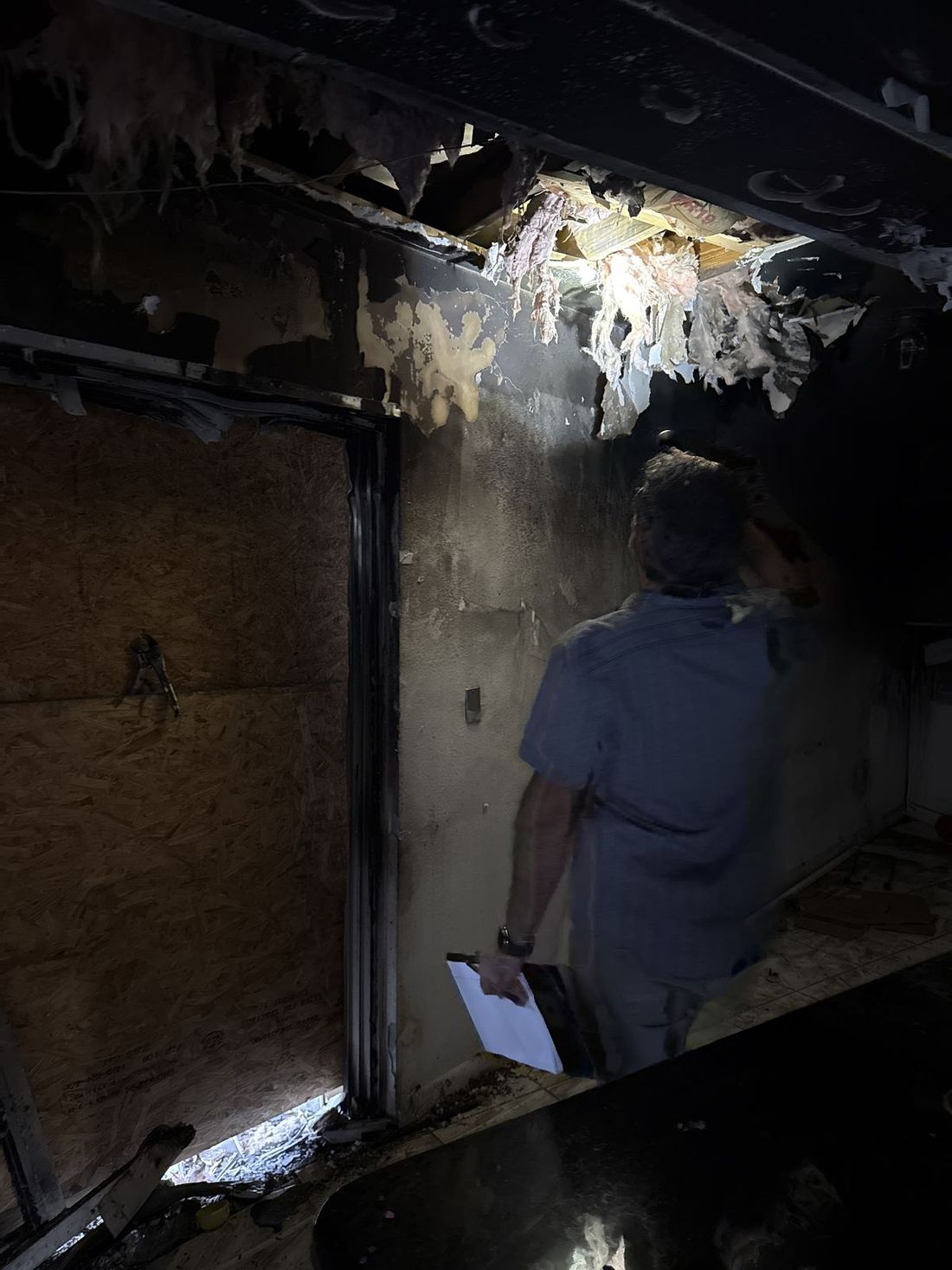
Short answer: A “fire adjuster” is one of two people. The insurance company’s fire adjuster is employed or hired by the carrier to inspect the loss, decide what the policy covers and write the carrier’s estimate. A public adjuster is licensed by the state to do the same work for the policyholder: scope the fire and smoke damage, inventory the contents, document the living expenses and code upgrades, prepare the proof of loss and negotiate the claim. A third person, the origin-and-cause investigator, determines how the fire started. Fire claims are the largest claims most homeowners ever file, averaging $88,170 for fire and lightning from 2019 through 2023 per the Insurance Information Institute, and the difference between the two adjusters’ scopes is usually measured in tens of thousands of dollars.
The carrier’s fire adjuster
Carriers assign fire losses to adjusters with large-loss authority, either staff adjusters or independent adjusters hired by the carrier for the claim. Either way, the adjuster’s job is to settle the claim for the carrier within the policy. On a fire, that means:
- Verifying coverage: the policy in force, the named insured, occupancy, and any exclusion or condition the facts might trigger
- Referring an origin-and-cause investigation when the cause is undetermined, when an appliance or product may be at fault (subrogation), or when the circumstances raise questions
- Scoping the structure: what burned, what is smoke-damaged, what has to be removed and rebuilt, written in estimating software at the carrier’s pricing
- Pricing contents: taking your inventory and applying depreciation to each item for the actual cash value payment, with the balance held until items are replaced
- Setting loss of use: an allowance and a period, usually tied to the carrier’s own repair timeline
- Managing the duties: the recorded statement, the documents request, the sworn proof of loss, and the examination under oath where the carrier wants one
None of this is improper, and most carrier fire adjusters are competent. The limit is structural: the adjuster writes what the inspection shows, at the carrier’s pricing, within the time the file allows, and smoke is where that produces the gap. A kitchen fire that charred six cabinets gets scoped as six cabinets and a repaint; the residue in the ducts, the attic and the bedroom closets is a line that does not get written unless someone writes it.
The origin-and-cause investigator
The investigator is a fire scientist or certified fire investigator hired by the carrier (and sometimes separately by the fire marshal for the state). The job is to determine where the fire started and what ignited it, from burn patterns, electrical arc mapping, the appliance remains and witness statements. The findings decide two things: whether an exclusion applies (an intentional fire set by an insured, for example) and whether the carrier can recover its payment from a manufacturer, an electrician or a neighbor through subrogation. For the policyholder, the practical rule is to leave the point of origin undisturbed until the investigator has seen it. The appliance, the cord, the panel, the space heater: in place, photographed, untouched.
The public adjuster on a fire claim
A public adjuster is licensed by the state to represent the policyholder in the claim, and fire losses are where the license earns its keep. On a fire, the public adjuster:
- Writes the full scope, including the parts the carrier’s estimate leaves out: smoke in wall cavities, attic insulation, HVAC, odor sealing, matching of finishes across rooms, and the demolition the rebuild actually requires
- Builds the contents inventory from photographs, receipts and the burned items, priced at replacement cost item by item, with the cleaning-versus-replacement call made with a restoration contractor rather than conceded
- Documents loss of use from the first night and ties the period to a realistic repair timeline rather than the carrier’s estimate
- Identifies code upgrades and claims them under ordinance or law coverage before the demolition that would make them invisible
- Orders the testing: hygienist sampling for smoke, vendor inspections for electronics and appliances, an engineer where the structure is in question
- Prepares the sworn proof of loss and the supporting file, and attends the recorded statement
- Negotiates the claim, files supplements as hidden damage is found, and invokes the policy’s appraisal clause when the number is still short
Our guide to what a public adjuster is and how to choose one covers licensing and the questions to ask, and whether a public adjuster is worth it looks at the only published Florida study on the question.
What a fire adjuster costs
The carrier’s adjuster costs you nothing directly; the carrier pays. A public adjuster works on a contingency fee set by contract. Florida caps the fee at 20% of the insurance claim payment, and at 10% of payments on claims arising from a declared state of emergency made during the first year after the declaration (§626.854). New Jersey requires the fee to be stated in the written contract and regulates public adjuster conduct and contracts under N.J.A.C. 11:1-37. Homeland works on a No Recovery, No Fee basis: the fee comes from the recovery, and there is none without one.
When to hire one, and when not to
| Situation | Carrier adjuster only | Add a public adjuster |
|---|---|---|
| Small, contained fire; no smoke beyond the room; contents under a few thousand dollars | Often sufficient | Usually not needed |
| Smoke through the house; HVAC ran; contents in every room affected | The scope will stop at the char | Yes; the smoke claim is the claim |
| Total or near-total loss; rebuild; code upgrades; long loss of use | Large-loss adjuster; carrier pricing | Yes, from the first week |
| Undetermined cause; investigator involved; recorded statement or EUO requested | The investigation is the claim | Yes, and an attorney if fraud is suggested |
| Fire in a rental, a condo or a business | Two or three policies in play | Yes; coordination is the work |
What to do before any adjuster arrives
- Get the fire department incident number and the policy with all endorsements.
- Photograph everything before anything is moved, including the point of origin.
- Do not discard, clean or repair beyond securing the property.
- Start the contents list and keep every living-expense receipt.
- Decide who will be with you at the inspection and the recorded statement.
- Give notice in writing; in Florida the carrier must acknowledge within 7 days and decide within 60 under §627.70131, and in New Jersey begin investigating within 10 working days under N.J.A.C. 11:2-17.7.
Frequently asked questions
Does the insurance company’s fire adjuster work for me?
What is an independent adjuster?
How much does a public adjuster charge on a fire claim?
Can I hire a public adjuster after the carrier has already paid?
What does the fire investigator decide?
Homeland serves policyholders in Trenton, Miami and Jacksonville, with local lines and a licensed public adjuster who calls back right away.
If this is your loss, call Homeland before you talk to the insurance company: Florida (305) 783-3777, New Jersey (732) 517-3777, 24 hours. A licensed public adjuster reviews the claim for free and calls you back right away. No Recovery, No Fee.
Sources
- Insurance Information Institute, Facts + Statistics: Homeowners and renters insurance
- Fla. Stat. §626.854 (public adjuster definition and fee limits)
- N.J.A.C. 11:1-37 (public adjuster contracts and conduct)
- Fla. Stat. §627.70131
- Fla. Stat. §627.70132
- N.J.A.C. 11:2-17.7
This article is for general information only and is not legal or insurance advice. Statutes, regulations and policy wording change, and how they apply depends on your own policy and the facts of your claim. Homeland Public Adjusters is a public adjusting firm, not a law firm.
- Surprising Things Your Policy Covers
- Neighbor's Condo Fire: Who Pays?
- Damaged Tile or Laminate: A Claim?
- Barn, Stable & Outbuilding Coverage
- Wind and Tornado Risk on the Farm
- Crop Insurance vs. Property Insurance
 Yeni Martinez
 Alberto Enriquez
 Yisel Dieguez
Homeland Public Adjusters represents policyholders, not insurers. Get a free review of your claim.
Get a Free Claim ReviewIf you already have an open claim, see What to Do in the First 24 Hours After Property Damage, or visit our Public Adjuster Near Me page to get connected with the Homeland adjuster covering your area.