Is a Public Adjuster Worth It? What a Florida Study Found

Homeland Public Adjusters · Last reviewed: October 2026
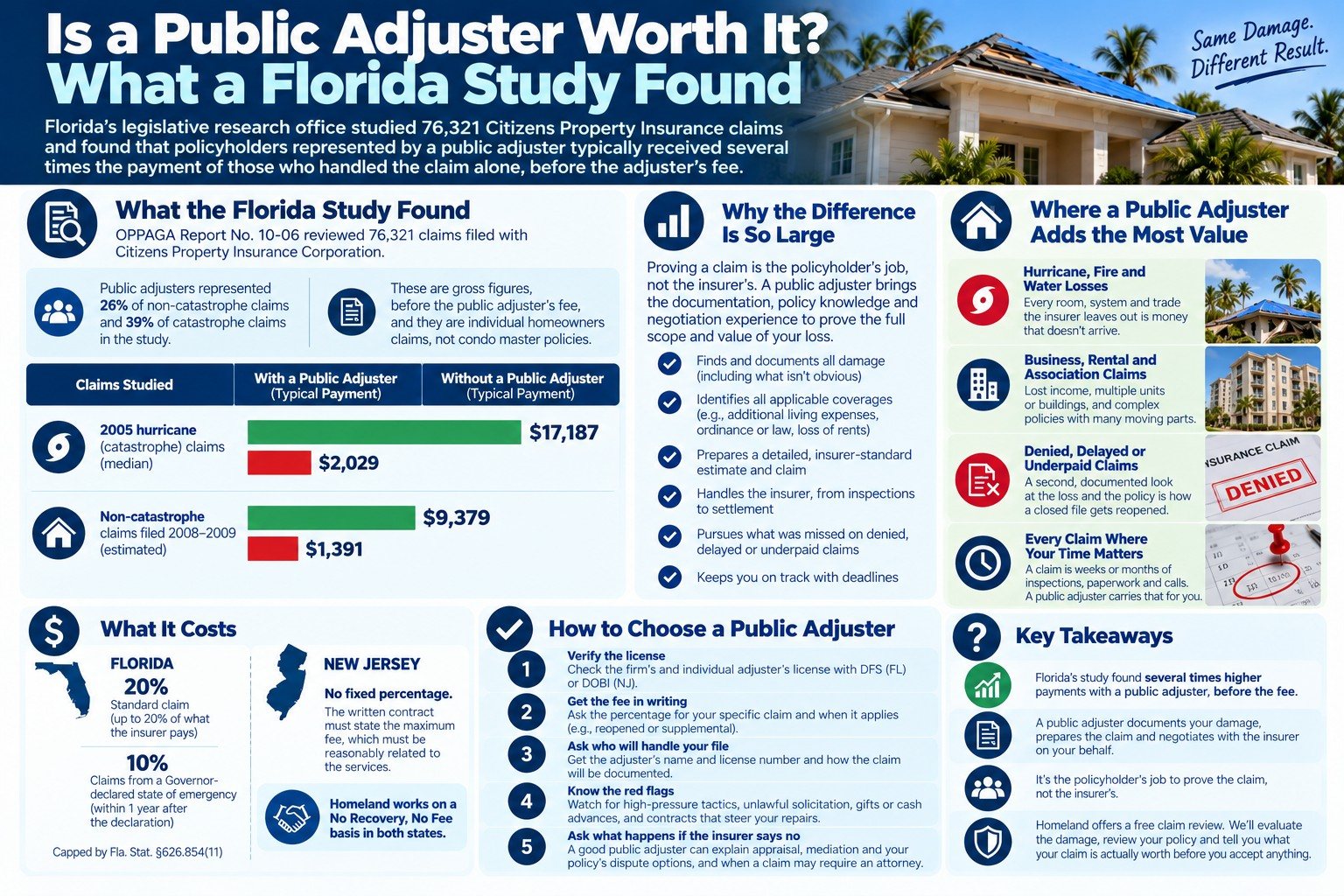
Short answer: Yes. Florida's legislative research office studied 76,321 Citizens Property Insurance claims and found that policyholders represented by a public adjuster typically received several times the payment of those who handled the claim alone, before the adjuster's fee. The reason is simple: proving a claim is the policyholder's job, not the insurer's, and a public adjuster is the licensed professional who does that job for you.
What the Florida study found
In January 2010, the Florida Legislature's Office of Program Policy Analysis and Government Accountability published OPPAGA Report No. 10-06, a review of 76,321 claims filed with Citizens Property Insurance Corporation, the state-backed insurer. Public adjusters represented policyholders in 26% of the non-catastrophe claims and 39% of the catastrophe claims studied.
| Claims studied | Typical payment with a public adjuster | Without |
|---|---|---|
| 2005 hurricane (catastrophe) claims, median | $17,187 | $2,029 |
| Non-catastrophe claims filed 2008–2009, estimated | $9,379 | $1,391 |
The report notes that these are gross figures, before the public adjuster's fee, and that represented claims took longer to settle: a median of 115 days versus 41 for non-catastrophe claims. Both points deserve a closer look. A fee capped at 20% of a $9,379 payment still leaves far more than $1,391, and the extra weeks are what a documented claim takes: inspections, a line-item estimate, photographs, policy review and a negotiation the insurer has to answer on the record.
Why the gap is so large: the burden of proof is yours
A property policy pays for what you prove. It's the policyholder's job to show what was damaged, what caused it, and what it costs to repair properly. The adjuster your insurance company sends is there to evaluate the claim for the insurer, not to build it for you. When nobody builds the claim, the insurer's number is the only number on the table, and that's the number that gets paid.
A public adjuster is to a property claim what an attorney is to a court case. Plenty of people could, in theory, file their own pleadings. Almost no one should, because the outcome turns on documentation, structure, knowledge of the rules and the experience to know what the other side will do next. A public adjuster brings the same discipline to a much narrower lane: property damage, policy coverage and claim negotiation, with a licensed firm working on your side of the file.
The "small claim" problem
The most expensive mistake on a property claim is deciding how big it is before anyone has looked. A wet spot on a ceiling is rarely just a wet spot. It can mean a roof leak that has been running for weeks, saturated insulation, a drywall replacement that has to match the rest of the room, flooring that was damaged from underneath, and a mold condition that has its own policy limit and its own clock. The homeowner who pays out of pocket for a patch has often paid for the one repair that was visible and absorbed the rest.
That is why Homeland evaluates every loss, large or small, before anyone decides what it's worth. A claim that really is minor is a quick conversation. A claim that only looked minor is the one a public adjuster exists for.
Where a public adjuster changes the outcome
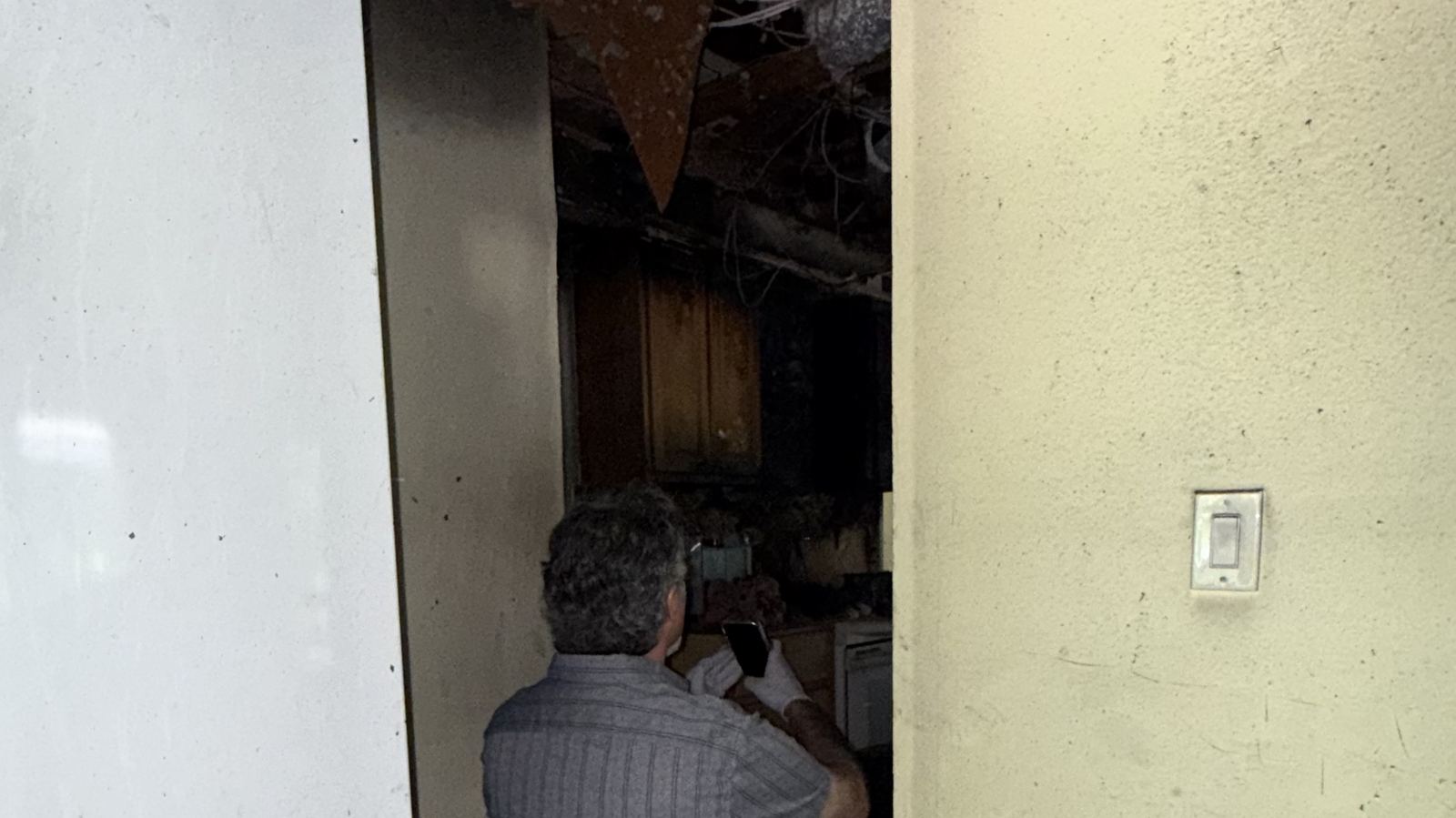
Hurricane, fire and water losses: scope and pricing drive the payment, and every room, system and trade the insurer leaves out of its estimate is money that doesn't arrive.
Business, rental and association claims: lost income, loss of rents, multiple units or buildings, and policies with many moving parts, where the policyholder's documentation is the claim.
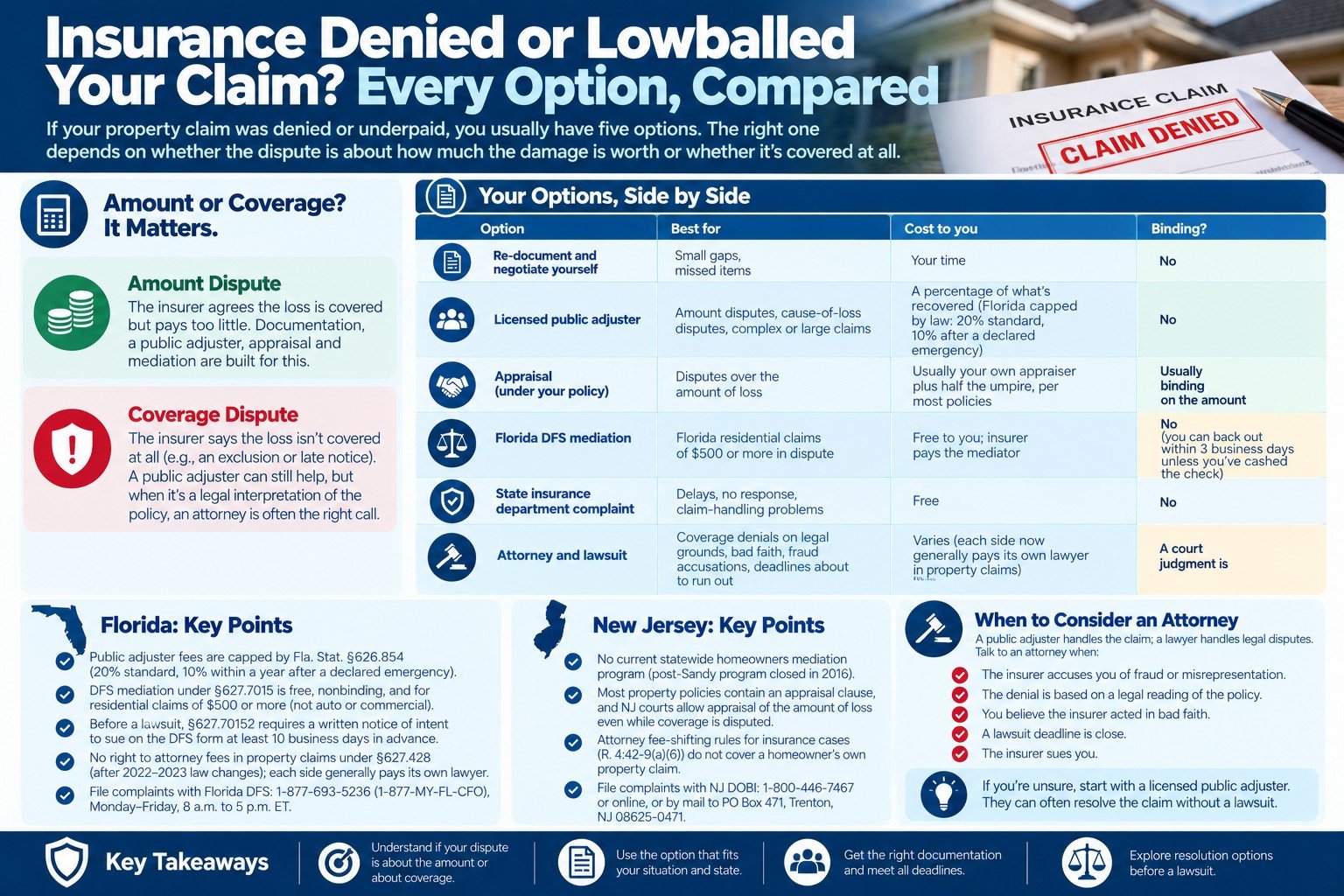
Denied, delayed or underpaid claims: insurers rarely pay the correct amount and move on. A second, documented look at the loss and the policy is how a closed file gets reopened.
Every claim where your time matters: a claim is weeks or months of inspections, paperwork, phone calls and statutory deadlines. A public adjuster carries that for you and keeps the clock from running out.
What it costs
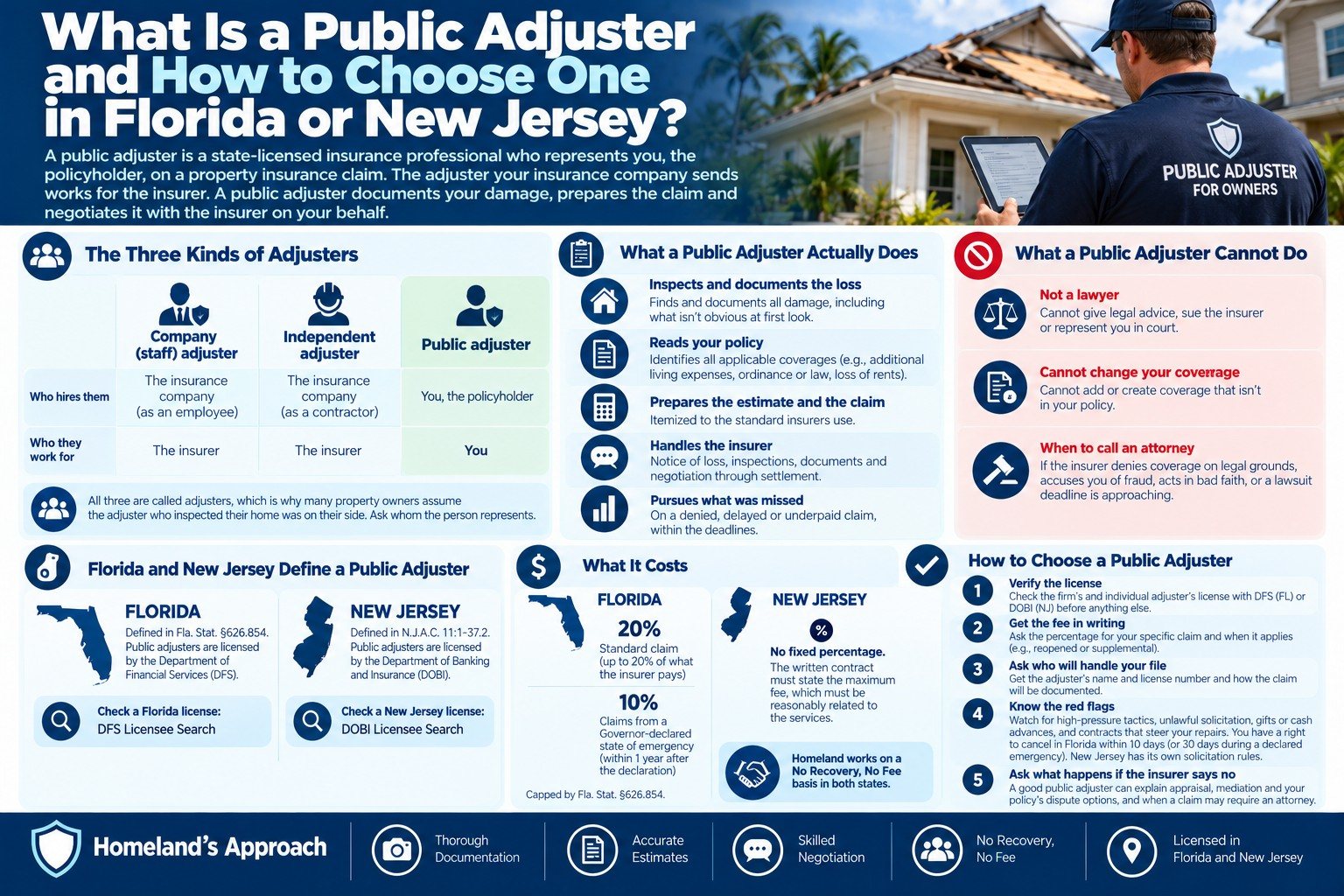
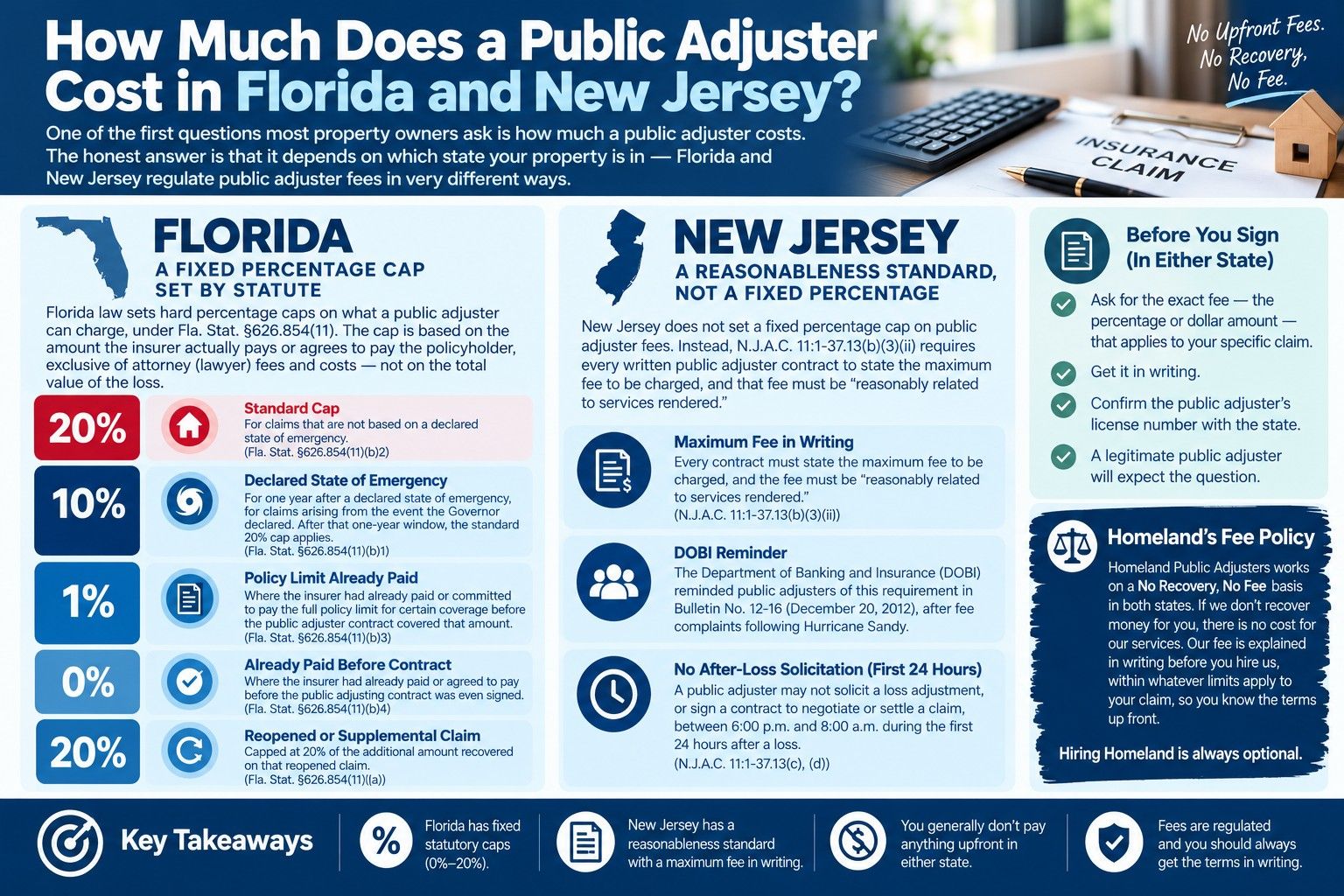
Florida caps public adjuster fees at 20% of the insurer's payment, or 10% for claims from a declared state of emergency made during the year after the declaration (Fla. Stat. §626.854(11)). New Jersey requires the contract to state the maximum fee, which must be reasonably related to the services. Homeland works on a No Recovery, No Fee basis: if we don't recover money for you, there's no fee. The question isn't whether the fee is worth paying; it's whether you want the insurer's estimate or your own to decide what your claim is worth.
Homeland offers a free claim review in Fort Lauderdale, Tampa and Jersey City.
Frequently asked questions
Is it worth hiring a public adjuster?
Do public adjusters get you more money?
Is my claim too small for a public adjuster?
How long does a claim take with a public adjuster?
Call Homeland for a free claim review. We'll evaluate the damage, review your policy and tell you what your claim is actually worth before you accept anything.
This article is for general information only and is not legal or insurance advice. Statutes, regulations and policy wording change, and how they apply depends on your own policy and the facts of your claim. Homeland Public Adjusters is a public adjusting firm, not a law firm.
- Surprising Things Your Policy Covers
- Neighbor's Condo Fire: Who Pays?
- Damaged Tile or Laminate: A Claim?
- Barn, Stable & Outbuilding Coverage
- Wind and Tornado Risk on the Farm
- Crop Insurance vs. Property Insurance
 Yeni Martinez
 Alberto Enriquez
 Yisel Dieguez
Homeland Public Adjusters represents policyholders, not insurers. Get a free review of your claim.
Get a Free Claim ReviewIf you already have an open claim, see What to Do in the First 24 Hours After Property Damage, or visit our Public Adjuster Near Me page to get connected with the Homeland adjuster covering your area.