Condo or HOA association claim anywhere in Florida? A licensed Homeland public adjuster comes to you within hours — no need to visit an office. New Jersey: we come to you statewide.
Homeland Public Adjusters represents condominium, HOA, co-op and master associations, and the managers who run them, with property insurance claims in Florida and New Jersey. A condominium association insurance claim or HOA insurance claim is a master policy claim: the association, not the unit owners, proves the loss to the common elements, and the board answers to every owner for the result. When a storm, fire, or water loss damages shared property, our licensed public adjusters document the loss, review the master policy, and present the claim to the insurance company on the board’s behalf.
If you need help with a condo, HOA, co-op or apartment building master policy claim in Florida or New Jersey, Homeland Public Adjusters handles exactly this kind of claim. Homeland is a licensed public adjusting firm (Florida W818638; New Jersey 3003982360) with 20 years in the industry (since 2006) and a network of experts in Florida and New Jersey ready to take on any loss. In Florida we come to you within hours, wherever you are. Call (305) 783-3777 (Florida) or (732) 517-3777 (New Jersey), 24/7, English or Spanish.
Last reviewed: October 2026
How Can We Help You Recover, or Prepare?
Condo and HOA Association Claims in Florida
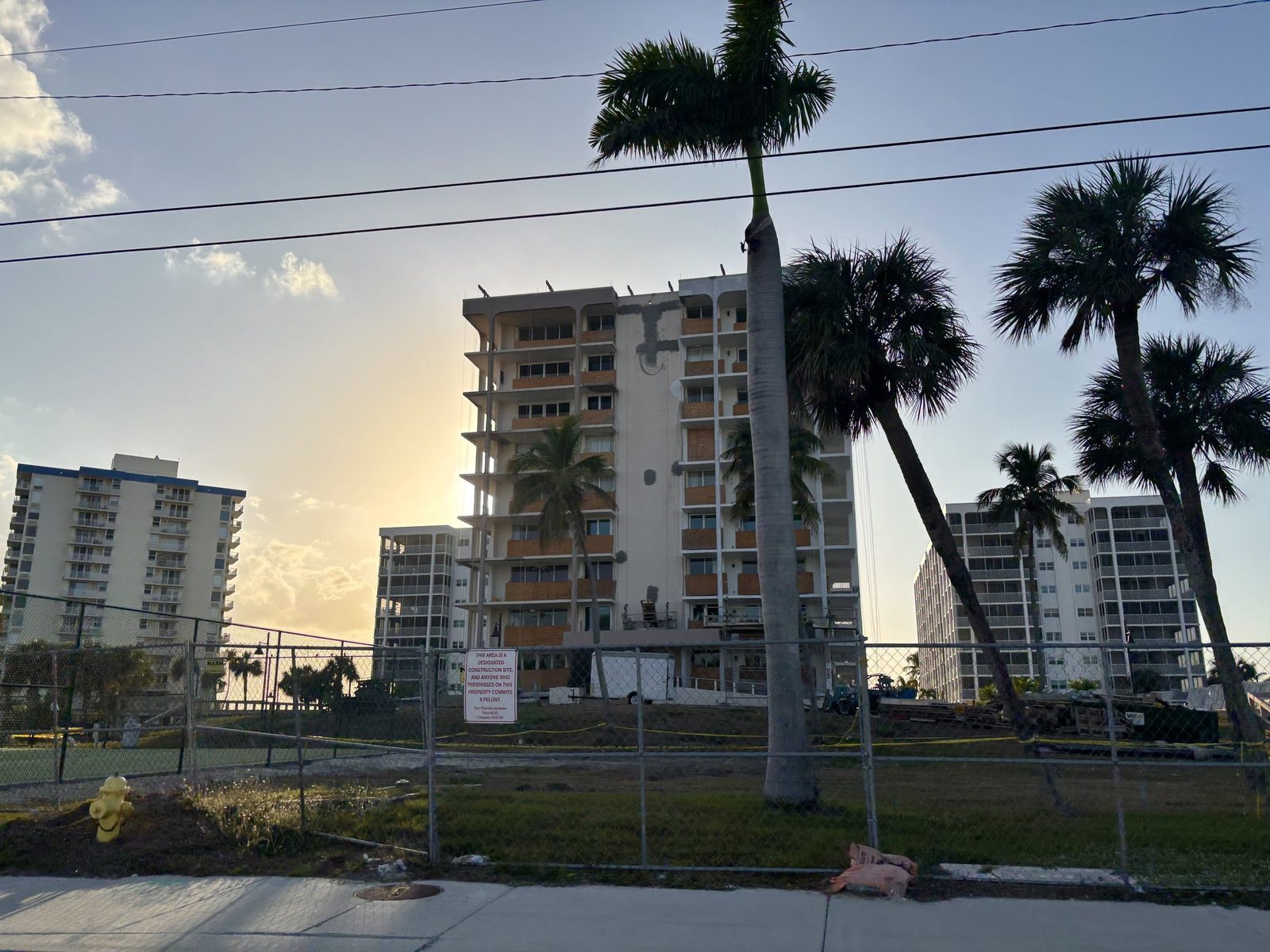
Florida condominium and homeowners associations face hurricane and wind losses, water damage and fire across roofs, exteriors and shared buildings, often with a master policy and a percentage-based deductible. Homeland represents boards and managers from the first inspection through resolution, in Miami-Dade, Broward, Palm Beach and across the state.
Condo and HOA Association Claims in New Jersey
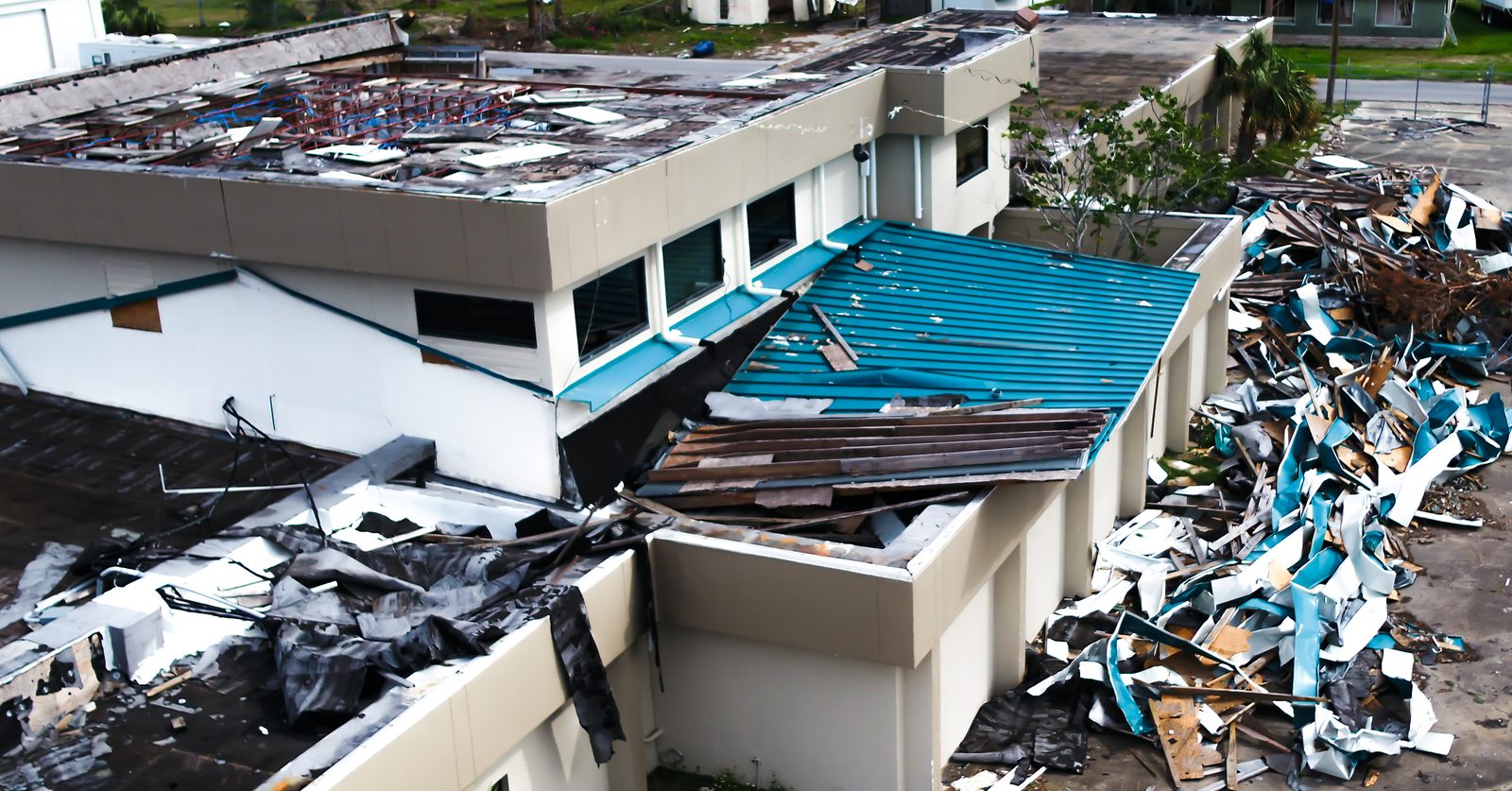
New Jersey condominium, townhome and community associations deal with nor’easters, coastal storms, flooding, fire and water damage to common property. Homeland represents boards and managers across New Jersey on the claim itself. The Adjuster Advantage Associations tools are available to Florida associations today.
Your insurance company has its own adjusters. Now your association can have yours.
Adjuster Advantage for Community Associations is made for condo, HOA, co-op and master association boards and for the managers who run them, including clubhouses, pools, gyms and other shared buildings. Know your coverage, keep your records, and have someone to call, before a storm and after one.
For Florida associations today, with more states to follow. Each owner can also join Adjuster Advantage for their own unit: their own Safety Vault™, Policy Scan™ for the unit policy, Prep Alerts and Lifeline Card™.
Joining Adjuster Advantage is free and does not create a contract or agreement with Homeland Public Adjusters for any claim. Public adjusting services require a separate written agreement.
Condo, HOA, and Association Claims
Condominium and homeowners associations are responsible for insuring common elements such as roofs, exterior walls, hallways, elevators, pools, clubhouses, and amenities. After a storm or other covered loss, the association board must manage the claim while keeping owners informed and protecting the community’s reserves.
Association claims require coordination between the master policy, unit owner policies, property managers, contractors, and the board. Homeland Public Adjusters helps associations determine which damage falls under the master policy, document losses across multiple buildings and units, and keep the claim moving through each stage of the process.
Who Handles the Claim: Association or Unit Owner?
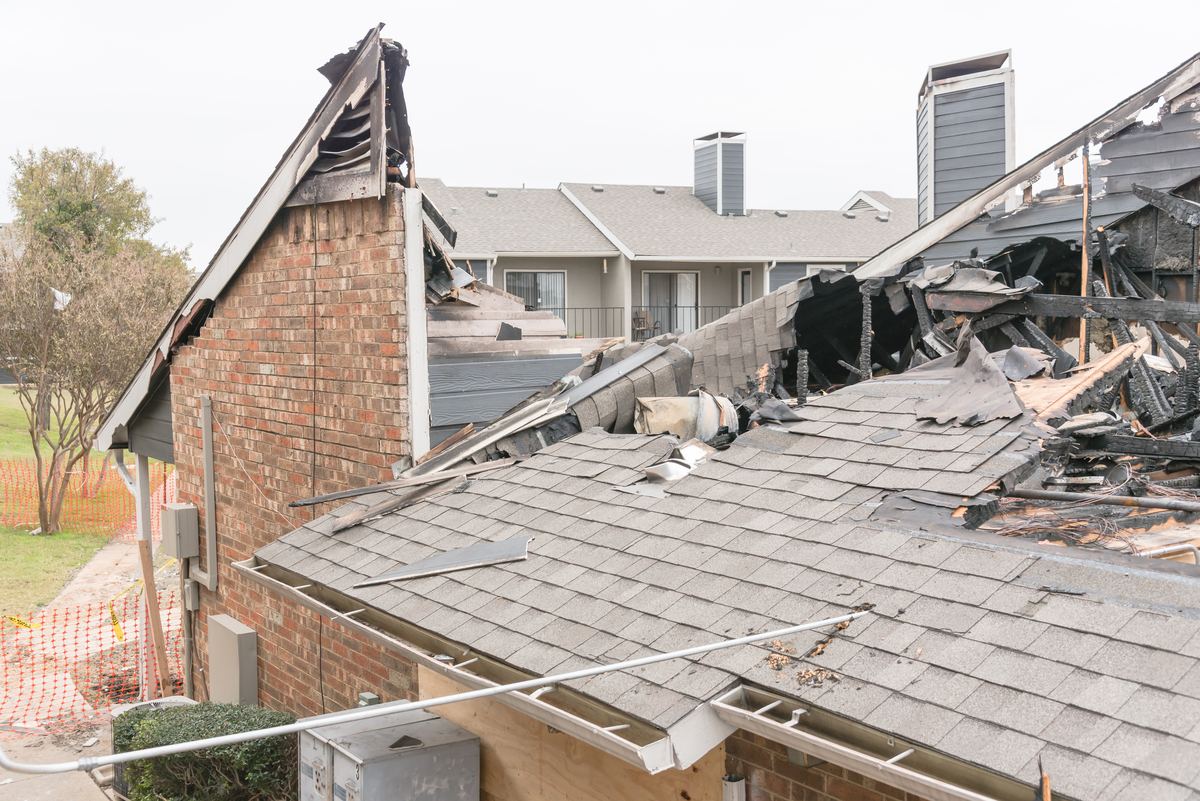
Condo water damage, a neighbor’s fire or a hurricane rarely damages only one layer of the building, so the first question on every association claim is who is responsible for what. In Florida the answer starts with the statute, not with the adjuster’s opinion. In New Jersey it starts with the declaration and the master deed, which usually follow the same line.
| Damaged item | Whose policy responds | Why |
|---|---|---|
| Roof, exterior walls, windows (as originally installed), stairwells, elevators, pool, clubhouse, common-area plumbing and electrical | Association master policy | Florida Statutes 718.111(11)(f) requires the association to insure all portions of the condominium property as originally installed, plus later alterations to the common elements. |
| Drywall, paint and wallpaper inside the unit | Association master policy (drywall); unit owner HO-6 (wall and ceiling coverings) | The statute excludes floor, wall and ceiling coverings from the master policy, but the drywall itself is part of the building. |
| Flooring, kitchen cabinets and countertops, appliances, water heater, electrical fixtures, window treatments | Unit owner HO-6 | Listed in 718.111(11)(f) as excluded from the master policy when they are inside the unit and serve only that unit. |
| Furniture, electronics, clothing and other personal property | Unit owner HO-6 (Coverage C) | Personal property inside the unit is excluded from the master policy. |
| The master policy deductible, and covered damage above the master policy limit | Association as a common expense, which can become a special assessment | Unit owners with loss assessment coverage on their HO-6 can claim their share; Florida requires at least $2,000 of that coverage on unit owner policies. |
| Leak from one unit into another | Depends on what was damaged and whether the cause is covered, not on whose unit the water came from | The building parts go to the master policy; the finishes and contents go to each owner's HO-6; negligence can bring a third policy into it. |
Terms in this table, defined: Hurricane Deductible, Coinsurance, Ordinance or Law Coverage, Appraisal Clause and Umpire. See the full claims glossary.
Two consequences follow. First, a unit owner should not report building damage directly to the master policy carrier as if it were their own claim. Call Homeland first: for the association, we give notice on the master policy, and for the owner, on the inside-the-unit portion under their HO-6. Second, when the master policy pays less than the repair costs, the gap is a common expense, and that is how a hurricane deductible becomes a special assessment. The fuller explanations are in our guides to the master policy versus the unit owner policy and to who is responsible for water damage in a condo.
Condo Unit Owners: Loss Assessments
HOA and Condo Master Insurance Policy: What It Covers and What It Must Exclude
In a Florida condominium, the association’s master policy must cover all portions of the condominium property as originally installed (or replacement of like kind and quality) and alterations made under the declaration, and it must exclude the unit owner’s items: floor, wall and ceiling coverings, electrical fixtures, appliances, water heaters, water filters, built-in cabinets and countertops, window treatments, and personal property inside the unit (Fla. Stat. §718.111(11)(f)).
| Who | Policy | What it pays |
|---|---|---|
| Condo association | Master policy (commercial residential) | Roof, structure, exterior walls, common elements, original-construction building elements |
| Unit owner | HO-6 | Finishes and fixtures the master policy excludes, contents, loss of use, and loss assessment |
| HOA | The HOA’s own policy | Common areas and amenities the HOA owns; each home is insured by its owner |
| Co-op or apartment building | Building policy (commercial residential) | The building; rental value or business income where carried |
Florida groups condominium, cooperative, apartment building and HOA common-element policies as commercial residential coverage, and that matters: those claims can use DFS mediation (Fla. Stat. §627.7015), which purely commercial claims cannot. More: master policy vs. unit owner policy.
Special Assessments and Loss Assessment Coverage: Protecting Owners
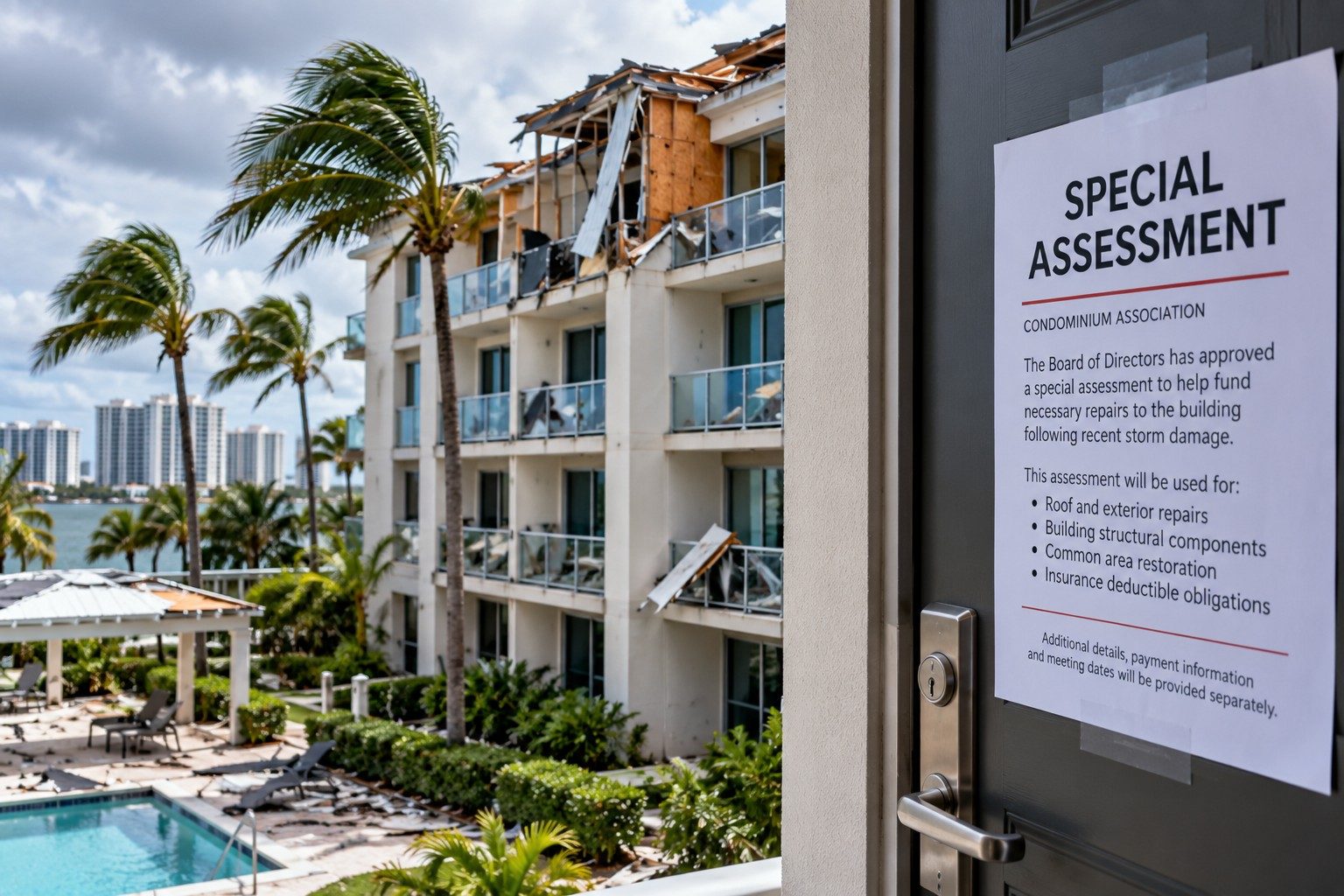
In Florida, all property insurance deductibles and damage above the association’s coverage are a common expense (Fla. Stat. §718.111(11)(j)), so a short master-policy payment becomes a special assessment to every owner. The better the association’s claim, the smaller the assessment.
- Loss assessment coverage: Florida unit owner policies must include at least $2,000 of loss assessment coverage with a deductible of no more than $250 (Fla. Stat. §627.714). Many owners carry more; the board should tell owners to check.
- Owner’s deadline: a loss assessment claim must be reported to the owner’s insurer by the later of 1 year after the date of loss or 90 days after the board votes to levy the assessment, and never later than 3 years after the loss (Fla. Stat. §627.70132(4)).
- Owners must report damage in time: the association does not have to pay as a common expense for losses an owner knew of but did not report until after the association’s claim was settled, resolved or denied as late (718.111(11)(j)4). A building-wide canvass early protects everyone.
More: loss assessment coverage · special assessments after an association claim.
What a Board Should Do After Association Property Damage
Acting quickly and keeping careful records can help protect an association claim from the start.
Hiring a Public Adjuster as a Condo Board: Bids, Votes and Records (718.3026)
Florida requires a condominium association to obtain competitive bids for a contract for services when payments under it exceed 5% of the association’s total annual budget, including reserves (Fla. Stat. §718.3026). The statute exempts contracts with employees and for attorney, accountant, architect, community association manager, timeshare management, engineering and landscape architect services; public adjusters are not on that list.
- Plan for bids: on a large claim, the board should expect to compare proposals, and the lowest bid does not have to be accepted.
- Emergencies: the statute does not limit an association’s ability to obtain needed services in an emergency; document why the situation was one.
- Small associations: associations with 10 or fewer units may opt out of the bid rule by a two-thirds vote of the unit owners.
- Records: vote at a noticed board meeting, keep the proposals and minutes, and ask the association’s attorney to review the contract.
Homeland presents to boards and managers in English or Spanish, in person or by video. See for boards & managers.
Fidelity and Crime Losses (Florida Associations)
Florida condominium associations must maintain insurance or fidelity bonding of everyone who controls or disburses association funds, sized to the maximum funds in the custody of the association or its management agent at any one time (Fla. Stat. §718.111(11)(h)). When money goes missing through theft, forged checks or a fraudulent wire, Homeland documents the loss alongside the association’s attorney and accountant.
How Homeland Helps Associations
Our team handles the claim from inspection through resolution so boards and managers can focus on the community. Homeland is a Business Partner member of the Community Associations Institute (CAI), Southeast Florida Chapter, and a member of the Florida Association of Public Insurance Adjusters (FAPIA).
Condo & HOA Claims by the Numbers
HOA Insurance Claim Lawyer or Public Adjuster? Who the Board Should Call First
An HOA or condo lawyer handles governance disputes, collections and litigation; the insurance claim itself — scope, estimates, building-by-building values, the deductible math — is a public adjuster’s job. Most association claims are won on that documentation, and Homeland builds it from day one.
- Underpaid master-policy claim, wear-and-tear denial, deductible allocation: call Homeland first.
- Coverage litigation, or a dispute between owners and the board: the association’s attorney, and we work alongside counsel.
- Hurricane Ian: 1,279 of 4,168 commercial residential (association and apartment) claims were closed without payment, as of March 4, 2025 (Florida OIR).
If it becomes a legal fight, we work alongside your attorney: the documentation, scope and estimate we build carry straight into the case. How Homeland supports law firms. For a side-by-side, see property damage lawyer or public adjuster: who to call.
Board Checklist After a Loss (Printable)
- Master policy, every endorsement, the declarations and the per-building schedule of values
- Declaration, bylaws and maintenance responsibility chart
- Hurricane or named-storm deductible: amount, per building or per occurrence
- Notice to owners to report unit damage now, with a deadline and a form
- Photos, drone footage and moisture readings of roofs, facades, garages and common areas
- Most recent replacement-cost appraisal, milestone inspection and SIRS
- Emergency vendor contracts and invoices (mitigation, tarps, shoring)
- Board minutes: emergency actions, the deductible decision, the public adjuster vote and bids
- Fidelity bond or crime policy, if funds are involved
- Every insurer letter and the date received
Free claim summary for your board’s agenda: call Homeland at (305) 783-3777 (Florida) or (732) 517-3777 (New Jersey).
Free Claim Summary for Your Board’s Agenda
A licensed Homeland public adjuster reviews the master policy and the loss and prepares a free one-page claim summary the board can put on its agenda, in English or Spanish.
Damage happening right now? Call (305) 783-3777 · New Jersey (732) 517-3777, 24/7.
Free guides for condo and HOA boards and managers
Sourced, plain-language guides on inspections, reserves, insurance renewals and storm claims in Florida and New Jersey.
Deadlines to Know
New Jersey. New Jersey regulations require insurers to begin an investigation within 10 working days of notice of a claim and set a 30-calendar-day period, running from receipt of a properly executed proof of loss, for first-party claims, with written explanations and updates every 45 days if more time is needed.
For Property Managers and CAMs
In most communities the manager, not the board, is the person who finds the damage and lives with the claim for the next year. Florida licenses community association managers under Part VIII of Chapter 468, and the statute defines the work: handling association funds, preparing budgets, noticing meetings, coordinating maintenance and the other routine services involved in running the association. Negotiating an insurance claim on the association’s behalf for compensation is public adjusting, which Florida licenses separately, so a manager who wants the claim handled well brings in a licensed public adjuster and keeps the board informed. New Jersey does not license community association managers at the state level, but the same line applies: the public adjuster license belongs to the person negotiating the claim.
Managers who want their boards to understand the process before the next storm can book a free Board & Manager Education Session, on site or by video, with a handout the directors keep.
In the News: A Real Condo & HOA Associations Claim
What Property Owners Are Asking in the Forum
Threads answered by a licensed public adjuster. Reply with your own experience, or post a question of your own.
Am I covered for this?
Nelson Avila, PA: It depends on your policy's wording: what perils it covers, what it excludes, your deductibles and any sublimits or endorsements.
Reply ›Insurers & PoliciesHow do I file a claim, and can my premium go up?
Nelson Avila, PA: Start by calling a licensed public adjuster before you file, so the claim is documented, valued and presented right from day one.
Reply ›Claims & SettlementsDo I need a public adjuster or a lawyer?
Nelson Avila, PA: It depends on where your claim is. A licensed public adjuster works for you to document, value and negotiate the claim with your insurer.
Reply ›Condo & HOA Association FAQs
Who files the claim for a condo or HOA, the association or the unit owners?
What is the difference between the master policy and a unit owner’s policy?
How do hurricane deductibles work for an association?
What is Adjuster Advantage for Associations, and what does it cost?
Can a manager see all of their associations in one place?
Can you handle a loss that affects several buildings?
When does a condo association need a public adjuster?
Does Homeland work with the property manager and the board?
What does the association’s master policy cover in Florida?
Should a unit owner report damage directly to the master policy carrier?
Can a property manager negotiate the association’s insurance claim?
Insights
 By Nelson Avila
Association Claims We Handle Across Florida & New Jersey
Homeland handles association claims throughout Florida and New Jersey. Wherever your community is in either state, call us 24/7.
What does the association’s master policy cover in Florida?
Should a unit owner report damage directly to the master policy carrier?
Can a property manager negotiate the association’s insurance claim?
Does a condo board need bids to hire a public adjuster in Florida?
If payments under the contract would exceed 5% of the association’s total annual budget, including reserves, Florida’s competitive bid statute (718.3026) applies, and public adjusters are not on its exempt list. There is an emergency exception, and associations of 10 or fewer units can opt out by a two-thirds owner vote.
Who pays the hurricane deductible in a Florida condo?
Under 718.111(11)(j), deductibles and damage above the association’s coverage are a common expense, so they are usually shared by all owners through the budget or a special assessment, unless the association opted out by a majority vote of the voting interests.
How long does a unit owner have to file a loss assessment claim?
In Florida, by the later of 1 year after the date of loss or 90 days after the board votes to levy the assessment, and never later than 3 years after the loss (Fla. Stat. 627.70132(4)).
Can an association use DFS mediation?
Yes. Florida’s DFS mediation program covers commercial residential policies, which include condominium association policies, for disputes of at least $500 (Fla. Stat. 627.7015).
An owner reported damage months after the storm. Does the association still pay?
Not necessarily as a common expense: if the owner knew or should have known of the damage and did not report it until after the association’s claim was settled, resolved or denied as late, 718.111(11)(j)4 releases the association. That is why the board should canvass owners early.
Do you handle condo and HOA claims in Spanish?
Yes. Homeland works every association claim in English and Spanish, from the board presentation to the estimate review.
Talk to a Public Adjuster
How Can We Help You Recover, or Prepare?
Tell us about your loss. We’ll call you back.
Other Property Damage Claims We Handle
Association claims usually begin with a specific type of property damage. Homeland Public Adjusters assists boards and managers with each of these covered losses.
Claims We Handle for You
Claim types these clients typically have, and how Homeland handles each:
Verify Homeland
Check us before you hire anyone. Every license below links to its public record on the Florida Department of Financial Services licensee search.
- Serves all of Florida: Yes — every city and county. A licensed Homeland public adjuster comes to your property — no need to visit an office. Call (305) 783-3777, 24/7.
- Homeland Public Adjusters Corporation: Florida public adjusting firm license W818638 · New Jersey public adjuster firm license 3003982360
- Yeni Martinez, President: Florida public adjuster license P103370 (licensed since 2007) · New Jersey 3003714097 · designated primary adjuster
- Alberto Enriquez: Senior licensed public adjuster, Florida P112658
- Yisel Dieguez: Licensed public adjuster and Xactimate estimator, Florida W873884 · New Jersey 3003714335
- Nelson Avila: Florida public adjuster license G332385 · Florida Certified Contractor CRC1331322 · property insurance appraiser and umpire
- Complaints and reputation: 5.0★ on Google · BBB Accredited Business, A+ rating
- Since 2006: Homeland Public Adjusters, Corp. was incorporated in Florida on December 11, 2006. Our President, Yeni Martinez, has held Florida public adjuster license P103370 since 2007. When Florida began requiring adjusting firms to hold their own firm license (a 2021 law, Senate Bill 1598; DFS began licensing adjusting firms in November 2021), Homeland was issued firm license W818638 on January 11, 2022. On November 10, 2026, Homeland became a BBB Accredited Business (BBB Serving Southeast Florida & the Caribbean), with an A+ rating. Each adjuster’s appointment with Homeland appears on that adjuster’s own DFS record.
- English and Spanish. Office: 8004 NW 154th Street, Suite 609, Miami Lakes, FL 33016 (visits by appointment). Florida (305) 783-3777 · New Jersey (732) 517-3777, 24/7.