New Jersey’s Condo Structural Inspection and Reserve Study Law: What Boards and Managers Must Do
Licensed public adjusters serving Florida & New Jersey
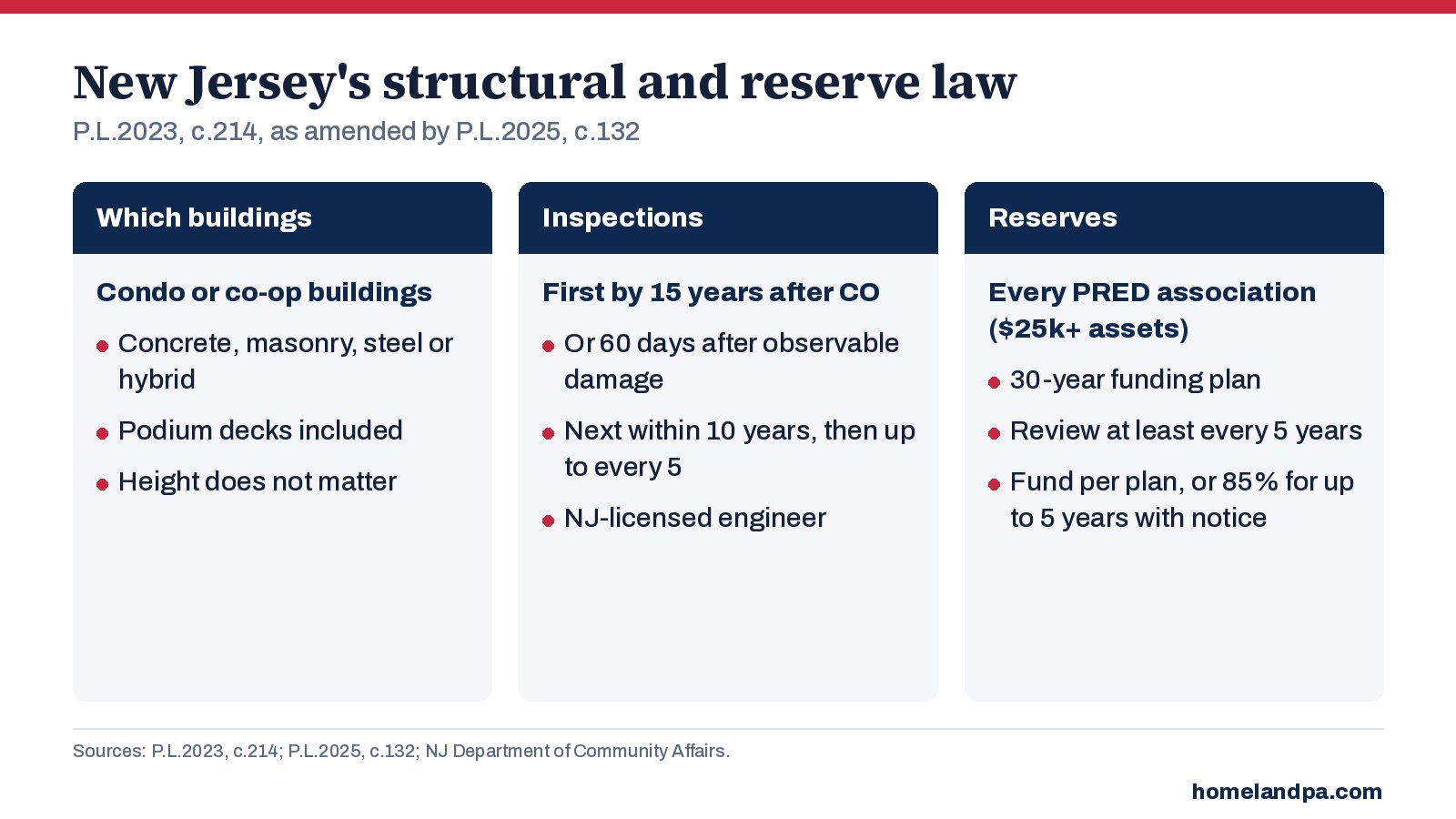
Short answer: New Jersey’s post-Surfside law, P.L.2023, c.214 (S2760, approved January 8, 2024), requires periodic structural inspections of covered condominium and co-op buildings by a New Jersey-licensed engineer, and a reserve study with a 30-year funding plan for every planned real estate development association at least every five years. A 2025 amendment, P.L.2025, c.132, changed how reserves must be funded.
Which buildings need structural inspections
- Residential condo or co-op buildings whose primary load-bearing system is concrete, masonry, steel or hybrid, including heavy timber, and buildings with podium decks.
- Excluded: frame construction with combustible walls or roofs (unless there is a podium deck), single-family homes, and buildings that are mostly rentals and not condo or co-op.
- Height does not matter under the current law.
When inspections are due
- First inspection: the earlier of 15 years after the certificate of occupancy or 60 days after observable damage to the primary load-bearing system.
- Buildings that were already 15 or more years old on January 8, 2024 had two years to complete the first inspection.
- After the first report: the next inspection no later than 10 years (or 60 days after observable damage); after that, at the interval the inspector sets, never more than 5 years.
- Reports follow the ASCE protocol or a similar national standard, list required maintenance and repairs specifically, go to the municipality, and are available to residents on request. Repairs need plans by a licensed architect or engineer filed with the municipality.
Reserve studies and funding
- Every planned real estate development association (condos, co-ops and HOAs) with $25,000 or more in common capital assets needs a reserve study under CAI National Reserve Study Standards or similar, by a credentialed reserve specialist or a licensed engineer or architect, with a 30-year funding plan, reviewed at least every five years.
- Existing associations without a recent study had one year from January 8, 2024; new associations must complete one within two years of the board election.
- Since August 21, 2025 (P.L.2025, c.132), existing associations must fund reserves under a plan in their most recent study, or at 85% of one for up to five fiscal years with a prominent notice to every owner, and to buyers, of expected special assessments or loans.
- The board may levy an assessment or borrow for corrective maintenance without owner consent after a written report from a licensed engineer or architect.
What this means for insurance
The master policy must cover the common elements and structural portions against fire and normal extended-coverage perils (N.J.S.A. 46:8B-14). The inspection report and reserve study are the building’s documented condition: after a winter storm, a water loss or a fire, they are what the insurer reads first. Keep them current, close out every repair item, and keep them with the insurance file. The free Adjuster Advantage for Associations app tracks inspection dates and repairs.
Frequently asked questions
Which New Jersey law requires condo structural inspections?
How often must a covered New Jersey building be inspected?
Do New Jersey HOAs need a reserve study?
What changed in 2025?
Sources: P.L.2023, c.214; P.L.2025, c.132; NJ DCA, structural integrity and capital reserve FAQ; NJ DCA summary; N.J.S.A. 46:8B-14.
This guide is general information for association boards and managers, current as of October 2026. It is not legal advice. Your governing documents, your policies and your association’s attorney control.
- Surprising Things Your Policy Covers
- Neighbor's Condo Fire: Who Pays?
- Damaged Tile or Laminate: A Claim?
- Barn, Stable & Outbuilding Coverage
- Wind and Tornado Risk on the Farm
- Crop Insurance vs. Property Insurance
 Yeni Martinez
 Alberto Enriquez
 Yisel Dieguez
Homeland Public Adjusters represents policyholders, not insurers. Get a free review of your claim.
Get a Free Claim Review