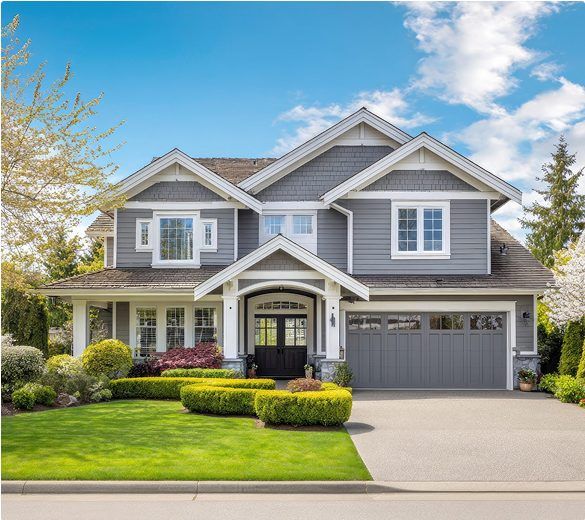
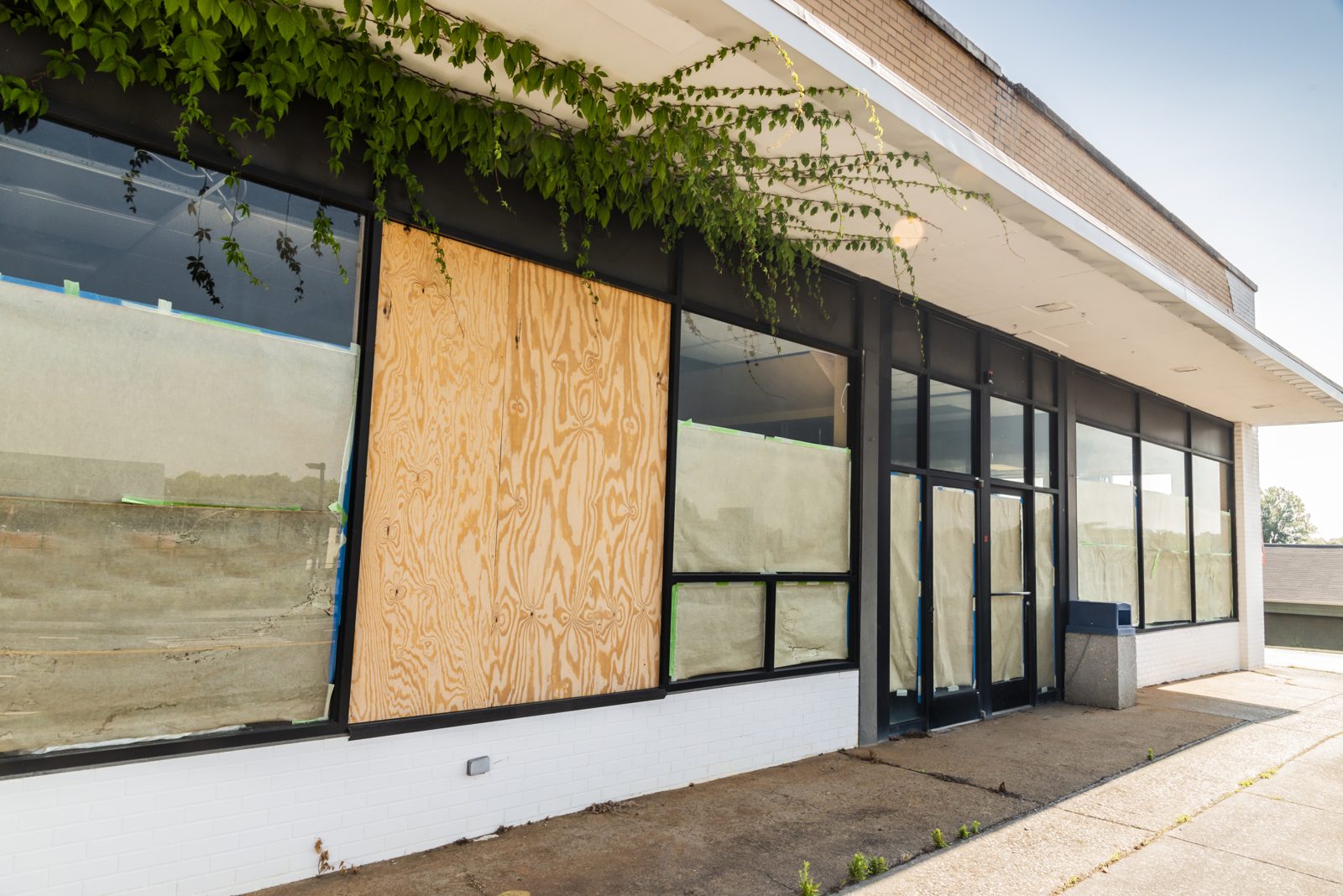
Retail storefront windows boarded with plywood after storm damage
CLIENTS SERVED

Retail & Strip Center Insurance Claims

A roof that leaks over four tenants, a car through the storefront, a fire in the unit next door. In a shopping center the question is always whose policy, and the answer is usually both.

Store or strip center damage anywhere in Florida? A licensed Homeland public adjuster comes to you within hours — no need to visit an office. New Jersey: we come to you statewide.

Homeland Public Adjusters represents retail store owners, shopping center and strip center owners, and the tenants in them, in Florida and New Jersey, with roof, storefront, water, fire, vehicle impact and storm claims, and with the lost sales and rent that follow. We document the shell, the build-out, the inventory and the income, and we handle the claim with every carrier involved. No Recovery, No Fee.

Last reviewed: October 2026

How Can We Help You Recover, or Prepare?

FLORIDA

Retail & Strip Centers Claims in Florida

Florida’s strip centers take hurricane wind on roofs that cover a dozen tenants, water into stores from one roof drain, and vehicle strikes at a rate well above the national average: Florida has about 10% of U.S. drivers and roughly 17% of its storefront crashes. Homeland represents Florida landlords and retail tenants with these claims.
NEW JERSEY
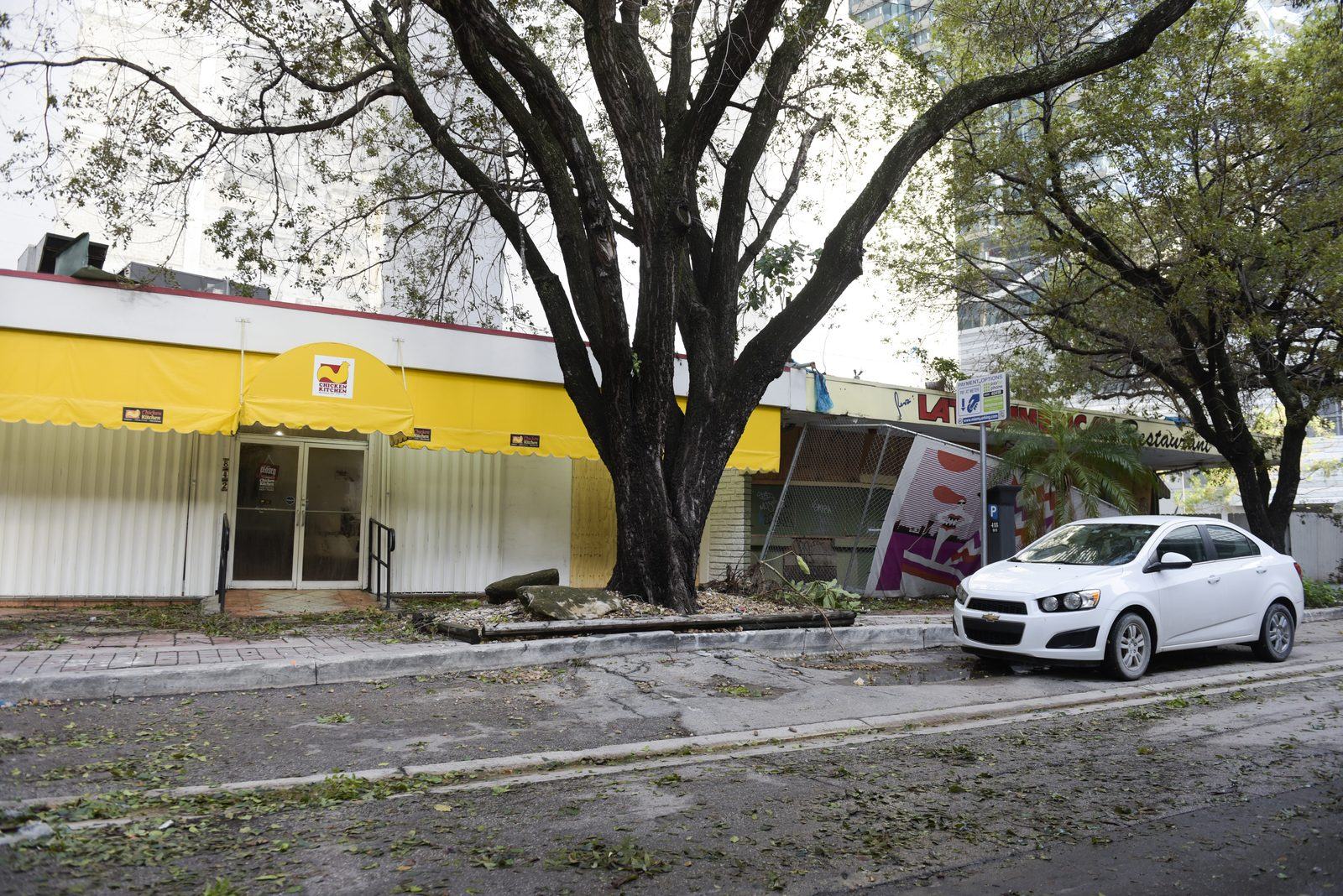
Yellow commercial building with storm debris and a fallen tree in the parking lot
Strip-center claims involve the landlord's building policy and each tenant's policy; the lease decides who claims what.

Retail & Strip Centers Claims in New Jersey

New Jersey’s highway retail and downtown storefronts face snow load, frozen sprinkler lines, nor’easter roof failures and fire in older multi-tenant buildings. Homeland handles New Jersey retail and shopping center claims, including the split between the landlord’s policy and the tenant’s.

The Losses We See

Retail claims come in two layers, the landlord’s shell and the tenant’s store, and the losses cross both:

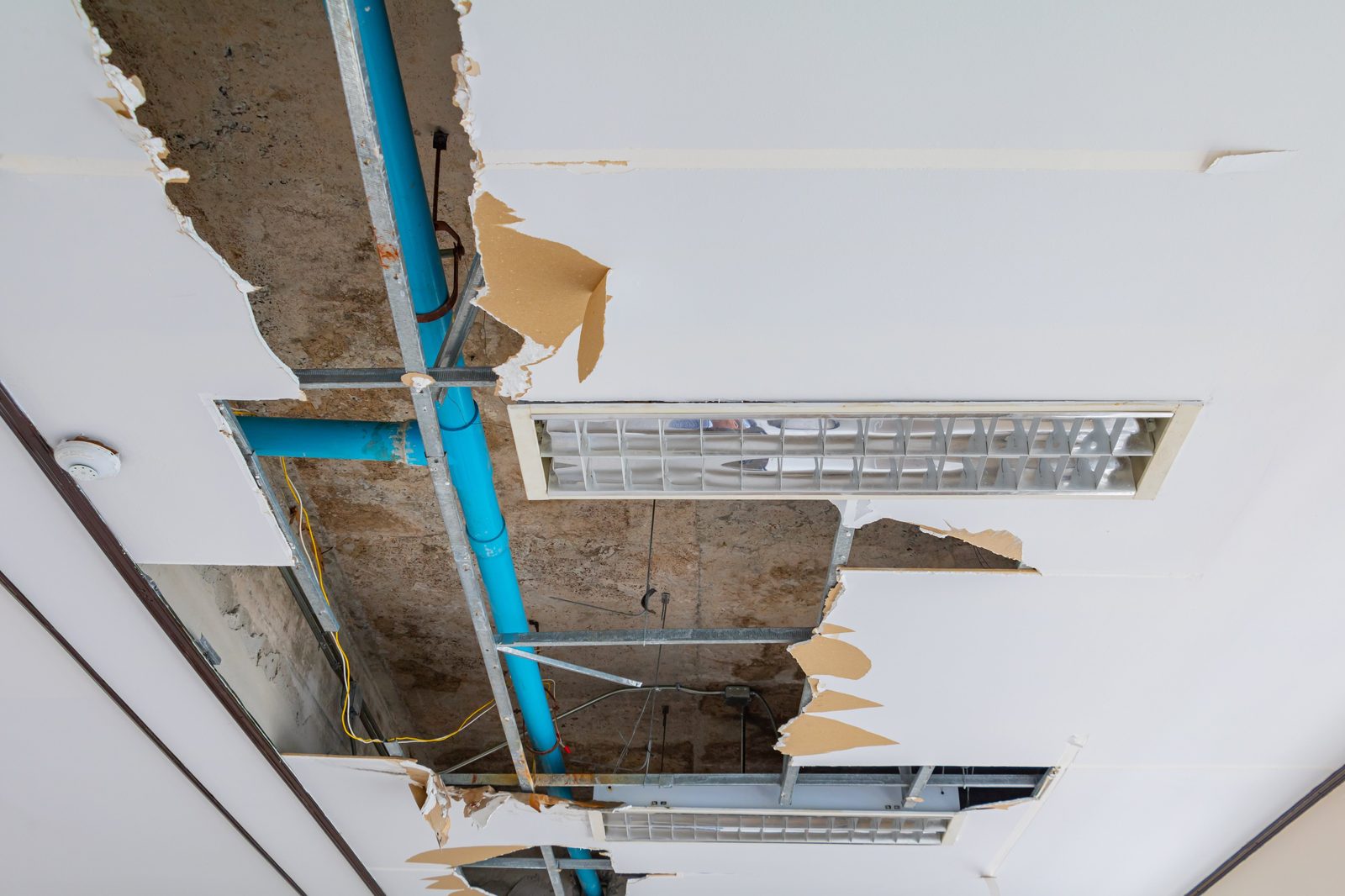
Roof leaks over multiple tenants: one storm, one roof, several claims; the landlord’s roof and each tenant’s inventory, finishes and lost sales
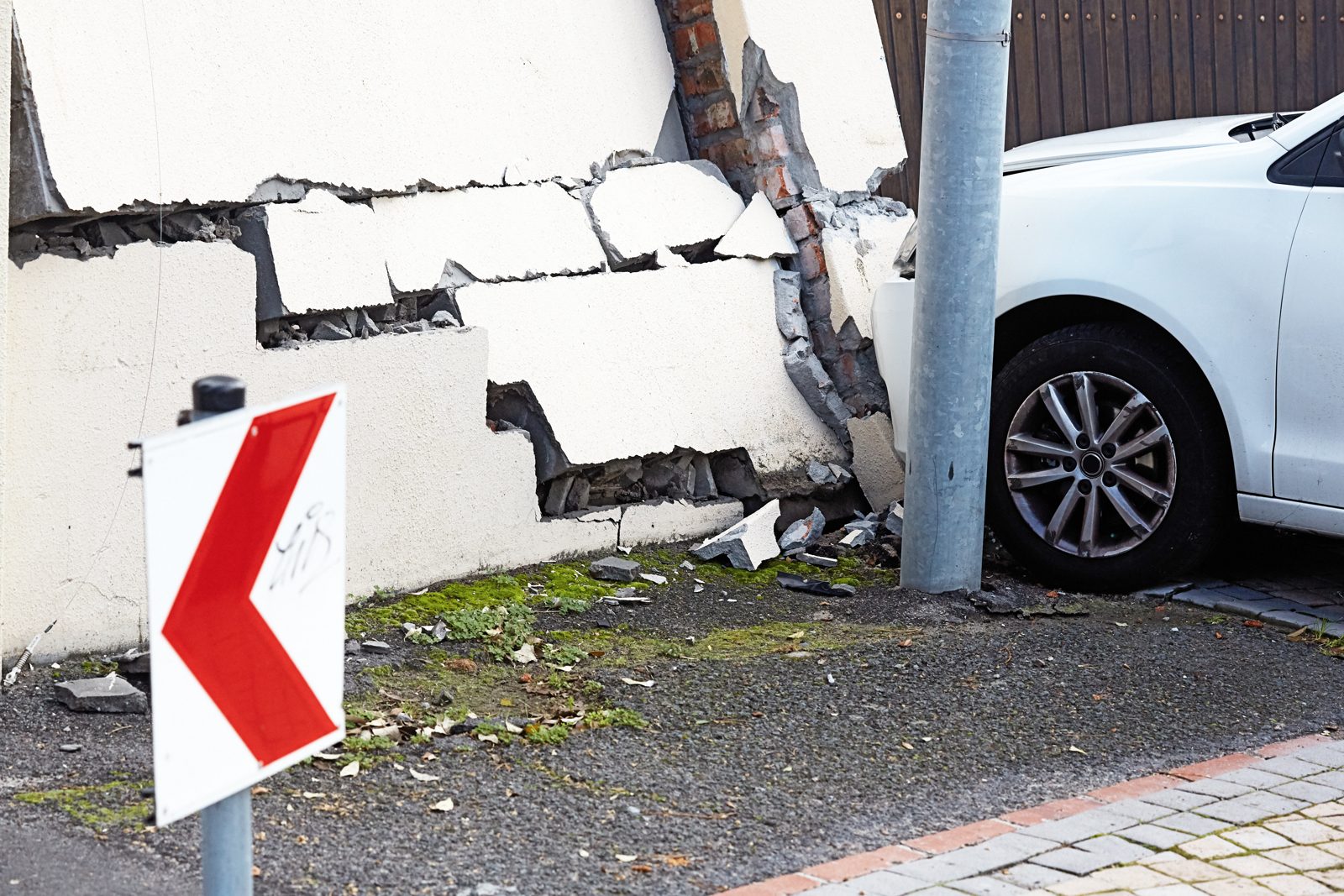
Vehicle strikes: retail stores are 24% of all vehicle-into-building crashes nationally and convenience stores another 6% (Storefront Safety Council); glass, framing, the merchandise behind it and the days closed
Fire and smoke: stores and mercantile properties average about 13,570 fires a year with $604 million in damage (NFPA); a fire in one unit smokes out the neighbors and shuts the center
Water from a neighboring unit: a restaurant’s grease trap, a salon’s plumbing, a frozen line in a vacant bay
Hurricane and wind: roof membrane, parapets, signage, storefront glass and the canopy; and the center closed while the power is out
Theft and vandalism: smash-and-grab, break-ins through the roof or the vacant unit next door, inventory and fixtures
Lost sales and lost rent: the tenant’s business income and the landlord’s rental income, each under its own policy
Tenant build-out at tenant expense: fixtures, flooring, lighting, HVAC the lease made the tenant’s problem
Retail & Strip Centers: by the numbers
24%Share of U.S. vehicle-into-building crashes that hit a retail store; convenience stores another 6% (Storefront Safety Council)
17%Share of U.S. storefront crashes that happen in Florida (SSC via WPTV)
13,570Fires per year in U.S. stores and mercantile properties, $604 million in damage (NFPA)
36%Share of nonresidential fire dollar losses in stores and offices (USFA, 2017–19)

The Coverages That Decide the Claim

Every commercial policy is a package of separate coverages with separate limits and separate arguments. These are the ones that decide this industry’s claims:

CoverageWhy it matters hereWhat to check
Business income (tenant) and rental income (landlord)The store loses sales; the center loses rent while units are unusableWhich policy carries which, the waiting period, and co-tenancy clauses that let anchors stop paying when the center is partly closed
Tenant improvements and bettermentsThe store the tenant built inside the landlord’s shellThe lease’s insurance clause against each policy’s schedule; the gap is usually the tenant’s
Stock and inventoryValued at cost, selling price or replacement depending on the formThe valuation clause and the seasonal peak endorsement
Ordinance or lawA storefront or roof rebuild triggers current codeCoverage C limit on an older center
Percentage wind deductiblePer building, as a percentage of its valueOn a strip center valued in the millions, the deductible can exceed the roof repair
Vandalism and vacancyCenters with empty bays risk the 60-day vacancy exclusionThe vacancy percentage the policy uses for commercial buildings (often 31% occupied) and the vacancy permit endorsement

What to Do After the Loss

1
Make it safe and stop the loss: shut the water, cut the power to the affected area, call the fire department for any smoke or gas. Keep people out of a space with a sagging ceiling.
2
Photograph and video before cleanup, every area, every piece of equipment, the stock, the ceiling above and the floor below, with a wide shot and close-ups.
3
Protect what is left and keep the receipts: board-up, tarps, extraction, a generator for the walk-in. Emergency work is reimbursed; permanent repairs wait for the inspection.
4
Tenants: pull the lease’s insurance and repair clauses the first day; they decide whether the landlord or you rebuilds the storefront and who claims what.
5
Landlords: notify every affected tenant in writing and keep the list; their claims run alongside yours and their adjusters will ask what you did.
6
Count the inventory before cleanup, with photographs by aisle or rack and the last stock report.
7
Let Homeland notify the carrier: call us first. Hire us and we file the notice in writing with the facts, the photos and the coverage request.
8
Start the income record the same day: daily sales before and after, the reservations or orders you turned away, the payroll you kept, the extra costs to keep going.

How Homeland Helps

Policy read first: business income, extra expense, ordinance or law, coinsurance, equipment breakdown, spoilage, tenant improvements and the percentage wind deductible, before the carrier’s adjuster frames the claim.
Building, equipment and inventory documented separately, each under the coverage and valuation that applies to it.
Business income built from your records: sales, P&L, payroll and the period of restoration proved, not estimated.
Landlord and tenant policies coordinated so the shell, the build-out and the contents are each claimed once, under the right policy.
Code and ordinance costs identified before demolition, when they can still be claimed.
Appraisal when the number is still short, handled by a licensed public adjuster who is also a certified property appraiser and umpire.
No Recovery, No Fee.

Deadlines to Know

Florida. Notice of an initial or reopened property claim is due within 1 year after the date of loss and a supplemental claim within 18 months (Fla. Stat. §627.70132), which applies to property insurance of every kind, commercial included. The 7-day acknowledgment and 60-day decision rules of §627.70131 apply to residential policies and to certain smaller commercial properties, so for a larger building the policy’s own proof-of-loss and suit clauses control.
Sources: Fla. Stat. §§627.70132, 624.604, 627.70131.

New Jersey. Insurers must begin investigating within 10 working days of notice and pay a first-party property claim within 30 calendar days after a properly executed proof of loss, with written delay notices every 45 days after that (N.J.A.C. 11:2-17.7).

In the News: A Real Retail & Strip Centers Claim

In the News. The Storefront Safety Council’s database of more than 29,000 vehicle-into-building crashes shows retail stores as the most frequent target at 24%, restaurants next at 19%, and convenience stores at 6%, with more than 100 crashes a day nationally. Florida, with about a tenth of the country’s drivers, accounts for roughly 17% of them, and nearly one in four Florida crashes happens in Broward or Miami-Dade. For a store owner, the crash is a property claim under the store’s policy, a claim against the driver’s auto liability carrier, and a business income claim for every day the doors are boarded, and all three need the same documentation from the first hour.

Retail & Strip Centers Claim FAQs

The roof leaked into my store. Is it my claim or my landlord’s?
Both. The landlord claims the roof and the shell under the building policy; you claim your inventory, fixtures, build-out and lost sales under yours. If the landlord’s negligence caused it, your carrier pursues them afterward. Call Homeland right away: we present your own claim rather than waiting for the landlord’s adjuster to pay your inventory.
A car hit my storefront. Who pays?
Your property policy pays first for the building and the stock; the driver’s auto liability carrier owes the deductible and whatever your policy does not cover, and business income runs under your policy. See our Vehicle Impact page for the three situations.
The fire was in the unit next door. We only have smoke.
Smoke and soot damage is covered under your own policy, and the cleaning, the inventory you cannot sell and the days closed are the claim. The neighbor’s carrier may owe afterward; yours pays now.
Our center has three empty bays. The carrier is raising vacancy.
Commercial vacancy clauses usually measure the percentage of the building occupied, not whether one unit is empty, and a vacancy permit endorsement keeps coverage on a center with empty bays. We check the clause and the occupancy before the carrier applies the exclusion.
Our anchor tenant stopped paying rent after the storm closed the center.
Rental income coverage pays the lost rent during the period of restoration when the policy carries it; a co-tenancy clause that lets other tenants reduce rent is a separate loss worth documenting in the same claim.
Do you represent the landlord and the tenants in the same loss?
We represent one side of a dispute at a time; in a shared loss where the interests align, we can document the whole center once and coordinate the separate claims so each carrier sees the same facts.
More Questions? See Our Full FAQ →

Insights

View All Posts

Retail & Shopping Center Claims We Handle Across Florida & New Jersey

Homeland handles these claims throughout Florida and New Jersey. Wherever the property is in either state, call us 24/7.

Related Coverage
Damage happening now? In Florida
Call (305) 783-3777, 24/7
In New Jersey
Call (732) 517-3777, 24/7

Talk to a Public Adjuster

How Can We Help You Recover, or Prepare?

Tell us about your loss. We’ll call you back.
Claims We Handle

Hurricane & Wind Damage→Flood Damage→Fire Damage→Water Damage→Winter Storm & Roof Damage→Theft & Vandalism Damage→Vehicle Impact Damage→Business & Commercial→Other Claims→Denied & Underpaid→
FREE APP

Get the Adjuster Advantage™ App

Get the App
Board or manager? AA Associations →

Other Property Damage Claims We Handle

A commercial loss usually begins with one of these perils. Homeland handles each of them for business owners in Florida and New Jersey.

How Can We Help You Recover, or Prepare?

Let Us Handle Your Retail & Strip Centers Claim

A commercial claim is a property claim and an income claim at once, and the first estimate covers neither. Call Homeland for a free review before you sign anything.

Or call 24/7: (305) 783-3777 Florida · (732) 517-3777 New Jersey. Hablamos español.

We Serve
Vacation & Short-Term Rental Owners
We Handle
Business & Commercial Claims
We Handle
Vehicle Impact Damage
We Serve
Marinas, Boatyards & Dealers
We Serve
Auto Shop & Dealership Owners
We Handle
Smoke Damage
We Serve
Marina & Boat Owners
We Serve
Government & Municipal Property Owners
We Serve
Business Income & Extra Expense
We Handle
Power Surge Damage
We Serve
Daycare & Child Care Owners
We Serve
Medical & Dental Office Owners
We Serve
Cargo & Fleet
We Handle
Winter Storm & Roof Damage
We Handle
Fire Damage
We Serve
Contractor's Equipment
We Handle
Tornado Damage
We Handle
Lightning, Falling Tree & Other Sudden Damage
We Handle
Commercial & Specialty Claims
We Serve
Third Party Uninsured Property Owners
We Serve
Boats & Yachts
We Serve
Spoilage & Power Outage
We Handle
Sewer & Drain Backup Damage
We Serve
Law Firms
We Handle
Mold Damage
We Handle
Denied & Underpaid Claims
We Serve
Builders Risk
We Serve
Warehouse & Industrial Owners
We Serve
Landlords & Rental Properties
We Serve
Multifamily & Apartment Owners
We Handle
Theft & Vandalism Damage
We Serve
Agricultural Property Owners
We Serve
Condo & HOA Associations
We Handle
Vehicle Impact Damage
We Handle
Hurricane & Wind Damage
We Handle
Appliance Leak Damage
We Serve
Mobile & Manufactured Homeowners
We Serve
Hotel & Motel Owners
We Serve
Cyber & Systems Losses (FL)
We Serve
Renters
We Handle
Sinkhole Damage
We Handle
Hail Damage
We Handle
Falling Tree & Debris Damage
We Serve
Church, School & Nonprofit Owners
We Serve
Homeowners
We Handle
Flood Damage
We Handle
Lightning Strike Damage
We Handle
Water Damage
We Serve
Large Loss Claims
We Handle
Business Interruption Claims
We Handle
Vandalism & Riot Damage
We Serve
Restaurant Owners
We Handle
Wildfire & Brushfire Damage
We Serve
Vacation & Short-Term Rental Owners
We Handle
Business & Commercial Claims
We Handle
Vehicle Impact Damage
We Serve
Marinas, Boatyards & Dealers
We Serve
Auto Shop & Dealership Owners
We Handle
Smoke Damage
We Serve
Marina & Boat Owners
We Serve
Government & Municipal Property Owners
We Serve
Business Income & Extra Expense
We Handle
Power Surge Damage
We Serve
Daycare & Child Care Owners
We Serve
Medical & Dental Office Owners
We Serve
Cargo & Fleet
We Handle
Winter Storm & Roof Damage
We Handle
Fire Damage
We Serve
Contractor's Equipment
We Handle
Tornado Damage
We Handle
Lightning, Falling Tree & Other Sudden Damage
We Handle
Commercial & Specialty Claims
We Serve
Third Party Uninsured Property Owners
We Serve
Boats & Yachts
We Serve
Spoilage & Power Outage
We Handle
Sewer & Drain Backup Damage
We Serve
Law Firms
We Handle
Mold Damage
We Handle
Denied & Underpaid Claims
We Serve
Builders Risk
We Serve
Warehouse & Industrial Owners
We Serve
Landlords & Rental Properties
We Serve
Multifamily & Apartment Owners
We Handle
Theft & Vandalism Damage
We Serve
Agricultural Property Owners
We Serve
Condo & HOA Associations
We Handle
Vehicle Impact Damage
We Handle
Hurricane & Wind Damage
We Handle
Appliance Leak Damage
We Serve
Mobile & Manufactured Homeowners
We Serve
Hotel & Motel Owners
We Serve
Cyber & Systems Losses (FL)
We Serve
Renters
We Handle
Sinkhole Damage
We Handle
Hail Damage
We Handle
Falling Tree & Debris Damage
We Serve
Church, School & Nonprofit Owners
We Serve
Homeowners
We Handle
Flood Damage
We Handle
Lightning Strike Damage
We Handle
Water Damage
We Serve
Large Loss Claims
We Handle
Business Interruption Claims
We Handle
Vandalism & Riot Damage
We Serve
Restaurant Owners
We Handle
Wildfire & Brushfire Damage

Claims We Handle for You

Claim types these clients typically have, and how Homeland handles each:

All claim types › · All clients ›

Verify Homeland

Check us before you hire anyone. Every license below links to its public record on the Florida Department of Financial Services licensee search.

  • Serves all of Florida: Yes — every city and county. A licensed Homeland public adjuster comes to your property within hours — no need to visit an office. Call (305) 783-3777, 24/7.
  • Homeland Public Adjusters Corporation: Florida public adjusting firm license W818638 · New Jersey public adjuster firm license 3003982360
  • Yeni Martinez, President: Florida public adjuster license P103370 (licensed since 2007) · New Jersey 3003714097 · designated primary adjuster
  • Alberto Enriquez: Senior licensed public adjuster, Florida P112658
  • Yisel Dieguez: Licensed public adjuster and Xactimate estimator, Florida W873884 · New Jersey 3003714335
  • Nelson Avila: Florida public adjuster license G332385 · Florida Certified Contractor CRC1331322 · property insurance appraiser and umpire
  • Complaints and reputation: 5.0★ on Google · BBB Accredited Business, A+ rating
  • Since 2006: Homeland Public Adjusters, Corp. was incorporated in Florida on December 11, 2006. Our President, Yeni Martinez, has held Florida public adjuster license P103370 since 2007. When Florida began requiring adjusting firms to hold their own firm license (a 2021 law, Senate Bill 1598; DFS began licensing adjusting firms in November 2021), Homeland was issued firm license W818638 on January 11, 2022. On November 10, 2026, Homeland became a BBB Accredited Business (BBB Serving Southeast Florida & the Caribbean), with an A+ rating. Each adjuster’s appointment with Homeland appears on that adjuster’s own DFS record.
  • English and Spanish. Office: 8004 NW 154th Street, Suite 609, Miami Lakes, FL 33016 (visits by appointment). Florida (305) 783-3777 · New Jersey (732) 517-3777, 24/7.
Start My Claim