More than 800,000 Florida households live in a manufactured home. Their claims are paid by different carriers, on different forms, under different rules, and they are underpaid more often than any other kind of home.
Homeland Public Adjusters represents owners of mobile and manufactured homes in Florida and New Jersey with hurricane, wind, fire, water, lightning and other property claims. Manufactured home policies are written by specialty carriers and by Citizens, often on an actual cash value basis, with tie-down, carport and add-on rules that trip up owners after a storm. We read the policy, document the home and everything attached to it, and handle the claim with the carrier for you. No Recovery, No Fee.
Florida has about 824,000 mobile homes, 7.8% of all housing units, and in Highlands County more than one home in five is a manufactured home. The Florida Manufactured Housing Association has said almost two-thirds of the state’s mobile homes were built before 1994, which is the line Florida law uses for Citizens’ actual-cash-value rule. Homeland represents manufactured home owners in parks and on private lots across the state.
Manufactured homes are insured on their own forms, and the carport, skirting and tie-downs are where the scope is usually short.
Mobile & Manufactured Home Claims in New Jersey
New Jersey has about 35,000 manufactured homes, many of them in land-lease communities in the southern and shore counties. Nor’easter wind, frozen pipes under an unskirted home, and fires in older units are the claims we see. Homeland handles New Jersey manufactured home claims and the park and tie-down questions that come with them.
A manufactured home is insured on a mobile home policy, not a standard homeowners form, and the differences decide the claim:
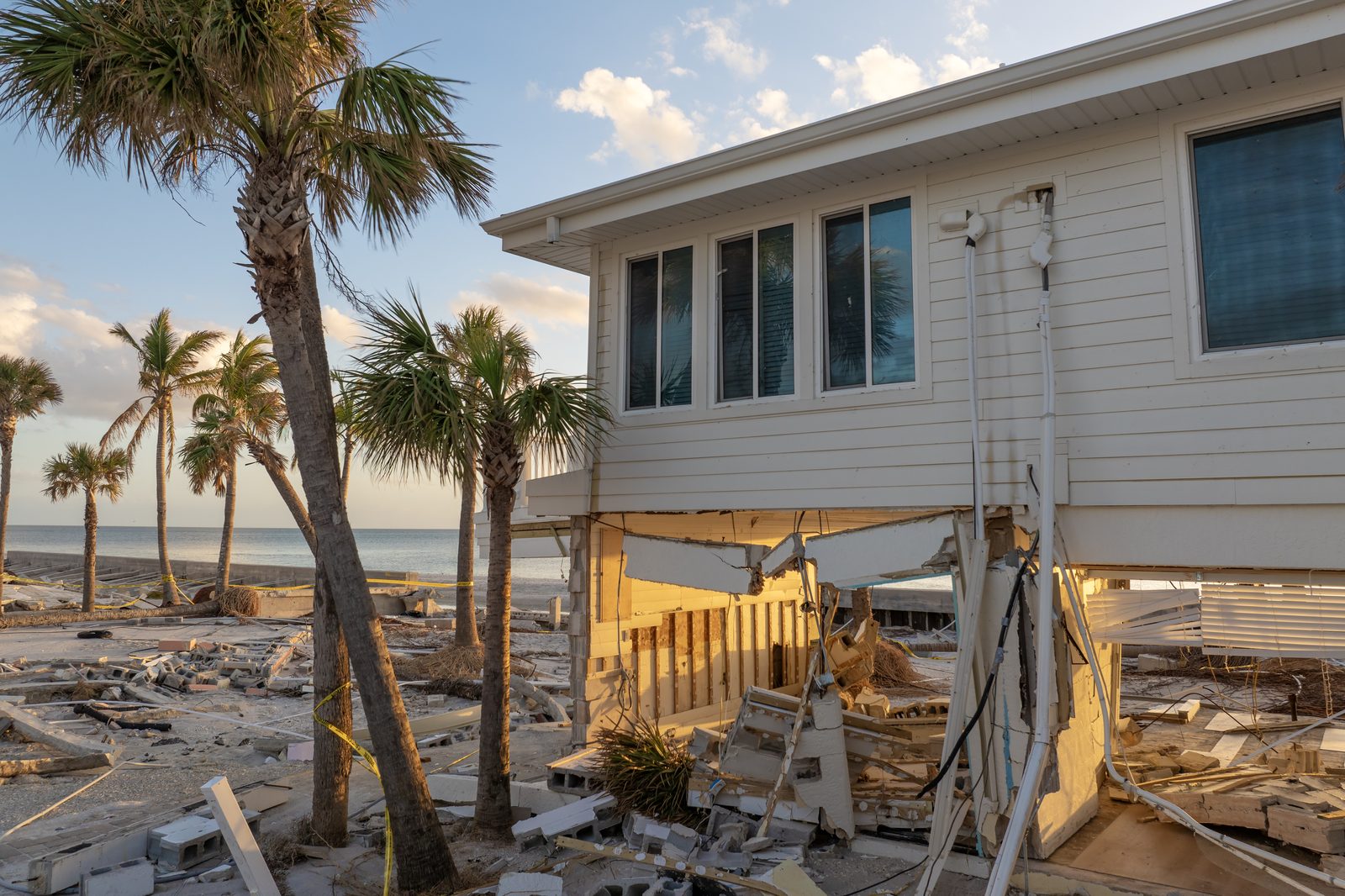
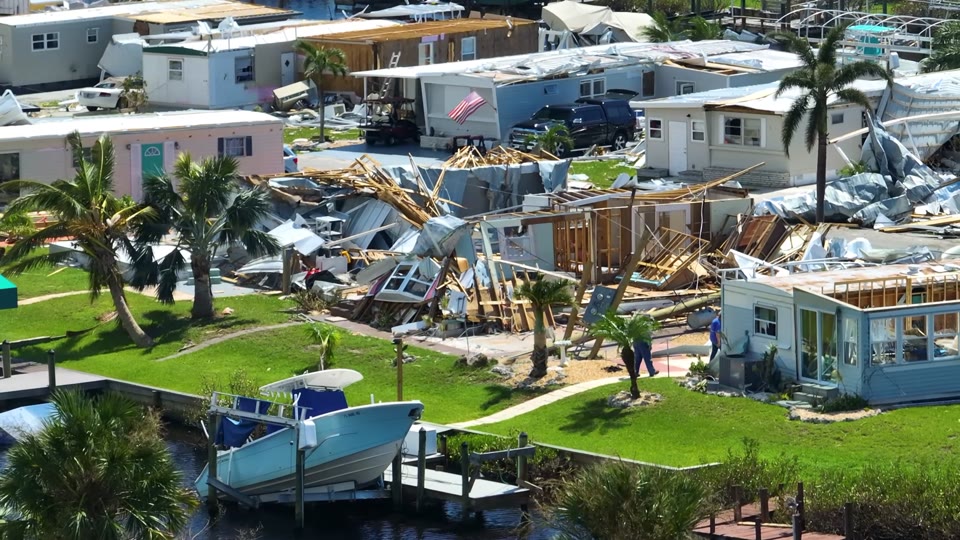
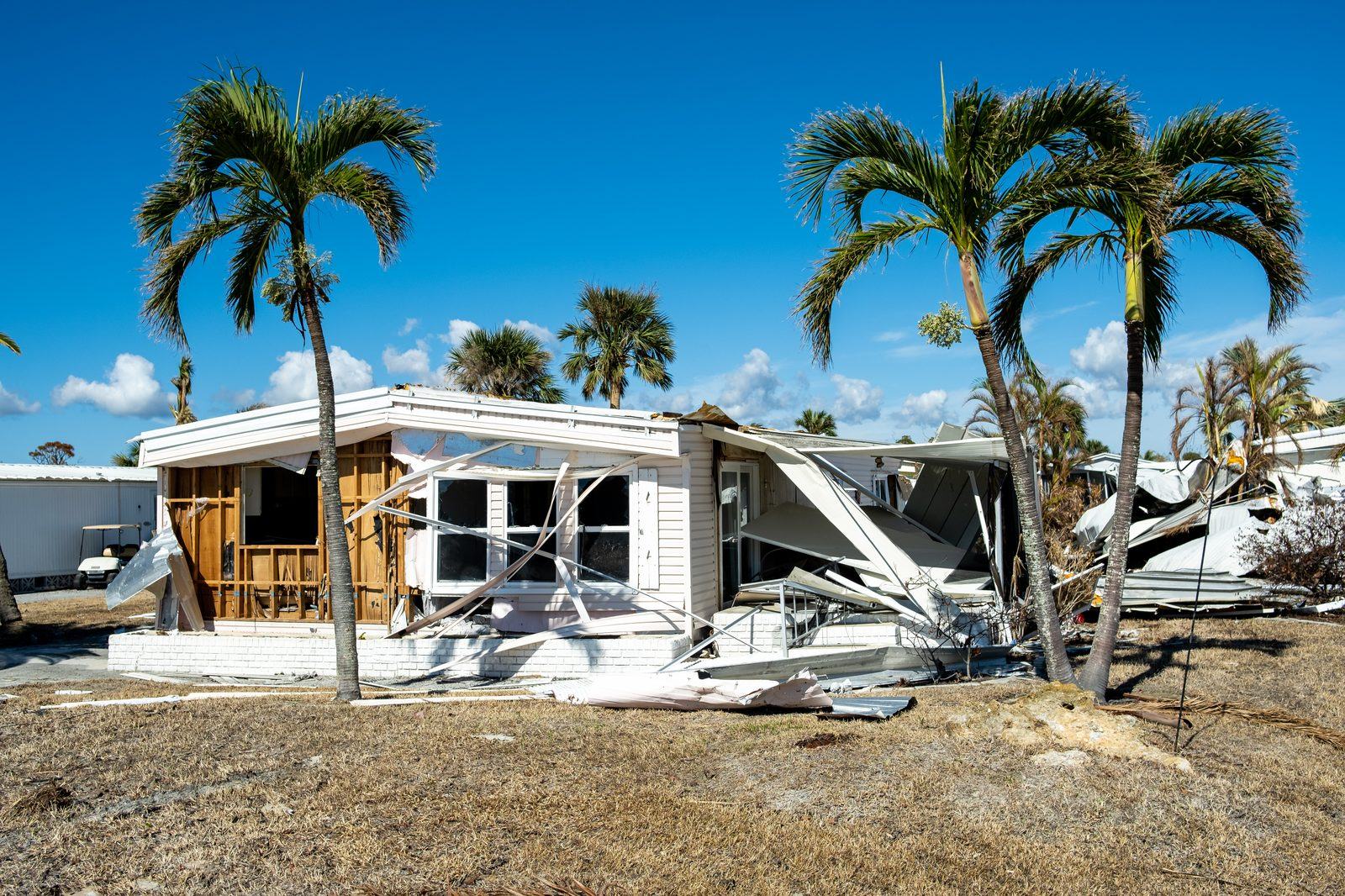
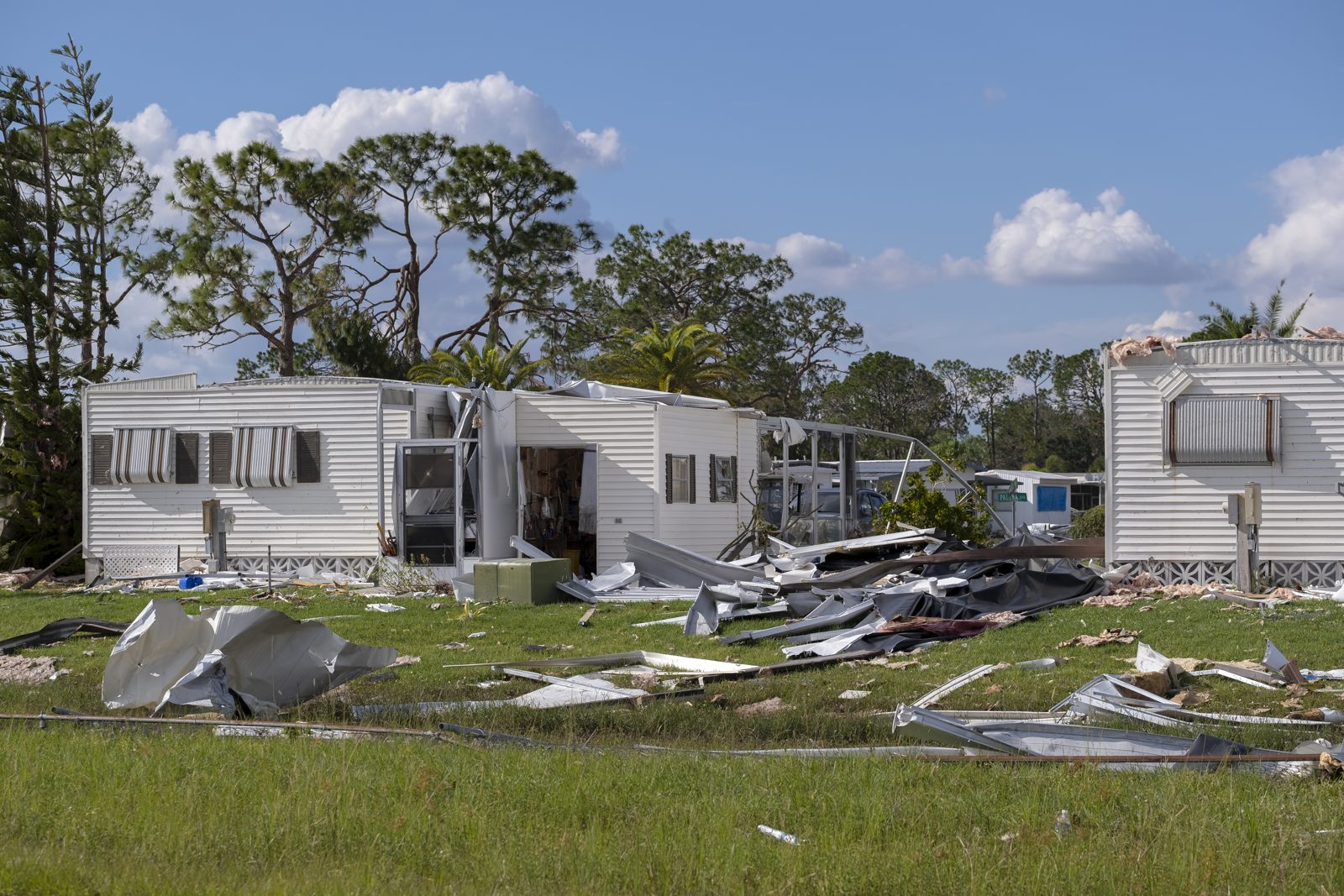
A Florida manufactured home community after hurricane winds. Tie-downs, carports and screen rooms are the first things to fail and the first things carriers leave off the estimate.
Actual cash value, not replacement cost: many mobile home policies pay the depreciated value of the home, and Florida law requires Citizens to limit coverage on mobile homes built before 1994 to actual cash value (Fla. Stat. §627.351(6)(c)15). On a 1985 home, “ACV” can mean a payment that will not buy a replacement.
Valued policy and total loss: Florida’s valued policy law treats a total loss of a mobile home on the basis the policy was written, whether ACV, replacement cost or a stated amount (§627.702(6)). Whether the loss is “total” is therefore the whole argument.
Other structures and contents are a percentage of the home: on the Citizens mobile home program, other structures are 10% of the dwelling limit and contents 25%, and contents are paid at depreciated value. A carport, shed, screen room and Florida room can be worth more than the policy allows for all of them together.
Tie-downs and installation: Florida requires manufactured homes to be installed to resist wind, flood, flotation, overturning, sliding and lateral movement (§320.8325), and HUD designates most of South and Southwest Florida as Wind Zone III (110 mph design). Carriers raise inadequate anchoring as a defense after wind losses; the installation record and a current tie-down inspection answer it.
Additions and alterations: a site-built Florida room or roof-over is sometimes not “the mobile home” under the policy, sometimes an other structure, and sometimes excluded unless scheduled. The permit history decides which.
The lot, the park and the lease: in a park (Chapter 723, Florida Statutes), the owner owns the home and rents the lot; skirting, driveways and common areas can belong to the park. Who repairs what after a storm follows the lease and the prospectus.
Flood is separate: most manufactured home communities sit in flood zones, and nearly 87% of the Lee County homes destroyed by Hurricane Ian stood in the AE zone. Wind pays under the mobile home policy; rising water pays under an NFIP or private flood policy, if there is one.
Specialty carriers: specialty insurers such as American Modern, Foremost and Assurant, along with Citizens, write much of this market, and each has its own forms, inspection requirements and total-loss practices.
Manufactured homes by the numbers
824,425Mobile homes in Florida, 7.8% of all housing units (ACS 2024)
21.8%Share of Highlands County homes that are mobile homes; Polk 18.6%, Pasco 16.7%, Citrus 19.9% (ACS 2024)
halfOf the 2,686 Lee County homes Hurricane Ian destroyed were mobile homes
pre-1994Mobile homes Citizens must insure at actual cash value under Fla. Stat. §627.351(6)(c)15
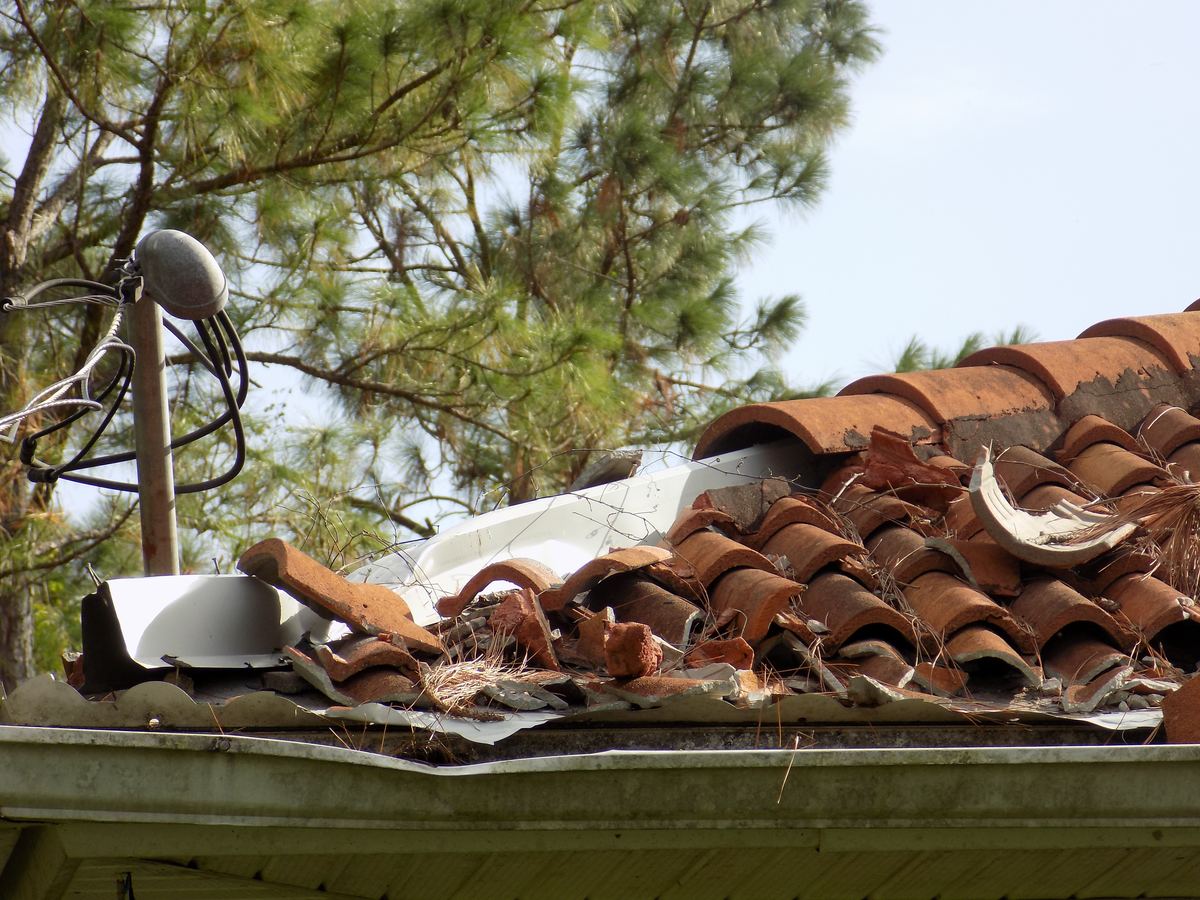
Hurricane and wind: roof-overs peeled, metal roofing and siding stripped, carports and screen rooms gone, and the home itself shifted on its piers; after Hurricane Ian, state inspectors found about 80% of the damage in some North Fort Myers parks was to carports and accessory structures
Fire: older units with aluminum wiring, space heaters and small kitchens burn fast; a fire in a manufactured home is usually a total loss, and the ACV argument starts immediately
Water: supply lines under the floor, water heaters in closets and roof-over leaks that run along the ceiling; belly-wrap and insulation damage is the part nobody sees
Lightning and power surge: metal-framed homes in the lightning capital of the country; A/C units, panels and electronics
Falling trees and limbs: parks built under old oaks and pines, with roofs that do not take an impact the way a block house does
Theft and vandalism of vacant seasonal homes between the owner’s visits
Tornado and straight-line wind in Central Florida, where the home’s anchoring is the first thing the carrier questions
Total loss disputes: whether a home with a broken frame, a shifted chassis or a saturated floor system can be repaired at all
What to Do After Damage to a Manufactured Home
1
Stay out until it is checked: a home that has shifted on its piers, lost a roof section or has water in the floor system may not be safe to enter. Have the park office or a contractor look first.
2
Photograph the home from all four sides, the roof, the piers and tie-downs, and every attached structure, before any cleanup. The anchoring photos matter more on a manufactured home than on any other claim.
3
Find the data plate and the HUD label: the data plate (usually inside a kitchen cabinet or near the panel) shows the manufacturer, date, wind zone and roof load; the carrier will ask.
4
Pull the title, the installation permit and any tie-down inspection: they answer the carrier’s first defense before it is raised.
5
Protect what is left and keep the receipts: tarps, board-up, water extraction. Do not start permanent repairs or demolition before the inspection.
6
List the contents room by room at replacement cost, even on an ACV policy, because depreciation is applied item by item and the starting number matters.
7
Let Homeland notify the carrier: call us before the insurance company. Hire us and we file the notice in writing with the photos and the home’s records.
8
Do not accept a total-loss payment, or sign a title over, until the number has been reviewed. On a manufactured home the carrier’s total-loss figure is where most of the money is argued.
How Homeland Helps Manufactured Home Owners
We read the mobile home form, not a homeowners form: ACV versus replacement cost, the percentage limits for other structures and contents, add-on and alteration language, and the anchoring conditions.
Total loss, repairable, or a repair that costs more than the home: we document the frame, floor system, roof structure and utilities so the answer is proved rather than assumed, and we bring in an engineer when the chassis is in question.
ACV argued from evidence, not the carrier’s depreciation table: condition, upgrades, permitted improvements and the local market for comparable homes.
Every attached structure claimed under the right coverage: carport, screen room, Florida room, shed, roof-over, skirting, steps and ramps.
Contents inventoried and priced, with depreciation challenged item by item.
Park and lease questions sorted out so repairs on the lot do not stall the claim on the home.
Spanish-speaking owners served in Spanish, from the first call to the final payment.
Florida. Notice of an initial or reopened property claim is due within 1 year after the date of loss and a supplemental claim within 18 months (Fla. Stat. §627.70132). For a hurricane, the date of loss is the date of landfall or the date the storm is verified. Your carrier must acknowledge within 7 days and pay or deny within 60 days of notice (§627.70131). Citizens and the specialty carriers may add inspection and proof-of-loss requirements in the policy itself.
New Jersey. Insurers must begin investigating within 10 working days of notice and pay a first-party property claim within 30 calendar days after a properly executed proof of loss (N.J.A.C. 11:2-17.7). Your policy sets its own prompt-notice condition.
In the News. After Hurricane Ian, Florida’s Department of Highway Safety and Motor Vehicles sent its manufactured home inspectors through the parks of Lee and Charlotte counties. At Mobile Gardens in Englewood they found half the homes “obliterated by nine hours of high winds”; in several North Fort Myers parks, about 80% of the damage was to carports and accessory structures rather than the homes themselves. That split is the manufactured home claim in one sentence: the structures that took the storm are the ones the policy covers at a fraction of the dwelling limit, and the homes that survived are priced by their age. A separate university study found mobile homes were half of the 2,686 homes Ian destroyed in Lee County.
Some do, many do not. Mobile home policies are often written on an actual cash value basis, and Florida law requires Citizens to limit coverage on mobile homes built before 1994 to actual cash value of the dwelling. Check the declarations page for “ACV,” “RCV” or a stated amount; the answer sets the ceiling on the claim.
The carrier says my home is a total loss and offered the ACV. Is that it?
Not necessarily. The ACV figure is an opinion of condition and depreciation, and it can be argued with evidence: upgrades, permitted improvements, maintenance and comparable sales. And whether the home is truly a total loss, rather than repairable, is a separate question we document before accepting either answer.
My carport and screen room were destroyed but the home is fine. Am I covered?
Yes, under the other structures coverage, which is typically a percentage of the dwelling limit (10% on the Citizens program). When the attached structures are worth more than that percentage, the limit, not the damage, decides the payment, and it is worth knowing before the next renewal.
The adjuster says my tie-downs were inadequate. Can they deny the claim?
They will try to reduce it. Florida requires installation to the state’s anchoring standards, and a home that was properly installed and inspected has the record to prove it. Photographs of the straps and piers after the storm, the installation permit and any tie-down inspection are the answer; an engineer’s opinion settles the rest.
I live in a park. Who repairs the lot, the skirting and the driveway?
The lease and the park prospectus say. Under Chapter 723 the home is yours and the lot is the park’s, and what sits between them (skirting, steps, pads, driveways) varies by community. We sort out the split so the claim on the home is not held up by a dispute about the lot.
Is flood damage covered?
Not by the mobile home policy. Rising water is covered only by an NFIP or private flood policy. After a hurricane, wind damage and surge damage are separated carefully because they are paid by different policies; we document both.
My home was built in 1978. Can I still get a fair claim?
Yes. Age affects the valuation basis, not whether the loss is covered. Older homes are where the ACV argument matters most and where documentation of condition and improvements changes the number.
Does Homeland handle claims in Spanish?
Yes. We handle the claim in Spanish from the first call to the final payment, and our team is bilingual.
Mobile & Manufactured Home Claims We Handle Across Florida & New Jersey
From the parks of Highlands, Polk and Pasco counties to Lee, Charlotte and the Big Bend, and across New Jersey’s manufactured home communities, Homeland handles mobile home claims throughout both states. Call 24/7.
The carrier’s adjuster will price your home by its age and the book. Call Homeland for a free review before you accept that number. We document the home, the carport, the additions and the contents, and we present the claim the policy actually owes.
 By Yeni Martinez
 By Nelson Avila