
Neighbor’s Tree Fell on My House: Who Pays, and What About Removal?

Homeland Public Adjusters · Last reviewed: October 2026
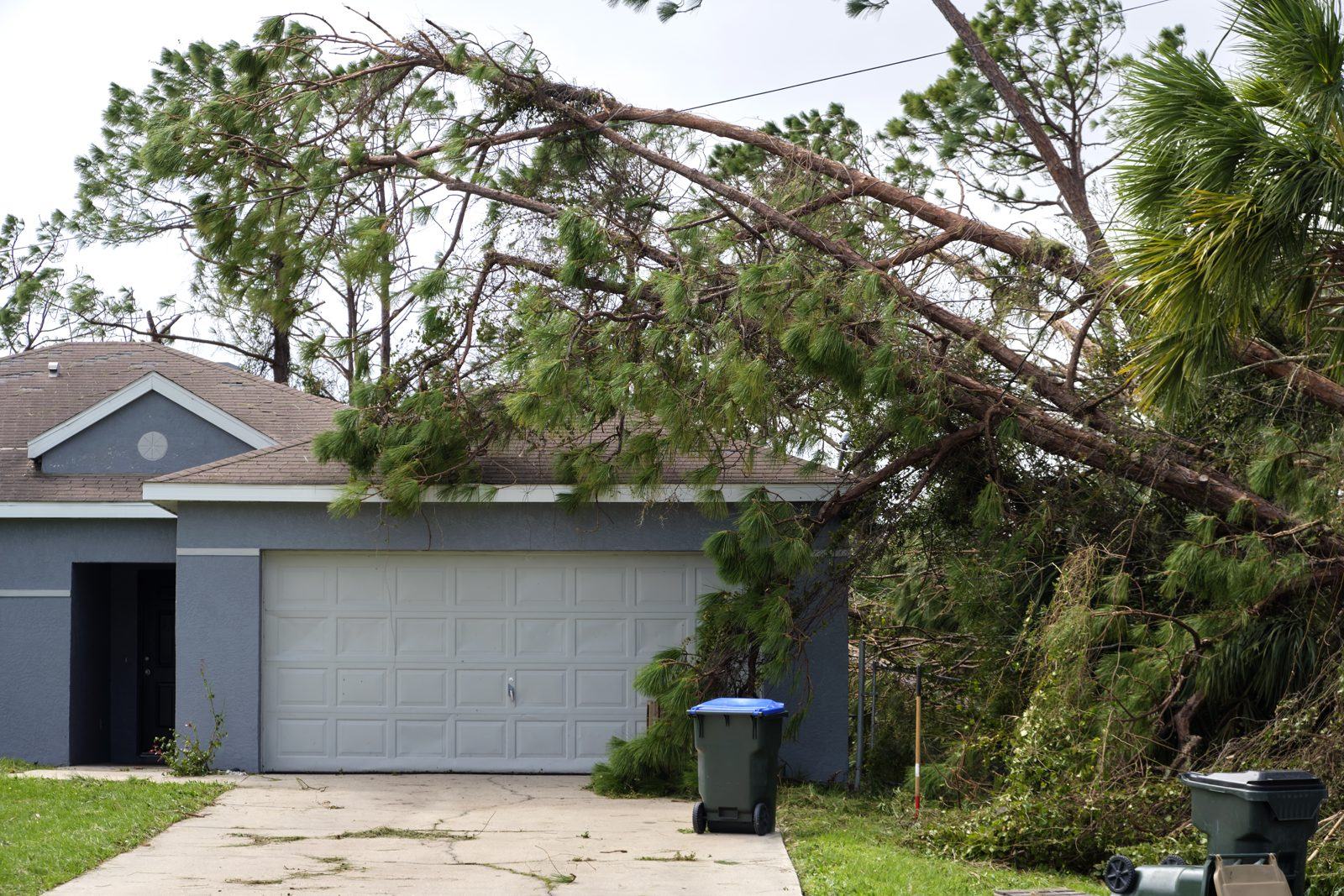
Short answer: Your own homeowners policy pays to repair your house when a neighbor’s tree falls on it, as long as a covered peril such as wind, lightning or the weight of ice brought it down; the Insurance Information Institute says it is irrelevant whether or not you own the tree. Removal of the tree is usually capped at about $500 or $1,000 and is paid only when the tree damaged a covered structure or blocked a driveway or ramp. The neighbor’s liability insurance pays only if the neighbor was negligent, for example by ignoring a dead tree.
Have a property claim anywhere in Florida? A licensed Homeland public adjuster comes to you within hours — no need to visit an office. Call (305) 783-3777 (Florida) or (732) 517-3777 (New Jersey), 24/7.
If you need help with damage from a neighbor’s tree that fell on your house, roof, fence or car port in Florida or New Jersey, Homeland Public Adjusters handles exactly this kind of claim. Homeland is a licensed public adjusting firm (Florida W818638; New Jersey 3003982360) with 20 years in the industry (since 2006) and a network of experts in Florida and New Jersey ready to take on any loss. In Florida we come to you within hours, wherever you are. Call (305) 783-3777 (Florida) or (732) 517-3777 (New Jersey), 24/7, English or Spanish. In New Jersey, Homeland handles the claim on your own homeowners policy.
Whose policy pays for the damage
The standard homeowners policy covers the dwelling against windstorm, and a tree is just the object the wind used. The claim runs under your own policy, subject to your deductible, and your insurer does not wait to find out whose tree it was. If the neighbor turns out to have been negligent, your carrier can pursue the neighbor’s liability insurer afterward (subrogation) and refund your deductible if it recovers.
The reverse is also true: if your tree lands on the neighbor’s house, their policy pays for their house. You are not automatically liable because the tree was rooted on your side of the line.
| What was damaged | Who pays | Limit to watch |
|---|---|---|
| Roof, walls, windows, fence, shed, pool enclosure | Your own property policy (dwelling or other structures) | Your deductible; in Florida, a separate roof deductible does not apply when a fallen tree punctures the roof deck (§627.701) |
| Removing the tree from the house or a blocked driveway | Your own policy, debris removal coverage | Typically $500 or $1,000 per the Insurance Information Institute |
| The tree itself, shrubs and landscaping | Your own policy, but only for limited perils such as fire, lightning, vandalism or vehicles | About $500 per item; wind and disease are not covered perils for plants |
| A tree that fell in the yard and hit nothing | Usually nobody | No damage to a covered structure, no removal coverage on most forms |
| Your deductible and anything your policy did not pay | The neighbor’s liability insurer, only if the neighbor was negligent | Proof that the neighbor knew the tree was dead or dangerous |
When the neighbor is responsible
Florida’s rule comes from Gallo v. Heller, 512 So. 2d 215 (Fla. 3d DCA 1987): a landowner is not liable for damage caused by trees and natural vegetation that are healthy, and a neighbor is free to trim encroaching roots and branches back to the property line at the neighbor’s own expense. The University of Florida’s IFAS Extension summarizes the law the same way: a healthy tree creates no liability, while a dead or dangerous tree the owner knew about can support a negligence claim.
New Jersey applies a negligence standard from Burke v. Briggs, 239 N.J. Super. 269 (App. Div. 1990): the question is whether the owner made reasonable use of the property and whether a reasonable inspection would have revealed the condition. In a 2018 appellate decision applying that rule, a $3,000 judgment against a tree owner was reversed because there was no evidence the tree was dead or damaged before it fell.
What the claim should include
- The roof as a system, not a patch: a trunk that punctures the deck breaks trusses, sheathing and underlayment well beyond the hole; the carrier’s first estimate rarely opens the attic.
- Matching: Florida’s matching statute (§626.9744) requires reasonable repair or replacement of adjoining areas when the new material does not match in quality, color or size. New Jersey has no matching statute, so the argument there rests on the policy’s replacement-cost language. See the Florida matching rule.
- Gutters, soffit, fascia, screens, fences and the pool cage, each under the right coverage.
- Interior water damage from rain through the opening, and the drying.
- Loss of use if the house is unsafe while the roof is open.
- Debris removal up to the policy limit, with the arborist’s invoice.
What to do when a tree comes down
- Keep everyone away from the tree and the damaged area; a trunk resting on a roof is still loaded, and lines may be down.
- Photograph the tree where it lies, its root plate or break point, and the property line, before any cutting. A photo of a hollow or rotten trunk is the negligence evidence.
- Tarp the opening and keep the receipts; emergency protection is your duty and is reimbursed.
- Call Homeland first, before the neighbor’s insurer calls you.
- Get the arborist or tree company to put the tree’s condition in writing on the invoice.
- Do not accept a removal-only payment as the whole claim; the roof scope comes from an inspection, not from the ground.
- Note the deadlines: Florida requires notice within 1 year of the loss and a supplemental claim within 18 months (§627.70132); New Jersey insurers must begin investigating within 10 working days and pay within 30 days of a proper proof of loss (N.J.A.C. 11:2-17.7).
If a Neighbor’s Tree Falls on My House, Who Is Responsible? Florida in 2026
In Florida, your own homeowners policy pays for a neighbor’s tree that damages your house, minus your deductible, whoever owned the tree. The neighbor is generally responsible only if they were negligent, for example by ignoring a tree that was visibly dead or dangerous. A 2025 bill that would have made owners liable for their trees falling on another property, HB 599 (“Property Owner Liability”), died in the House Civil Justice & Claims Subcommittee on June 16, 2025, and its Senate companion SB 724 died the same day (Florida Senate bill page).
The reverse case: if my tree falls on my neighbor’s house
Their own policy usually pays for their house. Your liability coverage comes into play only if you were negligent, and your own policy still covers your house, your fence and the tree removal it allows.
No insurance of your own and a negligent neighbor? In Florida, that is a third-party claim Homeland handles: third-party damage claims. For injuries, or a lawsuit over negligence, talk to an attorney; we work alongside your attorney on the property side.
Frequently asked questions
My neighbor’s tree fell on my roof. Do I file with my insurance or theirs?
Will insurance pay to remove the tree?
The tree fell in my yard and hit nothing. Is cleanup covered?
Can I make my neighbor pay my deductible?
Does the Florida roof deductible apply?
Is the tree itself covered?
My neighbor’s tree fell on my fence. Who pays?
Usually your own policy, under other structures coverage, minus your deductible. If the tree was visibly dead or dangerous and the neighbor ignored it, your insurer may pursue the neighbor afterward.
Did Florida pass a law making neighbors pay for their trees?
No. HB 599 (2025) would have done that, but it died in committee on June 16, 2025, along with its Senate companion SB 724.
Homeland serves policyholders in Coral Gables, Tallahassee and Cherry Hill, with local lines and a licensed public adjuster who calls back right away.
If this is your loss, call Homeland before you talk to the insurance company: Florida (305) 783-3777, New Jersey (732) 517-3777, 24 hours. A licensed public adjuster reviews the claim for free and calls you back right away. No Recovery, No Fee.
Sources
- Consumer Reports, When a tree falls, who pays for the damage (citing III)
- InsuranceNewsNet, If a tree lands on your house, who pays for it (citing III)
- Insurance Information Institute, Homeowners insurance basics
- Scott v. McCarty (Fla. 4th DCA 2010), quoting Gallo v. Heller
- UF/IFAS Extension FE962, Trees and Landowner Responsibility
- N.J. Appellate Division, Paloti v. Lyght (2018), applying Burke v. Briggs
- Fla. Stat. 627.701
- Fla. Stat. 626.9744
- Weather.com, Falling trees: an underreported deadly danger
This article is for general information only and is not legal or insurance advice. Statutes, regulations and policy wording change, and how they apply depends on your own policy and the facts of your claim. Homeland Public Adjusters is a public adjusting firm, not a law firm.
- Insurance Denied Your Property Claim in Florida? What to Do Next
- Public Adjuster or Lawyer for a Florida Insurance Claim?
- Pipe Burst, AC Leak or Roof Leak in Florida: Who to Call First
- Kitchen & Grease Fire Insurance Claims
- Water Heater Leaking? What to Do & If Insurance Pays
 Nelson Avila
 Yeni Martinez
 Yisel Dieguez
Homeland Public Adjusters represents policyholders, not insurers. Get a free review of your claim.
Get a Free Claim ReviewIf you already have an open claim, see What to Do in the First 24 Hours After Property Damage, or visit our Public Adjuster Near Me page to get connected with the Homeland adjuster covering your area.
Related Articles
Who This Is For
Homeland handles this kind of claim for: