
Wherever you are in Florida, we come to you. A licensed Homeland public adjuster comes to your property within hours — no need to visit an office. Serving Florida property owners since 2006, in English and Spanish. New Jersey: statewide.
- 1. Your trees
- 2. Calendar
- 3. Storm plan
Build My Tree Calendar
Pick every fruit tree in your yard.
Based on UF/IFAS Extension publications. Timing varies by variety and weather. Nothing you choose is saved.
Care calendar and storm plan for 2 trees
harvest prune bloom fertilize · current month outlined
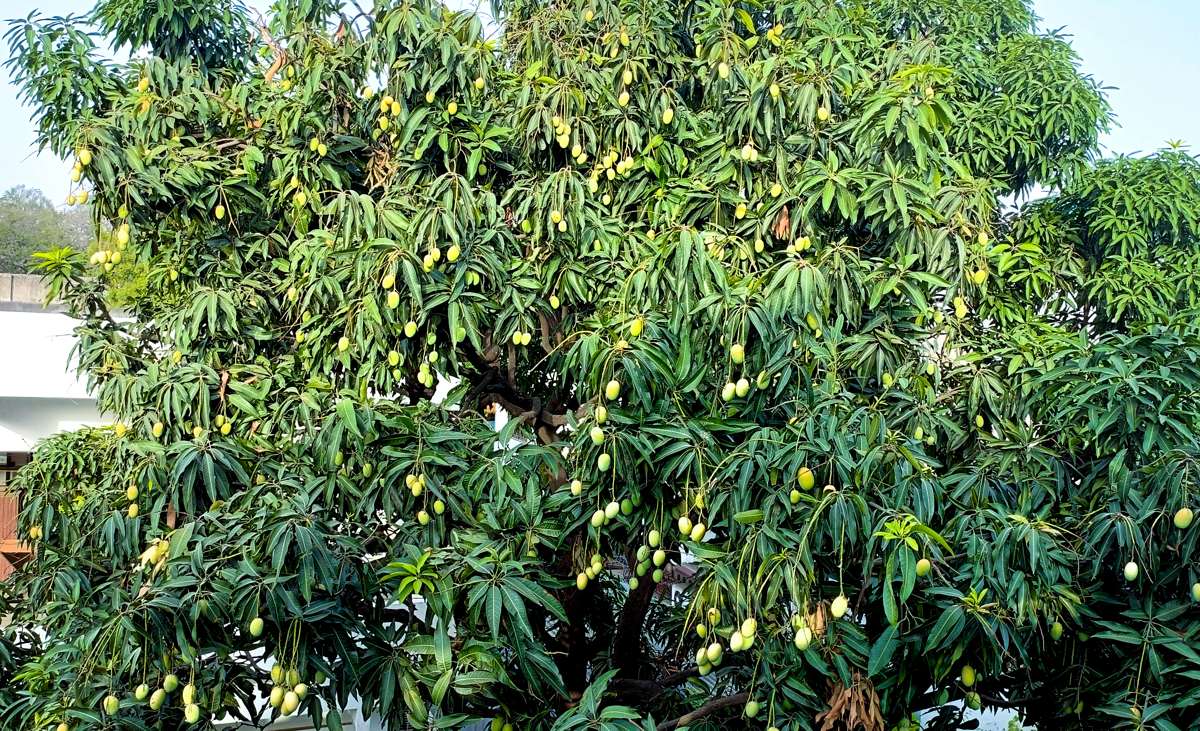
Mango
- Harvest: most varieties May to September, heaviest in June and July. Picked mangos ripen in 3 to 8 days.
- Prune as soon as the last fruit comes off your tree, at the end of its season: the sooner, the better. Mangos flower at the branch tips, and new growth needs months to mature before cool winter weather triggers bloom. Growers aim to finish by about September 1; pruning after Thanksgiving risks next year’s flowers and fruit. March or April is only for removing cold-damaged wood.
- Remove no more than about a third of the canopy at a time, and keep the tree low enough to pick, about 10 to 12 ft. Thinning the canopy lets wind through and cuts disease. Heavy pruning won’t kill the tree but can cut fruit for one to several seasons.
- Fertilize March through August; bearing trees need little or no nitrogen.
- Water mature trees only in long spring or summer dry spells; keep water off flowers and fruit (anthracnose).
Storm plan:
- Keep it 6 to 15 ft tall and open to the wind.
- If a storm threatens a tall tree out of season, many growers strip the small branches and most of the leaves so the wind has little to push on, leaving the main limbs like a tree in winter, or sacrifice the single weakest, most exposed limb. Avoid hard cuts to large trunks. The tree regrows, but expect less fruit next season.
- Flood tolerance: several weeks.
- After a storm, resetting a toppled mango gives mixed results because it sunburns easily: shade the trunk or paint it with half white latex paint, half water. Fruit may not return for 1 to 3 years.
Avocado
- Harvest depends on the type: West Indian May to September, Guatemalan-West Indian hybrids about July to March, Guatemalan September to January.
- Prune each tree soon after its harvest; for late varieties, wait until the danger of frost has passed. Keep tops at 10 to 15 ft.
- Fertilize March through September.
- Avocados don’t tolerate flooding or poorly drained soil; plant on a mound where water collects.
Storm plan:
- Limbs break easily in strong wind or under heavy fruit; a smaller tree means less storm damage.
- Pick fruit when a storm is coming: trees harvested before a storm had less damage.
- Flood tolerance: no more than a day or two of saturated soil.
- Avocados usually reset and recover well; fruit returns in 1 to 3 years.
Before a storm: every tree
- Prune every year to lower the height and open the canopy to wind; have a certified arborist do large trees.
- Plant large trees like mango and avocado 25 ft or more from the house, power lines and other trees.
- Photograph the yard before the storm, with a person in the frame for scale.
- When a storm is coming, pick ripe fruit.
- Stake young or recently moved trees on two or three sides with metal stakes, watching for irrigation lines.
- Bring potted trees inside, or lay them on their side on the ground.
- Don’t leave cut branches loose in the yard before a storm; check your county’s debris pickup rules.
After a storm
- Photograph each damaged tree before cleanup, with a person in the frame.
- Shade exposed trunks and roots with fallen branches, or paint them with half white latex paint, half water.
- Toppled tree with roots still in the ground: remove about 1/3 of the canopy and reset it at its original soil level; use cloth or rope slings, never chain.
- Don’t overwater; trees with no leaves need less water until new shoots appear.
- Late-season storms (October to November) can add 4 to 8 months to recovery.
Other fruit trees after a hurricane
- Guava: kept small, often stays standing and fruits again in 6 to 9 months.
- Longan: resets and recovers well; keep one strong shoot if several trunks regrow.
- Sapodilla: has historically withstood hurricane winds well.
- Jackfruit: mixed results; expect heavy branch dieback.
- Mamey sapote: resets well; with major limb damage it may take 4 to 5 years to fruit.
- Sugar apple and atemoya: often lean or topple, and resetting frequently fails.
Tree fell on your house, fence, pool cage or car? Photograph it before it is removed and call a licensed Homeland public adjuster, 24/7: Florida (305) 783-3777.
Sources: UF/IFAS HS1066, hurricanes and tropical fruit trees · UF/IFAS MG216 Mango · UF/IFAS Lee County, Mango Pruning · Fruitful Trees (YouTube): When and How to Prune Mango Trees, with Truly Tropical nursery · Fruitful Trees: How and When to Prune Mango Trees · Fruitful Trees: How to Prune a Mango Tree, with Incredible Edible Landscapes · Fruitful Trees: Preparing Fruit Trees for a Hurricane · MG213 Avocado · MG040 Banana · MG051 Lychee · MG269 Carambola · MG054 Papaya. Checked 2026-11-18.
Timing varies by variety and weather. For problems with a specific tree, contact your county UF/IFAS Extension office.
For education only: gathered from the sources cited here and from experienced professionals and growers. Not professional advice for your property; check with a qualified professional before you act.
Short answer: UF/IFAS Extension recommends keeping backyard fruit trees small and open to the wind: about 6 to 15 ft for mango and 10 to 15 ft for avocado. In Florida most mangos ripen from May to September and lychee from mid-May to early July. Prune mangos as soon as the last fruit comes off, pick ripe fruit when a storm is coming, and after one, shade exposed trunks and reset toppled trees quickly.
Sources: UF/IFAS Extension publications HS1066, MG216, MG213, MG040, MG051, MG269 and MG054, and mango pruning and storm videos from South Florida growers on Fruitful Trees. Checked November 17, 2026.
For education only. Homeland gathered this information from the agencies, Extension publications, professionals and growers cited on this page. We are not engineers, surveyors, arborists, pool professionals, tax advisors or attorneys, and this is not professional advice for your property. Check with a qualified professional before you act.
Florida Fruit Trees at a Glance
Harvest season, size and how each one handles a hurricane.
| Tree | Harvest · size · storm | Source |
|---|---|---|
| Mango | May to September; prune right after the last fruit, by about Sept. 1, and keep it 6 to 15 ft; flood tolerance several weeks; sunburns easily after a storm. | UF/IFAS MG216, HS1066; Fruitful Trees growers |
| Avocado | May to March by type; keep 10 to 15 ft; floods kill it in a day or two; resets and recovers well. | UF/IFAS MG213, HS1066 |
| Banana | 9 to 20 months from planting; tall types topple above 25 mph; regrows from the base. | UF/IFAS MG040, HS1066 |
| Lychee | Mid-May to early July; prune right after harvest; ‘Mauritius’ limbs are brittle. | UF/IFAS MG051, HS1066 |
| Carambola | June to February; keep 6 to 12 ft; trees at 12 ft or less generally survive hurricane winds. | UF/IFAS MG269, HS1066 |
| Papaya | Fruit 7 to 11 months after planting; topples easily when loaded with fruit; replant every 18 to 24 months. | UF/IFAS MG054, HS1066 |
What People Ask Next
Tree damage to your home? See how Homeland handles storm claims.
From the Homeland Forum
Real questions from Florida and New Jersey property owners, answered by licensed public adjusters.
Fruit Tree FAQs
When do mangoes ripen in Florida?
When should I prune my mango tree?
How do I protect fruit trees from a hurricane?
Can I save a fruit tree that fell in a hurricane?
Does insurance cover a tree that fell on my house?

Your yard and your home, ready for the storm
Adjuster Advantage members get storm alerts for their county, a prep checklist built for their household, a private place for before-storm photos, and a licensed Homeland public adjuster assigned to them. Free, in English and Spanish.
Verify Homeland
Check us before you hire anyone. Every license below links to its public record on the Florida Department of Financial Services licensee search.
- Serves all of Florida: Yes — every city and county. A licensed Homeland public adjuster comes to your property within hours — no need to visit an office. Call (305) 783-3777, 24/7.
- Homeland Public Adjusters Corporation: Florida public adjusting firm license W818638 · New Jersey public adjuster firm license 3003982360
- Yeni Martinez, President: Florida public adjuster license P103370 (licensed since 2007) · New Jersey 3003714097 · designated primary adjuster
- Alberto Enriquez: Senior licensed public adjuster, Florida P112658
- Yisel Dieguez: Licensed public adjuster and Xactimate estimator, Florida W873884 · New Jersey 3003714335
- Nelson Avila: Florida public adjuster license G332385 · Florida Certified Contractor CRC1331322 · property insurance appraiser and umpire
- Complaints and reputation: 5.0★ on Google · BBB Accredited Business, A+ rating
- Since 2006: Homeland Public Adjusters, Corp. was incorporated in Florida on December 11, 2006. Our President, Yeni Martinez, has held Florida public adjuster license P103370 since 2007. When Florida began requiring adjusting firms to hold their own firm license (a 2021 law, Senate Bill 1598; DFS began licensing adjusting firms in November 2021), Homeland was issued firm license W818638 on January 11, 2022. On November 10, 2026, Homeland became a BBB Accredited Business (BBB Serving Southeast Florida & the Caribbean), with an A+ rating. Each adjuster’s appointment with Homeland appears on that adjuster’s own DFS record.
- English and Spanish. Office: 8004 NW 154th Street, Suite 609, Miami Lakes, FL 33016 (visits by appointment). Florida (305) 783-3777 · New Jersey (732) 517-3777, 24/7.