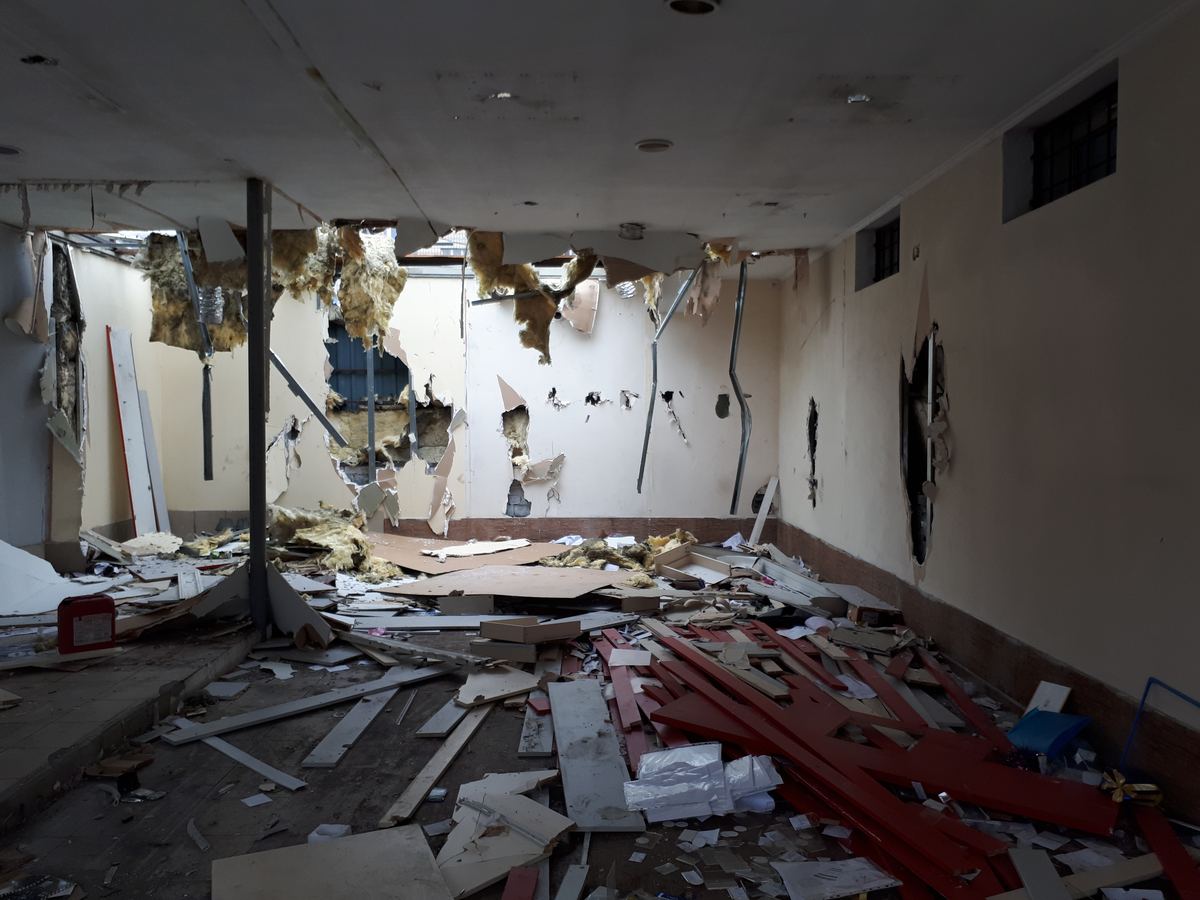
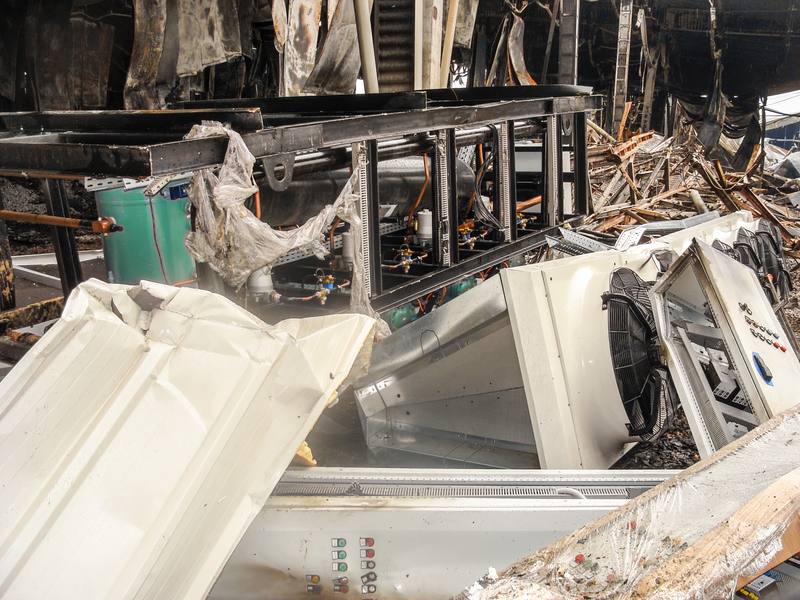
A kitchen fire, a burst line over the dining room, a walk-in that dies on a Friday night. The building claim is the small part; the income claim is the restaurant.
Homeland Public Adjusters represents restaurant, bar, cafe, bakery, catering and food service owners in Florida and New Jersey with fire, smoke, water, storm, equipment and spoilage claims, and with the business income claim that decides whether the restaurant reopens. We document the kitchen, the dining room, the stock and the books, and we handle the claim with the carrier so you can run the restaurant. No Recovery, No Fee.
Florida has about 48,900 restaurant locations and the state licenses more than 66,000 food service establishments. Hurricane closures, kitchen fires and water losses in older buildings are the claims we see most, and nearly every one carries a business income component the first estimate ignores. Homeland represents Florida restaurant owners from Miami to the Panhandle.
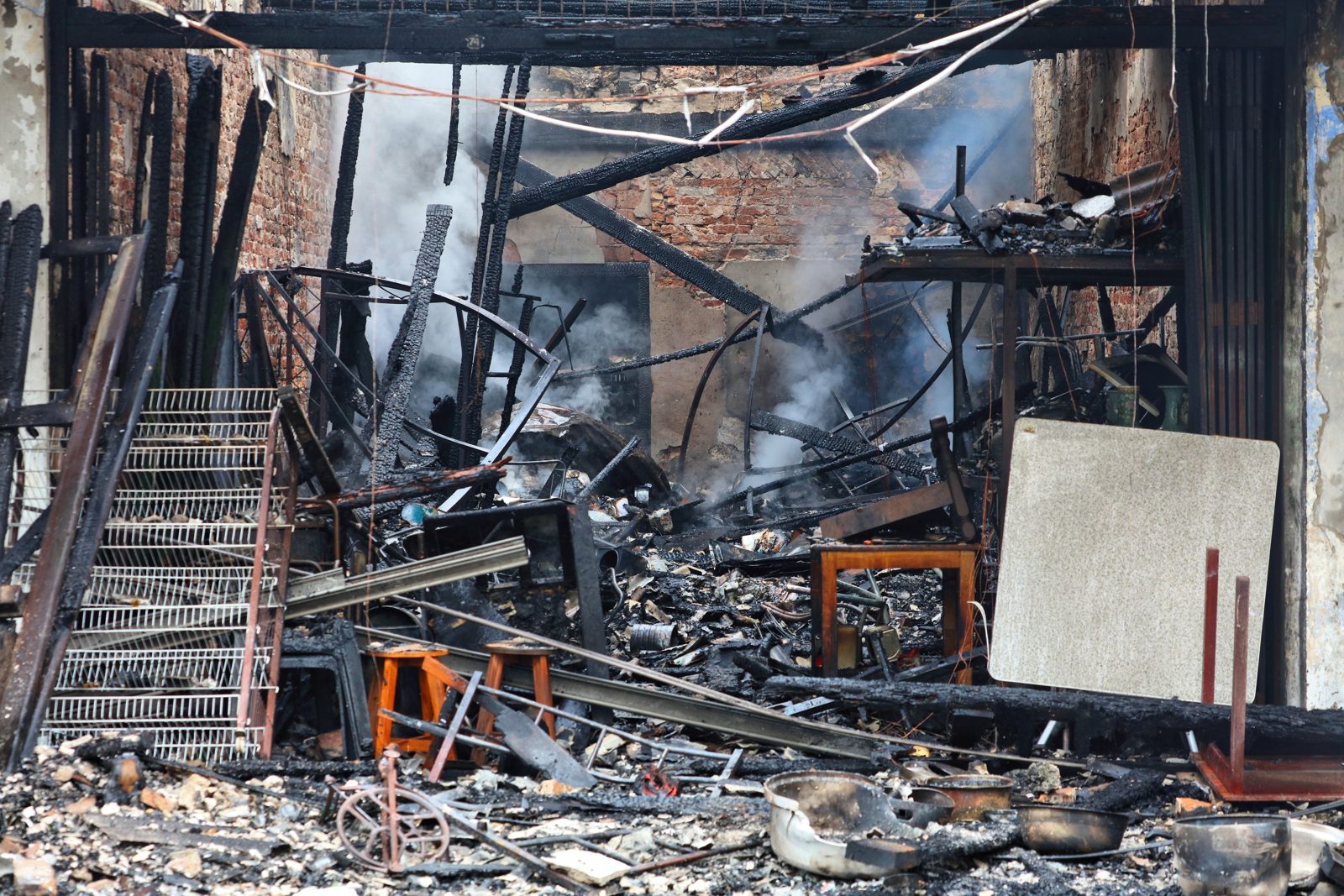
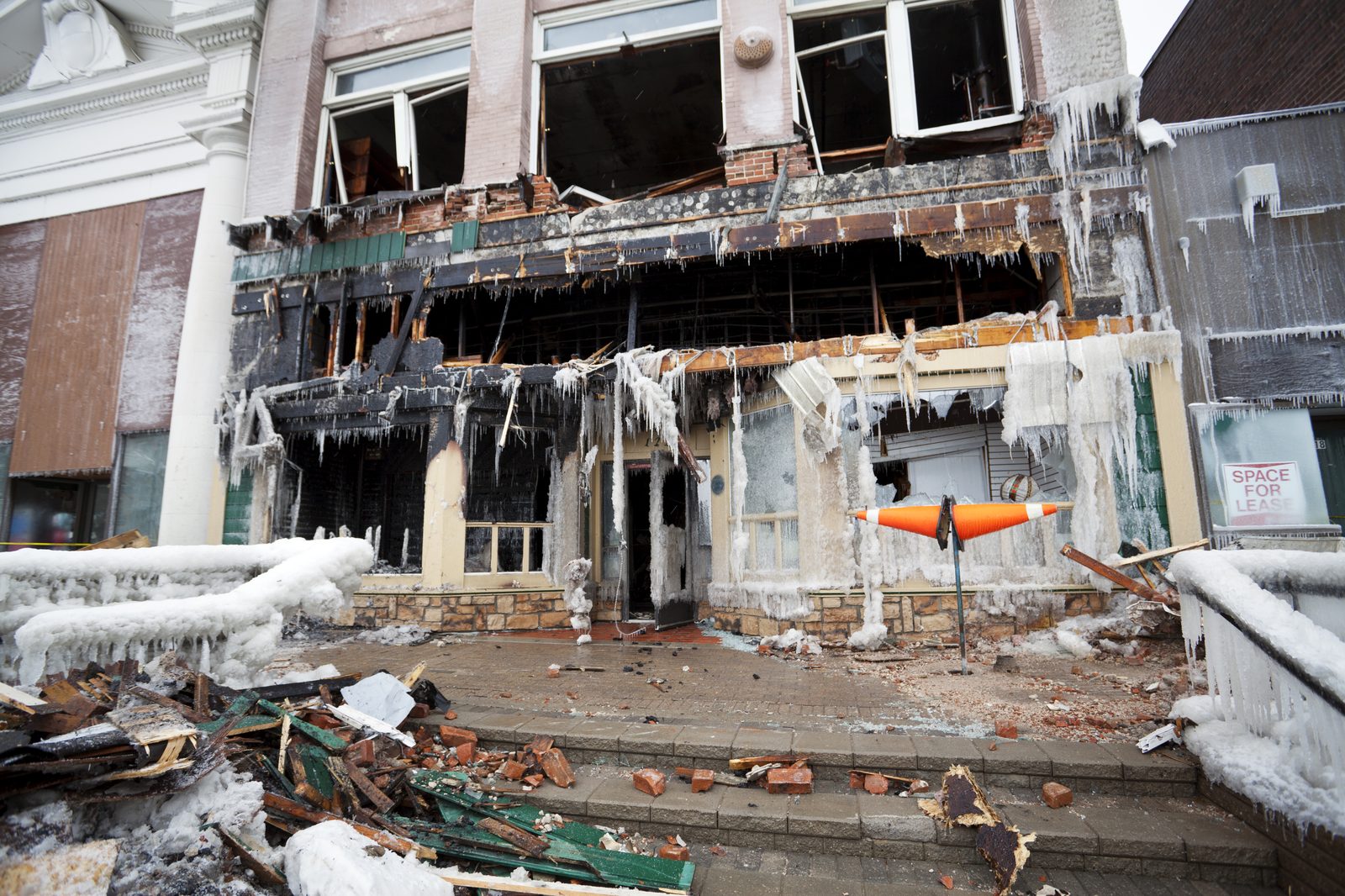
A restaurant fire closes the doors the same day. The claim is the building, the kitchen equipment and every day of lost income until reopening.
Restaurants & Food Service Claims in New Jersey
New Jersey’s 20,500 restaurants run in older buildings with older plumbing and electrical, through winters that freeze lines in shuttered kitchens and shore seasons that cannot be missed. Homeland handles New Jersey restaurant claims, including the lost-season claim when a storm closes a shore location in July.
Restaurants carry the highest concentration of fire, water and equipment risk of any small business, and the losses follow a pattern:
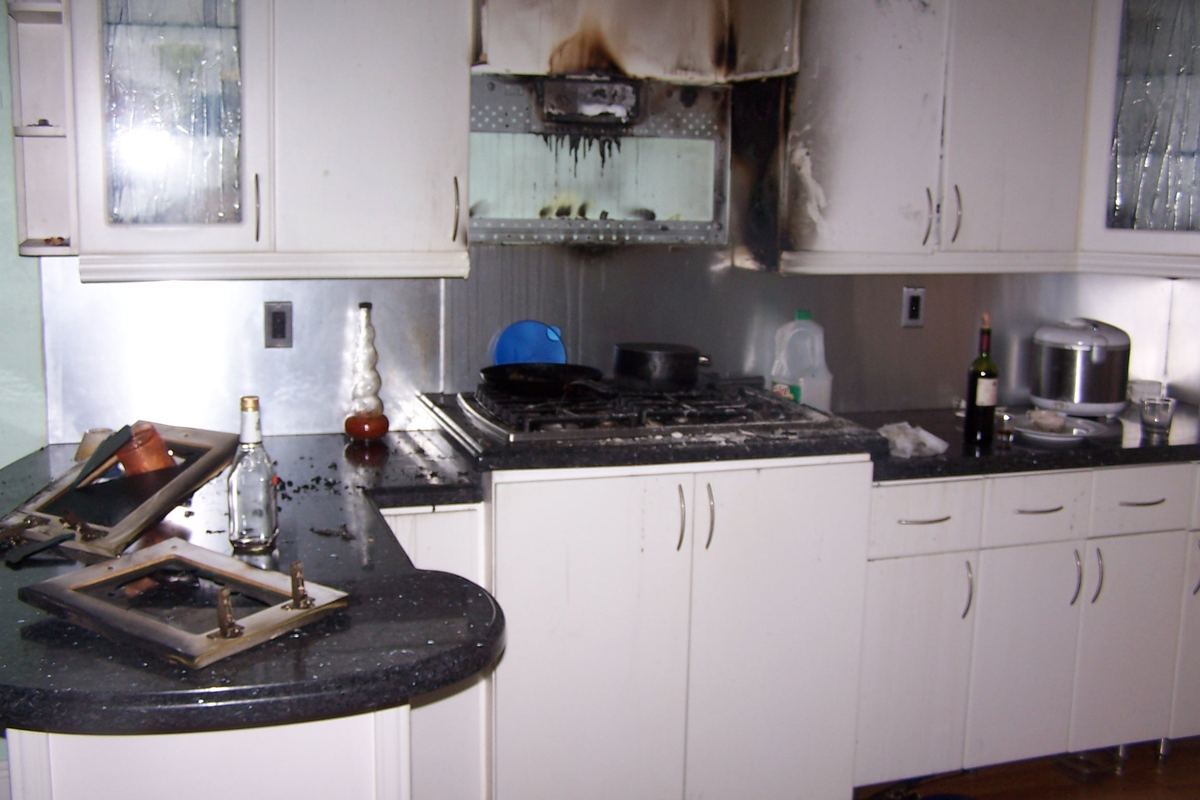
Kitchen and grease fires: cooking equipment causes about 61% of restaurant structure fires, and deep fryers alone about one in five (NFPA); the damage is the hood, the line, the ceiling and the smoke through the whole building
Suppression system discharge: an Ansul dump that saves the building ruins every surface in the kitchen and often shuts you down until the system is recharged and inspected
Water from above or below: a supply line, a sprinkler head or a grease trap backup into the dining room; flooring, booths, millwork and the subfloor
Walk-in and reach-in failures: a compressor that quits, a power outage after a storm; the stock is a spoilage claim and the compressor is an equipment breakdown claim, two different coverages
Hurricane and wind: roof, signage, patio and outdoor seating, and the week or month with no power
Hood, duct and exhaust fires that spread into the roof structure above the ceiling, where the carrier’s estimate rarely looks
Vehicle strikes: restaurants are 19% of all vehicle-into-building crashes nationally (Storefront Safety Council)
Smoke damage to a restaurant next door, where your dining room smells like someone else’s fire
Restaurants & Food Service: by the numbers
61%Share of restaurant structure fires caused by cooking equipment; deep fryers 21% (NFPA)
7,410Structure fires per year in U.S. eating and drinking establishments, $165 million in damage (NFPA)
66,642Food service establishments licensed in Florida, FY 2024–25 (DBPR)
19%Share of U.S. vehicle-into-building crashes that hit a restaurant (Storefront Safety Council)
Every commercial policy is a package of separate coverages with separate limits and separate arguments. These are the ones that decide this industry’s claims:
Coverage
Why it matters here
What to check
Business income and extra expense
A restaurant’s margin is in the next 30 days of sales; the building can wait, payroll cannot
The 72-hour waiting period, the limit, whether payroll is covered in full, and whether “extended business income” runs after reopening while customers come back
Spoilage
Pays for food stock lost to power failure or equipment breakdown
Often a $5,000–$25,000 sublimit; know yours before the walk-in dies, and photograph the stock before it is thrown out
Equipment breakdown
Covers the compressor, the hood motor, the panel; the property form excludes mechanical failure
Without it, a dead walk-in is not a claim; with it, the stock, the repair and the lost income all are
Ordinance or law
A kitchen rebuild triggers current fire code: hood, suppression, grease interceptor, electrical
Coverage C (increased cost of construction) limit; many policies carry too little for a code-driven kitchen
Tenant improvements and betterments
Most restaurants lease; the build-out is the tenant’s to insure
Who paid for the kitchen, the bar and the bathrooms, and which policy lists them
Coinsurance
Equipment-heavy businesses are often underinsured on contents
The contents limit against the real replacement cost of the kitchen
What to Do After the Loss
1
Make it safe and stop the loss: shut the water, cut the power to the affected area, call the fire department for any smoke or gas. Keep people out of a space with a sagging ceiling.
2
Photograph and video before cleanup, every area, every piece of equipment, the stock, the ceiling above and the floor below, with a wide shot and close-ups.
3
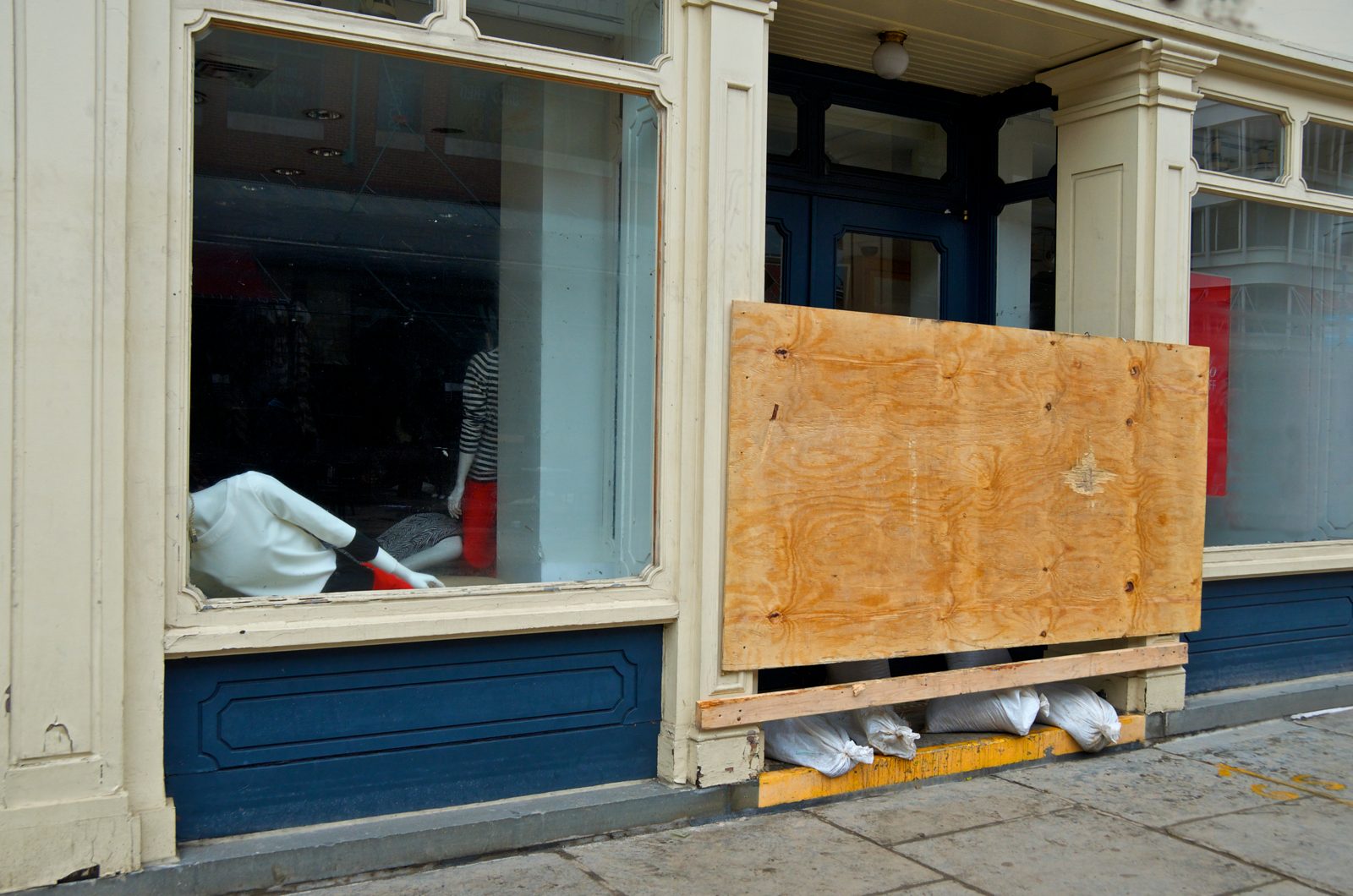
Protect what is left and keep the receipts: board-up, tarps, extraction, a generator for the walk-in. Emergency work is reimbursed; permanent repairs wait for the inspection.
4
Photograph the stock in the walk-in and reach-ins before you discard it, with the temperature log; spoilage is paid on what you can show was there.
5
Get the fire marshal’s or health department’s closure order in writing: it fixes the start of the period of restoration and proves you could not operate.
6
Pull the hood and suppression service records: the carrier will ask whether the system was maintained before it pays for the kitchen.
7
Let Homeland notify the carrier: call us before the insurance company. Hire us and we file the notice in writing with the facts, the photos and the coverage request.
8
Start the income record the same day: daily sales before and after, the reservations or orders you turned away, the payroll you kept, the extra costs to keep going.
How Homeland Helps
Policy read first: business income, extra expense, ordinance or law, coinsurance, equipment breakdown, spoilage, tenant improvements and the percentage wind deductible, before the carrier’s adjuster frames the claim.
Building, equipment and inventory documented separately, each under the coverage and valuation that applies to it.
Business income built from your records: sales, P&L, payroll and the period of restoration proved, not estimated.
Landlord and tenant policies coordinated so the shell, the build-out and the contents are each claimed once, under the right policy.
Code and ordinance costs identified before demolition, when they can still be claimed.
Appraisal when the number is still short, handled by a licensed public adjuster who is also a certified property appraiser and umpire.
No Recovery, No Fee.
Deadlines to Know
Florida. Notice of an initial or reopened property claim is due within 1 year after the date of loss and a supplemental claim within 18 months (Fla. Stat. §627.70132), which applies to property insurance of every kind, commercial included. The 7-day acknowledgment and 60-day decision rules of §627.70131 apply to residential policies and to certain smaller commercial properties, so for a larger building the policy’s own proof-of-loss and suit clauses control.
New Jersey. Insurers must begin investigating within 10 working days of notice and pay a first-party property claim within 30 calendar days after a properly executed proof of loss, with written delay notices every 45 days after that (N.J.A.C. 11:2-17.7).
In the News: A Real Restaurants & Food Service Claim
In the News. The National Fire Protection Association’s study of eating and drinking establishments found an average of 7,410 structure fires a year, with cooking equipment responsible for 61% of them and deep fryers alone for one in five; failure to clean was a factor in 22%. For an owner, the number that matters is the one NFPA does not publish: the weeks a kitchen is closed while the hood, the suppression system and the ceiling above it are rebuilt to current code. That is a business income claim, and it is the part of a restaurant fire the carrier’s first estimate never includes.
Is the food in my walk-in covered when the power goes out after a storm?
Only if the policy carries spoilage coverage, and then up to its sublimit. Utility service interruption coverage is a separate endorsement that triggers the business income claim when the power is out. Photograph and log the stock before it is thrown away.
The fire suppression system went off but there was no real fire. Is the cleanup covered?
Usually yes. Discharge of a fire suppression system is a covered cause on most commercial forms, and the kitchen cleanup, the recharge and the lost days are part of the claim.
Can I claim the lost sales while the restaurant is closed?
If the policy carries business income coverage, yes, from 72 hours after the loss on the standard form until the restaurant could reasonably reopen, plus extra expense to keep operating. Sales records, reservations and the closure order are the proof.
My landlord’s insurance covers the building. Why do I need a claim?
The landlord’s policy covers the shell. Your kitchen, bar, finishes, equipment, stock and income are yours to insure and yours to claim, and the two adjusters will each point at the other unless both claims are documented together.
The carrier wants to replace the hood but not bring the kitchen up to code. Is that right?
No. Ordinance or law coverage pays the increased cost of construction to meet current code, and a kitchen rebuild in Florida or New Jersey triggers fire-code requirements the old kitchen did not meet. Check the Coverage C limit.
Do you handle claims for a restaurant group with several locations?
Yes. We handle single units and groups, including losses at several locations in the same storm, each under its own deductible and limits.
Let Us Handle Your Restaurants & Food Service Claim
A commercial claim is a property claim and an income claim at once, and the first estimate covers neither. Call Homeland for a free review before you sign anything.

 By Nelson Avila
 By Alberto Enriquez