A car hit your house anywhere in Florida? A licensed Homeland public adjuster comes to you within hours — no need to visit an office. New Jersey: we come to you statewide.
Some of Homeland's Results on Claims Like This
Every claim is different. Results depend on each loss and policy; past results don't guarantee a future outcome.
Amounts are insurance payments obtained on each claim, before Homeland's fee and other costs, rounded to the nearest dollar. Client names are withheld for privacy.
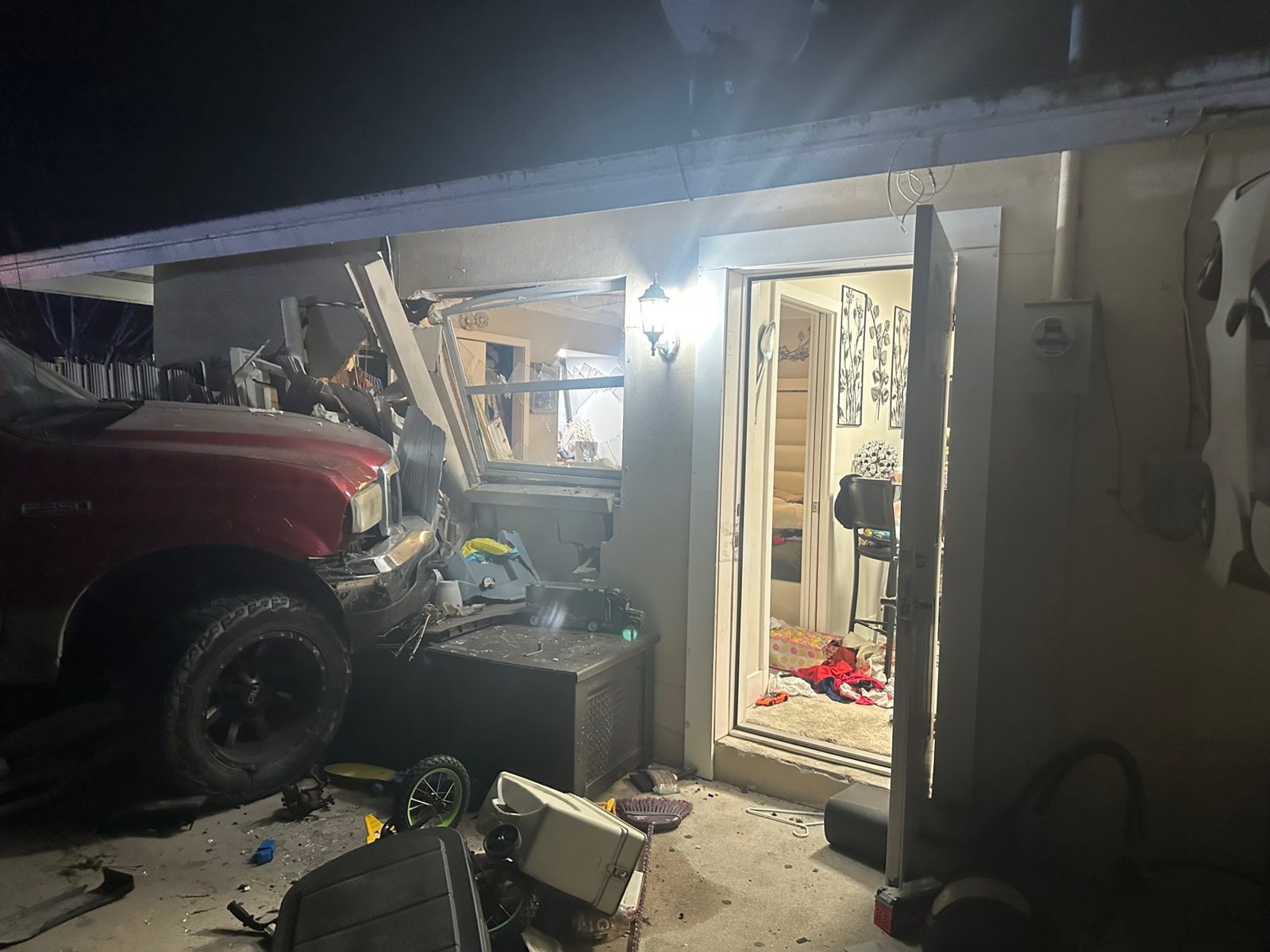
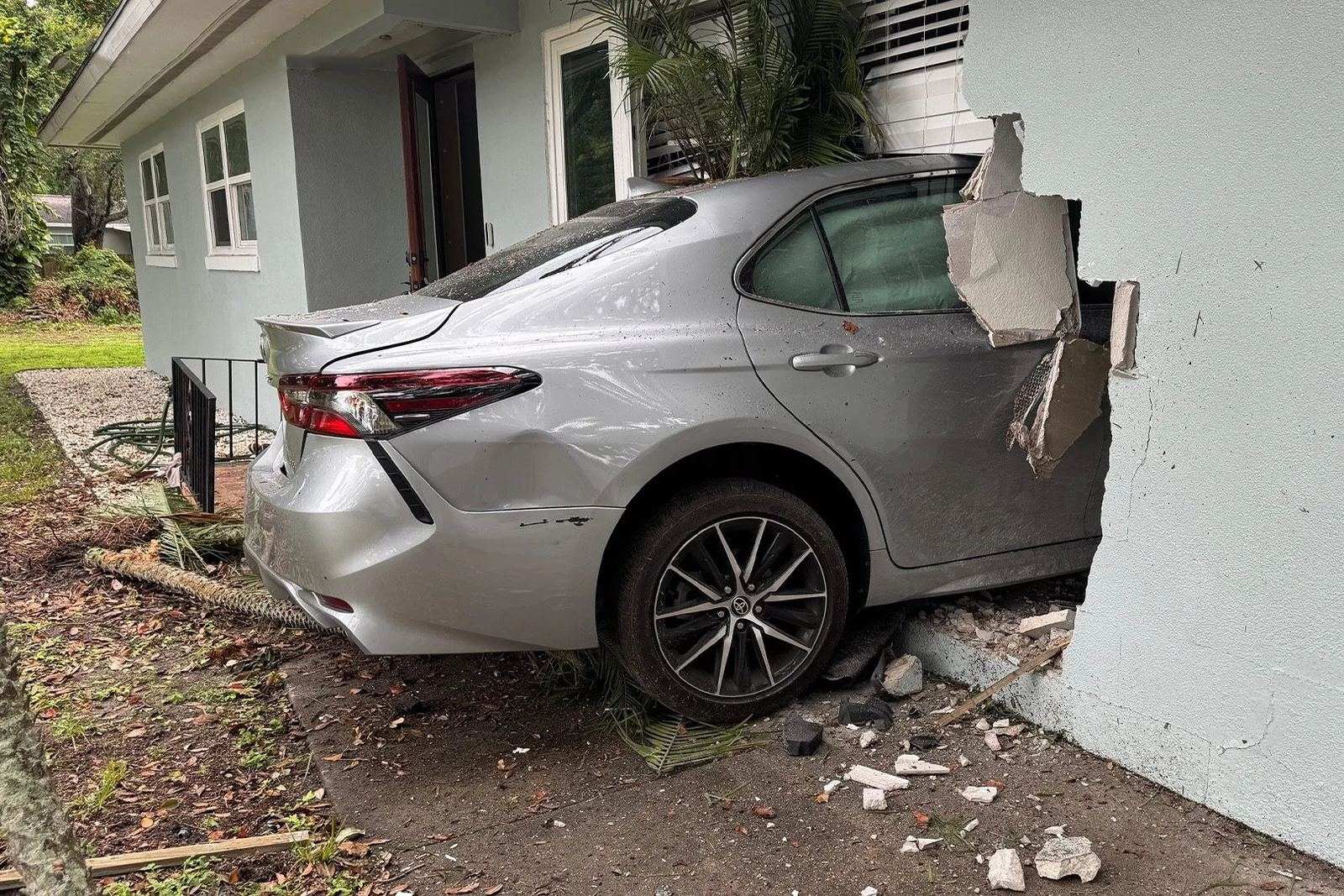
A vehicle that crashes into a house, garage, fence, condo building or storefront is a covered loss under nearly every property policy in Florida and New Jersey, whether the driver was you, a stranger or a delivery company. The same is true when the vehicle is an aircraft: a plane, helicopter or drone that hits your property is handled on your own policy first. Homeland Public Adjusters documents the damage behind the wall, works out which policy pays first, and handles the claim so you are not negotiating with two insurance companies at once. No Recovery, No Fee.
We handle the property, not the car. Homeland handles the damage to your home, building or business: the structure, its contents and the loss of use. Damage to the vehicle itself is a separate claim under the auto policy, and injuries are a matter for an attorney.
If you need help with a car, truck or other vehicle that crashed into your house, fence, condo building or business in Florida or New Jersey, Homeland Public Adjusters handles exactly this kind of claim. Homeland is a licensed public adjusting firm (Florida W818638; New Jersey 3003982360) with 20 years in the industry (since 2006) and a network of experts in Florida and New Jersey ready to take on any loss. In Florida we come to you within hours, wherever you are. Call (305) 783-3777 (Florida) or (732) 517-3777 (New Jersey), 24/7, English or Spanish.
Car Crashed Into My House: The Short Answer
When a car hits your house, your own property policy pays first, minus your deductible, without waiting for anyone to decide who was at fault. The at-fault driver’s property damage liability owes the rest, including your deductible; Florida requires only $10,000 of it per crash (Fla. Stat. §324.022). Your insurer then recovers from the driver’s insurer (subrogation). Personal injury protection (PIP) pays for injuries, never for the house.
Last reviewed: October 2026
How Can We Help You Recover, or Prepare?
Vehicle Impact Claims in Florida
Florida has about 10% of the country’s drivers and roughly 17% of its vehicle-into-building crashes, and nearly one in four of those happens in Miami-Dade or Broward. Homeland represents Florida owners on these claims in homes, carports and storefronts, from the first photos through the final payment. If you have no insurance of your own and the driver was at fault, our Third Party Uninsured Damage page covers that claim.
Vehicle Impact Claims in New Jersey
A car through a living-room wall in Elizabeth, a delivery truck into a storefront in New Brunswick, a plow into a garage in Toms River. New Jersey’s standard auto policy carries at least $25,000 of property damage liability, which is often less than the repair, so your own property policy usually leads the claim. Homeland handles vehicle impact claims for New Jersey homeowners, associations and businesses.
Who Pays When a Vehicle Hits Your Property
Vehicle impact is a named peril on the standard homeowners, condo unit, renters and landlord forms, and the special (HO-3) form covers the building against any sudden cause the policy does not exclude. The Insurance Information Institute lists “damage caused by vehicles” as covered under every standard homeowners form. So the first answer is: your own policy pays, subject to your deductible, and it pays without waiting for anyone to decide who was at fault. The second answer is who pays your deductible and everything your policy does not, and that depends on whose vehicle it was.
| Whose vehicle | Who pays first | What else is in play |
|---|---|---|
| A stranger’s car or truck | Your property policy (building, contents, loss of use), minus your deductible | The driver’s auto liability coverage owes the rest, including your deductible. Florida’s legal minimum is only $10,000 of property damage liability; New Jersey’s standard policy carries $25,000. Your carrier pursues the driver’s insurer (subrogation) and refunds your deductible if it recovers. |
| Your own car, or a family member’s | Your property policy for the house; your auto policy’s collision coverage for the car | Named-perils forms (HO-2, HO-6) exclude damage to a fence, driveway or walk caused by a vehicle owned or operated by a resident. The HO-3 covers the house either way. Your auto liability coverage does not pay for your own property. |
| A commercial vehicle into your business or condo building | Your commercial property or association master policy, including business income where the policy carries it | The trucking company’s commercial auto policy and sometimes its cargo insurer. Expect a liability adjuster to call within days with a quick number; the structural engineer’s report usually comes later and is larger. |
| Hit-and-run, uninsured or underinsured driver | Your property policy | Your deductible is likely gone unless the driver is found. Uninsured motorist coverage on your auto policy covers injuries, not your house. Report to the police the same day; the report number is the first thing every carrier asks for. |
| No property insurance of your own (Florida) | Nobody, unless the driver was at fault | A third-party claim against the driver’s liability insurer, which Homeland handles for Florida owners: Third Party Uninsured Damage Claims. |
Terms in this table, defined: Date of Loss, Public Adjuster, Proof of Loss. See the full claims glossary.
Florida’s no-fault law is often misunderstood here. Personal injury protection (PIP) pays medical and disability benefits after a crash; it pays nothing for your house. The property side runs under the driver’s property damage liability coverage and under your own property policy, and nothing in Florida law requires you to wait for the driver’s carrier before Homeland opens your own claim.
What If It Was an Aircraft?
A plane, helicopter, drone or falling aircraft debris that hits your house, your car or your business is handled like a vehicle strike. Your own policy pays first, minus your deductible, without waiting for anyone to decide who was at fault: your property policy for the building and contents, your auto policy for a car. Homeland documents the damage, including the structural damage behind the impact, and handles the claim.
No policy of your own? In Florida, Homeland can help you recover from the at-fault party’s insurance (third-party damage claims). In New Jersey, Homeland represents policyholders on their own policies.
Injuries: call an attorney. Florida public adjusters may not give legal advice or act on bodily injury claims (Fla. Stat. §626.854(3)); the property claim is separate, and Homeland handles it. Call Homeland first. Full guide: Car or Plane Hit Your House? Your Own Policy Covers It
Your Policy or the Driver’s Insurance? Two Routes Compared
You can claim on your own policy, against the driver’s liability insurer, or both. For most homes the order matters more than the choice.
| Your own policy first | Only the driver’s insurer | |
|---|---|---|
| Who has to prove fault | Nobody: vehicle damage is a covered peril | You do: the driver’s insurer pays only if its driver is liable |
| How much is available | Your dwelling, contents and loss-of-use limits | The driver’s property damage limit, as low as $10,000 in Florida |
| Deadlines that apply | Notice within 1 year; insurer pays or denies within 60 days | No claim-handling clock for the driver’s insurer toward you; a negligence suit must be filed within 2 years (Fla. Stat. §95.11(5)(a)) |
| Your deductible | Paid by you up front, then recovered through subrogation | No deductible, but nothing is paid until liability is accepted |
| Best fit | Structural damage, loss of use, contents, anything over $10,000 | Florida owners with no property policy of their own, with Homeland handling the claim (Florida only) |
No property insurance of your own? In Florida, Homeland handles the claim against the driver’s insurer: third-party damage claims. In New Jersey, Homeland represents policyholders on their own policies.
What a Vehicle Strike Actually Damages
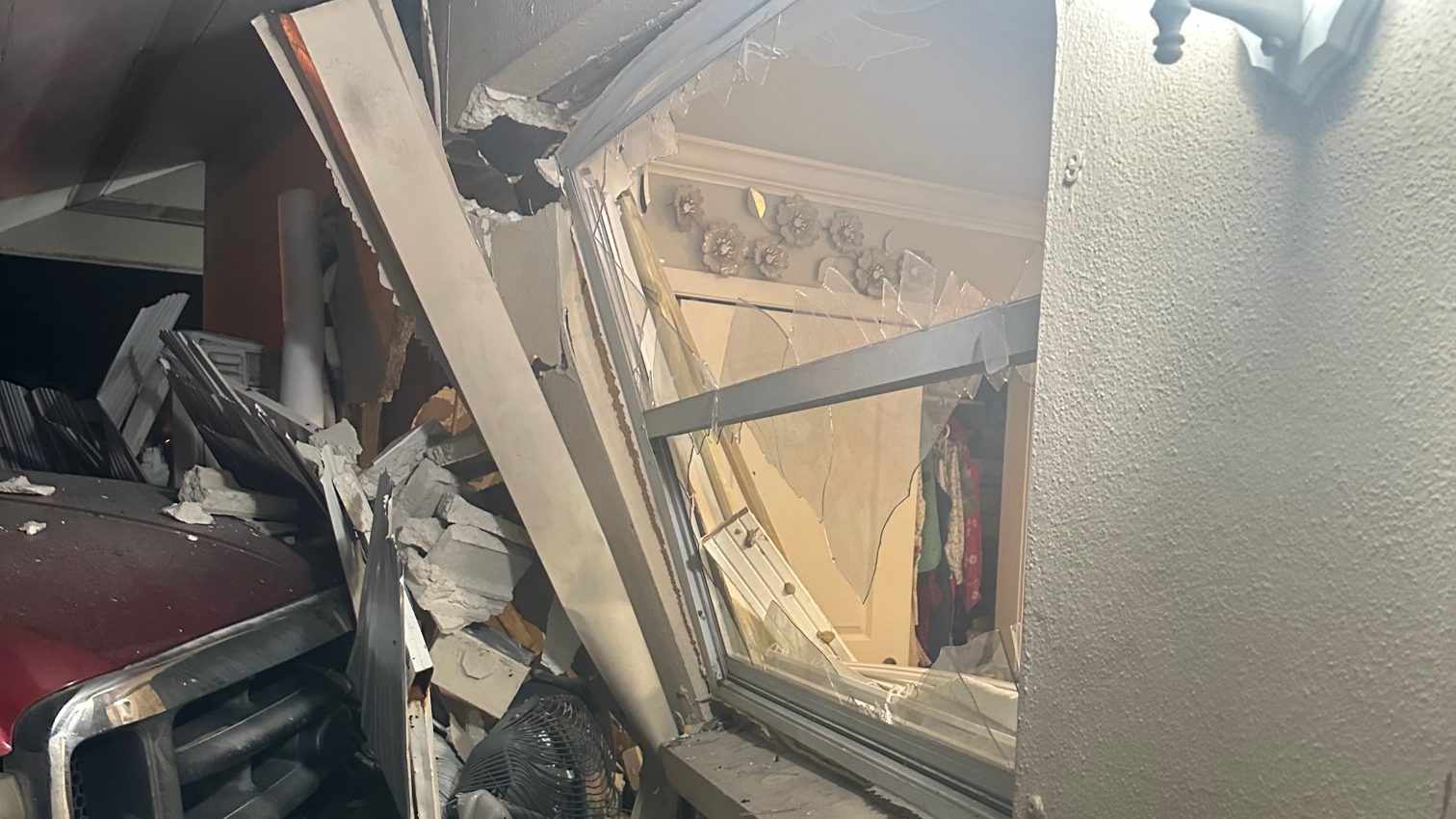
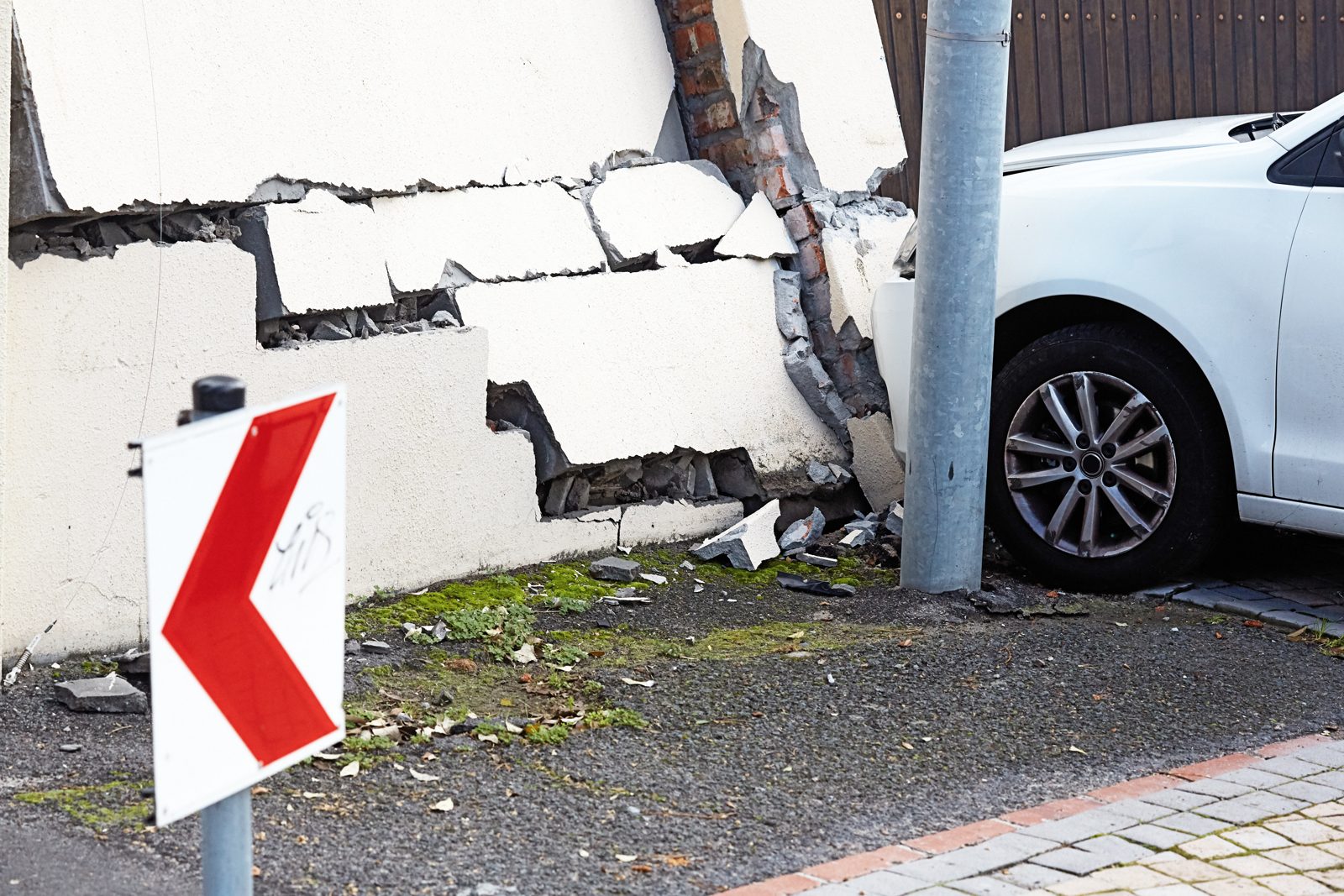
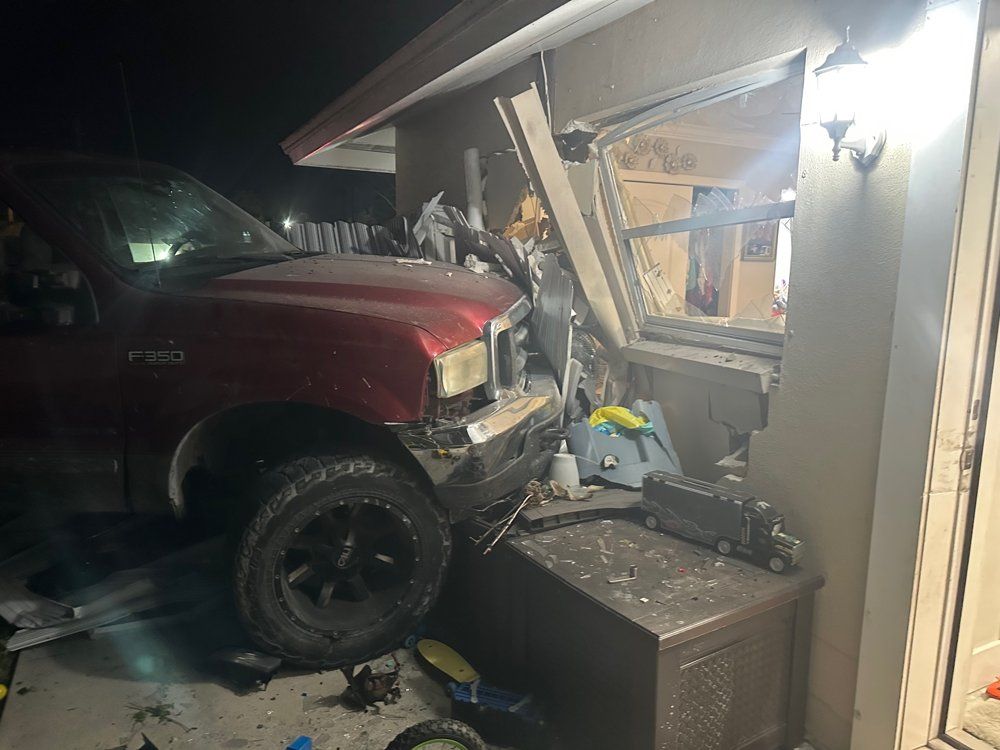
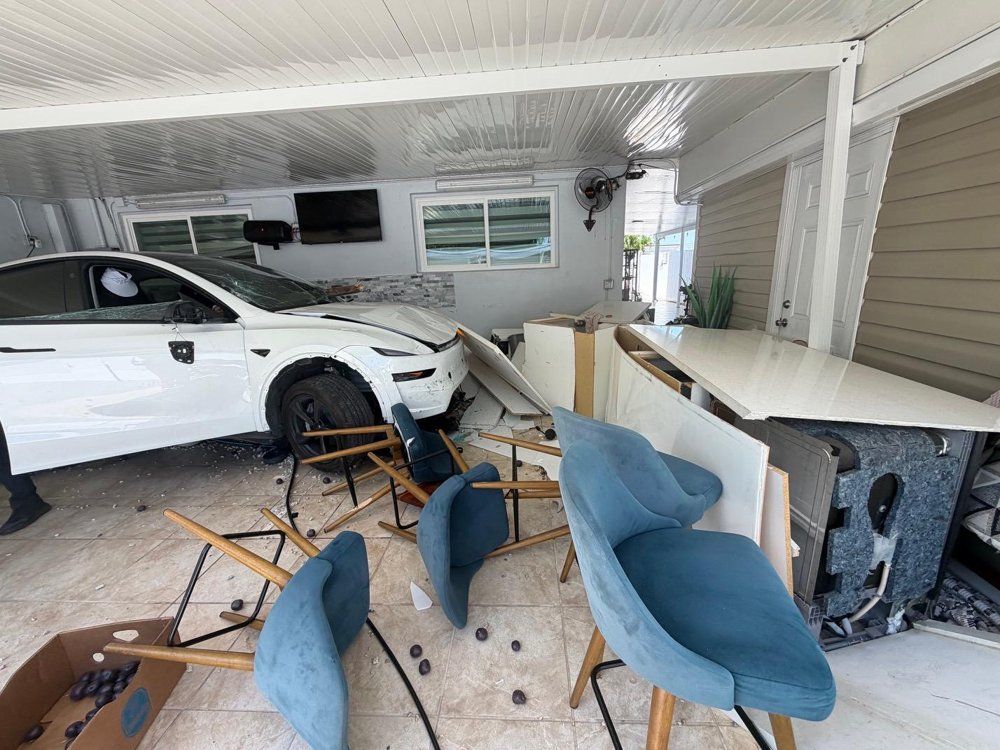
Two to four thousand pounds arriving at 20 or 30 miles an hour does not stop at the drywall. The visible hole is the smallest part of most vehicle impact claims we document:
What to Do After a Vehicle Hits Your Property
The Steps, Source by Source: Police, Crash Report, Insurance, Building Department
Every step after a vehicle strike leaves a record that the claim depends on. This is the order that protects the claim, with the official source for each step.
- Call 911 and get the case number. In Florida, the investigating officer must file a long-form crash report when anyone is hurt, a vehicle has to be towed, a commercial vehicle is involved, or the driver left the scene or was impaired (Fla. Stat. §316.066). Write down the officer’s name and agency before they leave.
- Get the crash report. Florida crash reports are sold through the FLHSMV Crash Portal for $10 per report plus a $2 convenience fee per transaction. They stay confidential for 60 days after filing, but the parties involved, their lawyers and their insurers can get them right away (316.066(2)). Homeland adds the report to your claim file.
- Call Homeland before anyone else talks numbers. A licensed public adjuster works for you, not for either insurer. Check any adjuster’s license on the Florida DFS licensee search or the New Jersey DOBI license search. Homeland is listed as agency W818638 in Florida and firm 3003982360 in New Jersey.
- Open the claim on your own policy, with us. Florida bars a new property claim not reported within 1 year of the date of loss, and a supplemental claim after 18 months (Fla. Stat. §627.70132). Once notified, the insurer must acknowledge within 7 calendar days and pay or deny within 60 days (Fla. Stat. §627.70131). Homeland sends the notice in writing, with the case number and photos.
- Homeland puts the driver’s insurer on notice; you sign nothing. The driver’s insurer owes your deductible and anything your policy leaves out. Its adjuster represents the driver: a release signed for the visible damage can close the claim before the structural damage is found.
- Call the building department if the structure is in question. A struck load-bearing wall, a shifted opening or a damaged meter can make the building unsafe until it is shored and inspected, and structural repairs generally need a permit. Keep every inspection notice: they prove the scope.
- Protect the property and keep receipts. Board-up, shoring, tarps and temporary fencing are part of the claim. Photograph the damage before the contractor covers it.
- If the claim stalls, Homeland escalates it. We press the insurer with a written demand and, for residential claims, prepare the claim for DFS mediation (Fla. Stat. §627.7015) or appraisal under your policy.
- If anyone was hurt, call an injury attorney for that part. Florida public adjusters may not act on bodily injury claims or give legal advice (Fla. Stat. §626.854(3)). The property claim is separate, and Homeland handles it.
How Homeland Handles a Vehicle Impact Claim
Car Hit My House: Lawyer or Public Adjuster? Who to Call First
Before you hire a car-hit-my-house lawyer for the property damage, know what each one does. Most vehicle impact claims are won on documentation, a structural scope and a line-item estimate, and that is the work Homeland does from the first day.
- Injuries: call a personal injury attorney. A public adjuster cannot handle bodily injury claims.
- The house, fence, garage or storefront: your own policy pays first, and the dispute is almost always about scope: framing, slab, utilities, code upgrades, matching. That is a public adjuster’s job.
- Damage beyond every policy limit: when the loss is larger than your coverage plus the driver’s, an attorney can advise you on pursuing the driver personally.
- Denied or stuck claim: call Homeland first for a free review of the denial, the estimate and the policy.
If it becomes a legal fight, we work alongside your attorney: the documentation, scope and estimate we build carry straight into the case. How Homeland supports law firms. For a side-by-side, see property damage lawyer or public adjuster: who to call.
Vehicle Impact Claim Checklist (Printable)
Keep this list by the door while the house is boarded up. Every line is something an adjuster will ask for.
- Police case number, officer’s name and agency
- Driver’s name, plate, auto insurer and policy number (from the exchange or the crash report)
- Photos and video before the vehicle is moved: inside, outside, ceiling, floor, cracks across the room
- Utility shut-offs and any gas, electric or water company visit
- Board-up, shoring, tarp and fencing invoices
- Building department notices, unsafe-structure tags and permits
- Engineer or contractor report on framing, slab and openings
- List of damaged contents and anything in the garage
- Hotel, rental, meals and storage receipts (loss of use)
- Every letter or email from either insurer, unsigned releases included
Do not sign a release or accept a check from the driver’s insurer until the structure has been inspected. Call Homeland first: (305) 783-3777.
Start a Vehicle Impact Claim
A licensed Homeland public adjuster calls you back and comes to the property: anywhere in Florida, and statewide in New Jersey.
Damage happening right now? Call (305) 783-3777 · New Jersey (732) 517-3777, 24/7.
Deadlines to Know
New Jersey. Insurers must begin investigating within 10 working days of notice and pay a first-party property claim within 30 calendar days after receiving a properly executed proof of loss; a third-party property damage claim must be resolved within 45 days (N.J.A.C. 11:2-17.7). Your policy sets its own prompt-notice condition.
In the News: A Real Vehicle Impact Claim
Vehicle Impact Claim Threads in the Forum
Threads answered by a licensed public adjuster. Reply with your own experience, or post a question of your own.
Am I covered for this?
Nelson Avila, PA: It depends on your policy's wording: what perils it covers, what it excludes, your deductibles and any sublimits or endorsements.
Reply ›Florida & New Jersey LawHow long does the insurance company have to pay?
Nelson Avila, PA: In Florida, the insurer must pay or deny your claim within 60 days after it receives notice of the claim, in writing.
Reply ›Insurers & PoliciesHow do I file a claim, and can my premium go up?
Nelson Avila, PA: Start by calling a licensed public adjuster before you file, so the claim is documented, valued and presented right from day one.
Reply ›Vehicle Impact Claim FAQs
A car hit my house. Does my homeowners insurance cover it?
Should I file with my insurance or the driver’s?
I crashed my own car into my garage. Is that covered?
The driver’s insurance company already offered me a check. Should I take it?
The driver drove off. What now?
A truck hit my building and the store is closed. Can I claim the lost sales?
Does the repair have to bring the wall up to current code?
Does Homeland handle the claim against the driver too?
Do I have to wait for the driver’s insurance before my own policy pays?
No. Vehicle damage is a covered peril on standard homeowners, condo and commercial forms, so your own policy pays under its terms whoever was at fault, and nothing in Florida law makes you wait for the driver’s carrier. Your insurer recovers from the driver’s insurer afterward.
The driver only has $10,000 in property damage coverage. Now what?
That is Florida’s legal minimum (Fla. Stat. 324.022), and a vehicle through a wall often costs more. Your own policy covers the rest under its limits. For anything above every policy, an attorney can advise you about pursuing the driver personally.
I crashed my own car into my house. Am I covered?
Yes for the house on a special-form (HO-3) policy, whoever was driving; named-perils forms exclude a fence, driveway or walk hit by a resident’s vehicle. The car itself goes on your auto policy’s collision coverage.
How do I get the crash report in Florida?
Through the FLHSMV Crash Portal, at $10 per report plus a $2 convenience fee per transaction. Reports are confidential for 60 days after filing, but the parties involved and their insurers can get them right away.
Who pays for a hotel while the house is repaired?
Your policy’s loss-of-use coverage (additional living expense) pays the increase in living costs while the home is uninhabitable, up to its limit. Keep every receipt; the driver’s insurer can owe what your policy does not.
A truck hit my store. Does insurance pay for the days we’re closed?
If your commercial policy carries business income coverage, yes: lost net income and continuing expenses while you repair, plus extra expense to reopen sooner. Keep sales records from before and after the crash. See business & commercial claims.
What if the driver took off?
A hit-and-run is still a covered loss on your property policy. Report it to the police the same day with the vehicle’s description and direction; the case number is the first thing every adjuster asks for.
Can Homeland help if I have no homeowners insurance?
In Florida, yes: Homeland handles the property damage claim against the at-fault driver’s insurer (third-party damage claims). In New Jersey, Homeland represents policyholders on their own policies.
A plane or helicopter hit my house. Who pays for the damage?
Your own property policy pays first, minus your deductible, whoever was flying. You do not wait for fault to be decided, and Homeland documents the damage and handles the claim. If you have no policy of your own, Homeland can help you recover from the at-fault party’s insurance in Florida. Injuries go to an attorney. The full answer is in Car or Plane Hit Your House? Your Own Policy Covers It
Insights
 By Nelson Avila
Vehicle Impact Claims We Handle Across Florida & New Jersey
Homeland handles vehicle impact claims throughout Florida and New Jersey. Wherever the car came to rest, call us 24/7.
Talk to a Public Adjuster
How Can We Help You Recover, or Prepare?
Tell us about your loss. We’ll call you back.
What Vehicle Impact Clients Say
Verbatim reviews from Homeland clients on Google.
“These guys are the best and we cannot thank them enough!”
Other Sudden Damage Claims We Handle
A vehicle strike is one of several sudden, non-storm losses that are covered more often than owners expect. Homeland handles each of these for Florida and New Jersey policyholders.
Who This Is For
Homeland handles this kind of claim for:
Verify Homeland
Check us before you hire anyone. Every license below links to its public record on the Florida Department of Financial Services licensee search.
- Serves all of Florida: Yes — every city and county. A licensed Homeland public adjuster comes to your property — no need to visit an office. Call (305) 783-3777, 24/7.
- Homeland Public Adjusters Corporation: Florida public adjusting firm license W818638 · New Jersey public adjuster firm license 3003982360
- Yeni Martinez, President: Florida public adjuster license P103370 (licensed since 2007) · New Jersey 3003714097 · designated primary adjuster
- Alberto Enriquez: Senior licensed public adjuster, Florida P112658
- Yisel Dieguez: Licensed public adjuster and Xactimate estimator, Florida W873884 · New Jersey 3003714335
- Nelson Avila: Florida public adjuster license G332385 · Florida Certified Contractor CRC1331322 · property insurance appraiser and umpire
- Complaints and reputation: 5.0★ on Google · BBB Accredited Business, A+ rating
- Since 2006: Homeland Public Adjusters, Corp. was incorporated in Florida on December 11, 2006. Our President, Yeni Martinez, has held Florida public adjuster license P103370 since 2007. When Florida began requiring adjusting firms to hold their own firm license (a 2021 law, Senate Bill 1598; DFS began licensing adjusting firms in November 2021), Homeland was issued firm license W818638 on January 11, 2022. On November 10, 2026, Homeland became a BBB Accredited Business (BBB Serving Southeast Florida & the Caribbean), with an A+ rating. Each adjuster’s appointment with Homeland appears on that adjuster’s own DFS record.
- English and Spanish. Office: 8004 NW 154th Street, Suite 609, Miami Lakes, FL 33016 (visits by appointment). Florida (305) 783-3777 · New Jersey (732) 517-3777, 24/7.