Public Adjuster vs. Independent Adjuster vs. Company Adjuster
Also called: independent adjuster, third party adjuster, company adjuster, staff adjuster, desk adjuster, field adjuster, what is a public adjuster

Homeland Public Adjusters · Last reviewed: October 2026
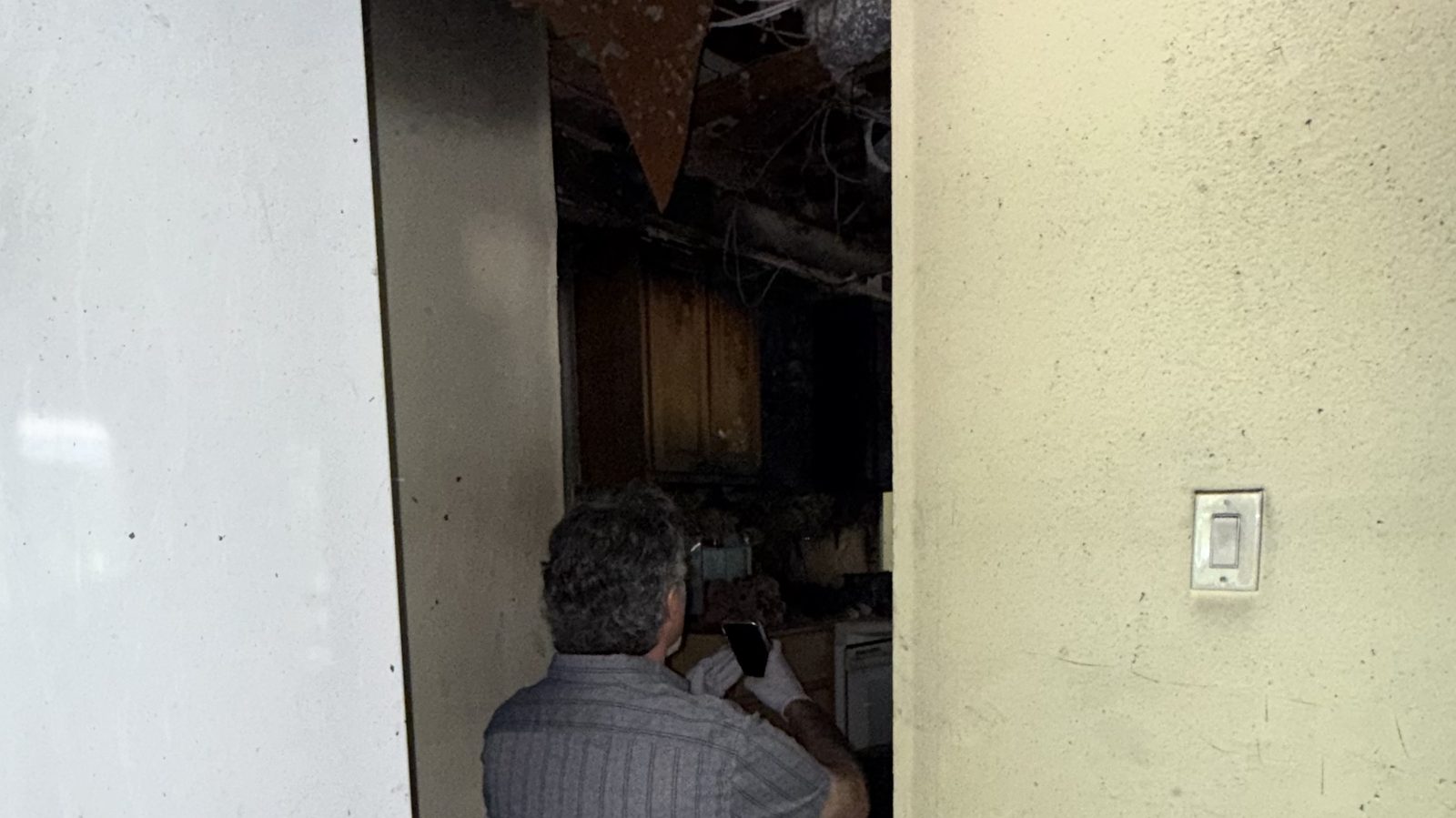
Three kinds of adjusters can show up on a property claim, and only one works for you. A company (staff) adjuster is an insurer’s employee. An independent adjuster is a contractor hired by the insurer, usually through an adjusting firm, to handle claims on the insurer’s behalf; “independent” describes the employment arrangement, not whose side they are on. A public adjuster is licensed by the state to represent the policyholder, prepares and negotiates the claim for you, and is paid by you, in Florida by a capped percentage of the recovery.
Full guide: What Is a Public Adjuster?
Side by side
| Company (staff) adjuster | Independent adjuster | Public adjuster | |
|---|---|---|---|
| Works for | The insurance company | The insurance company (as a contractor) | The policyholder |
| Paid by | Insurer salary | Insurer, per claim or per day | Policyholder, usually a percentage of the recovery |
| License | State adjuster license (Florida: all-lines or company adjuster) | State adjuster license (Florida: all-lines, appointed by the insurer) | State public adjuster license (Florida §626.854; New Jersey P.L.1993, c.66) |
| Loyalty / duty | To the insurer; must handle claims fairly under state unfair claims laws | Same as company adjuster | Fiduciary-type duty to the policyholder; cannot represent the insurer |
| Prepares the estimate | Yes, for the insurer | Yes, for the insurer | Yes, for you, and negotiates it |
| Appears after a catastrophe | Rarely in the field | Most field inspections after a hurricane | Retained by the owner at any point |
“Third-party adjuster” and “desk adjuster”
A third-party administrator (TPA) or third-party adjuster handles claims for an insurer under contract, often for self-insured businesses or for carriers that outsource. A desk adjuster reviews the file and the field adjuster’s photos from an office and writes or approves the estimate; after a catastrophe the person who inspected your roof and the person who decided the number are often different people in different states. None of these works for the policyholder.
Florida
A public adjuster is defined in §626.854 as a person who, for compensation, prepares, completes or files an insurance claim for an insured or aids in negotiating a settlement. The same section caps the fee at 20% of the claim payment, or 10% for claims arising from a declared state of emergency during the year after the declaration, and gives the policyholder the right to cancel the contract within 10 days (longer after an emergency). Florida requires anyone adjusting claims for compensation on either side to hold a Department of Financial Services license; a contractor or roofer who negotiates your claim for you is practicing public adjusting without a license.
New Jersey
New Jersey licenses public adjusters under the Public Adjusters’ Licensing Act (P.L.1993, c.66), administered by the Department of Banking and Insurance. There is no statutory fee cap; fees must be reasonably related to the services rendered (N.J.A.C. 11:1-37.13), and since P.L.2025, c.84 the contract must be in writing with license numbers, a three-business-day cancellation right, and work records supporting the fee. Homeland Public Adjusters Corporation holds New Jersey firm license 3003982360.
When to bring in a public adjuster
When the carrier’s number does not reflect the damage, when a claim has been denied or sits unanswered, when the loss is large enough that the documentation is a job in itself (fire, flood, hurricane, commercial), or when you simply do not want to negotiate against professionals alone. The earlier the better: a public adjuster who prepares the claim from the start shapes the record the carrier’s adjusters will work from. Fees are explained at public adjuster fees; the claim review is free.
Frequently asked questions
Is an independent adjuster on my side?
Can I have my own adjuster and still deal with the insurer’s adjuster?
What does a public adjuster cost?
Can my contractor negotiate my claim?
Related terms
The appraisal clause is a provision in most property policies that lets either the policyholder or the insurer demand appraisal when they disagree on the amount of a covered loss.
A proof of loss is a sworn, signed statement from the policyholder setting out the date and cause of the loss, the property involved, the interest of the insured and others, other insurance, and the…
A supplemental claim is a claim for additional loss or damage from the same peril the insurer has already adjusted, or for costs incurred while repairing under an open claim.
A policy exclusion is a provision that takes a cause of loss, a type of property, or a situation out of coverage that the insuring agreement would otherwise provide.
If this is your loss, call Homeland before you talk to the insurance company: Florida (305) 783-3777, New Jersey (732) 517-3777, 24 hours. A licensed public adjuster reviews the claim for free and calls you back right away. No Recovery, No Fee.
Sources
- Section 626.854, Florida Statutes
- New Jersey P.L.2025, c.84
- NJ DOBI Bulletin 12-16 (public adjuster fees)
This article is for general information only and is not legal or insurance advice. Statutes, regulations and policy wording change, and how they apply depends on your own policy and the facts of your claim. Homeland Public Adjusters is a public adjusting firm, not a law firm.
- Surprising Things Your Policy Covers
- Neighbor's Condo Fire: Who Pays?
- Damaged Tile or Laminate: A Claim?
- Barn, Stable & Outbuilding Coverage
- Wind and Tornado Risk on the Farm
- Crop Insurance vs. Property Insurance
 Yeni Martinez
 Alberto Enriquez
 Yisel Dieguez
Upload the denial letter or the insurer’s estimate. A licensed public adjuster reads it and calls you back right away. Free.
Free Claim Review