Homeland Public Adjusters represents warehouse, distribution, manufacturing, cold storage and light industrial owners and tenants in Florida and New Jersey with roof, wind, fire, water, sprinkler and equipment claims, and with the business income claim when the building cannot ship. We document the structure, the racking, the equipment and the inventory, and we handle the claim with the carrier. No Recovery, No Fee.
South Florida’s logistics corridors in Doral, Medley and Hialeah, the Port of Tampa and Jacksonville, and the distribution parks along I-4 take hurricane wind on low-slope roofs that fail at the flashing and coping first. After Hurricane Ian, IBHS found damage rates above 50% on the low-slope commercial roofs it assessed in Southwest Florida. Homeland represents Florida industrial owners and tenants.
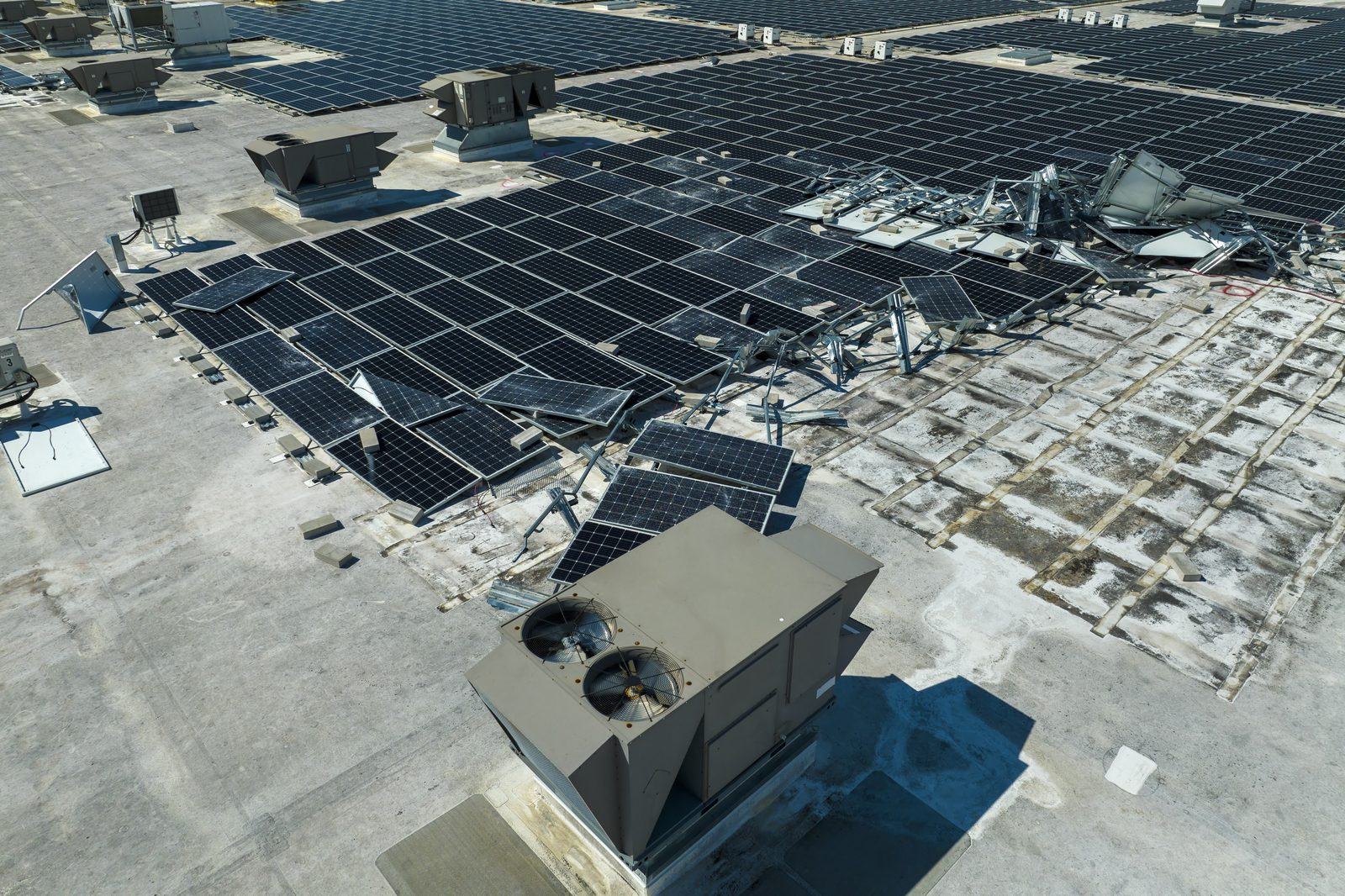
Rooftop equipment, solar arrays and HVAC units are part of the building claim and are often left out of the first estimate.
Warehouses & Industrial Claims in New Jersey
New Jersey’s warehouse belt along the Turnpike, in Middlesex, Union and Burlington counties, and the Port Newark industrial stock carry snow load, frozen sprinkler lines, nor’easter roof failures and fire risk in older buildings. Homeland handles New Jersey warehouse and industrial claims, including the tenant’s claim for the stock and equipment the landlord’s policy does not cover.
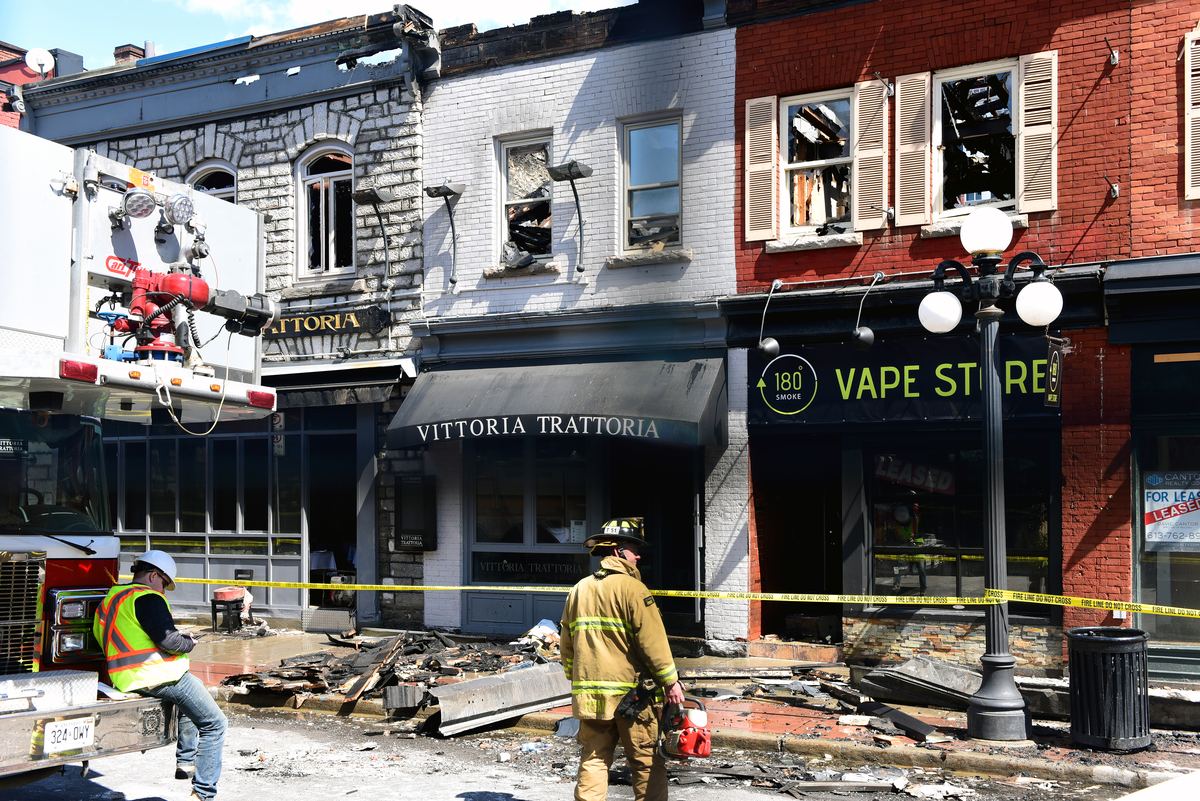
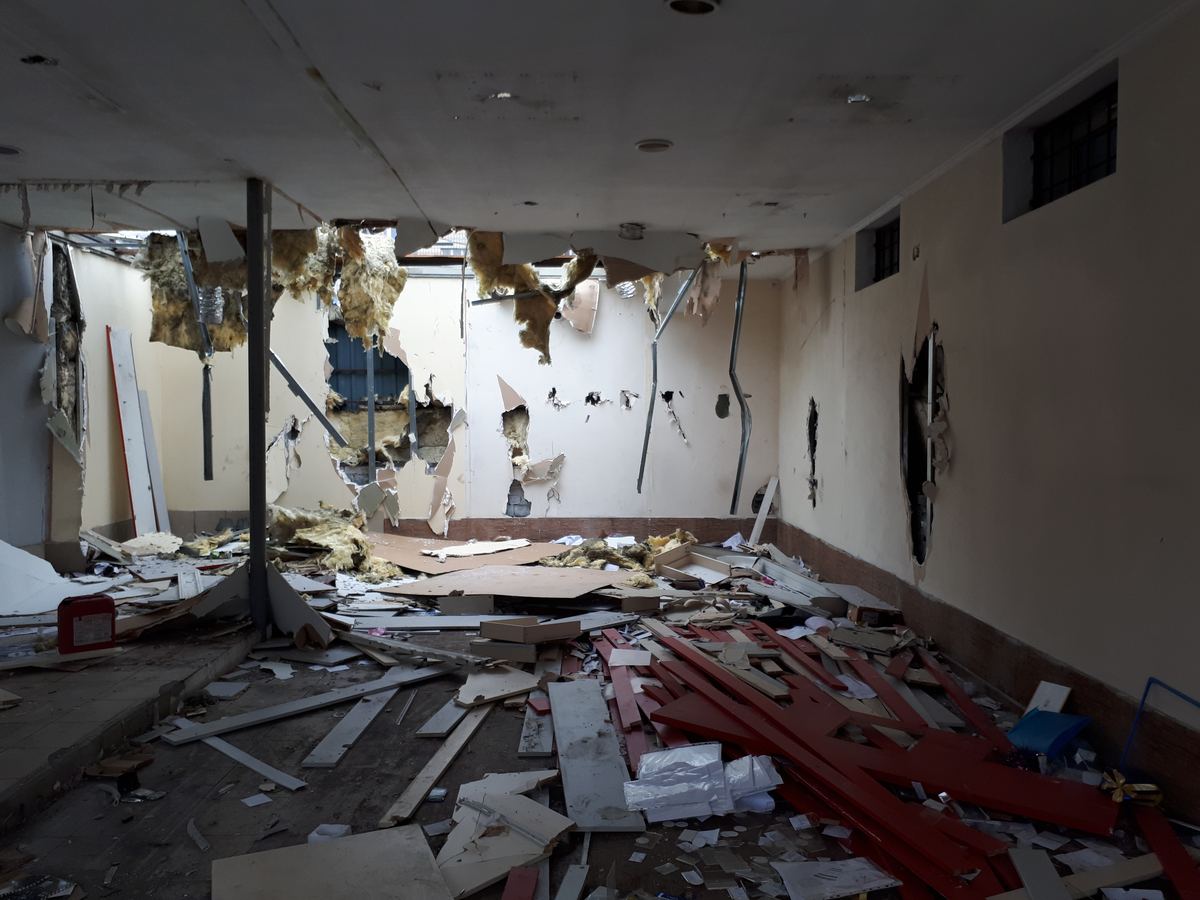
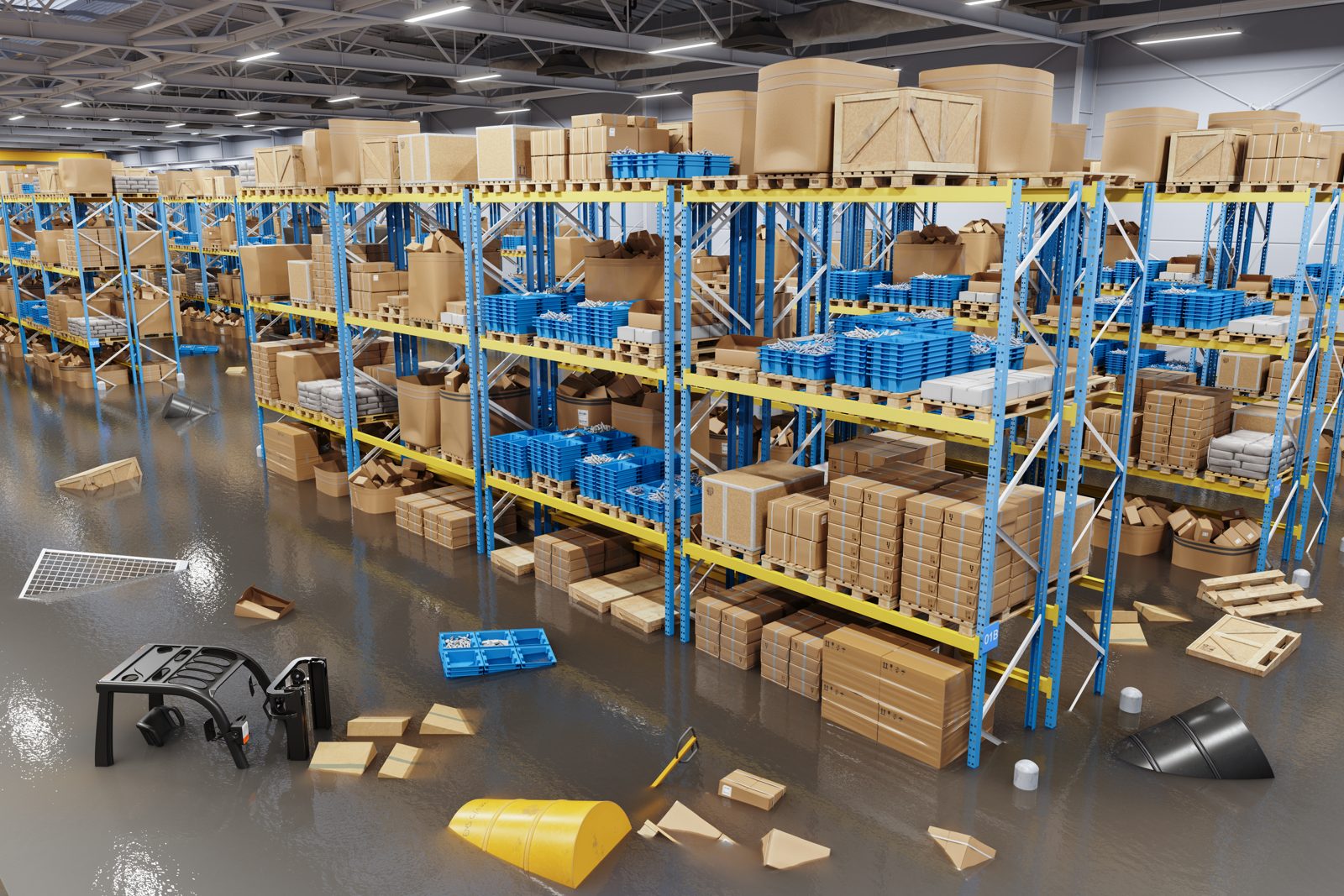
Industrial losses are decided by what the water or fire reached inside, not by the building itself:
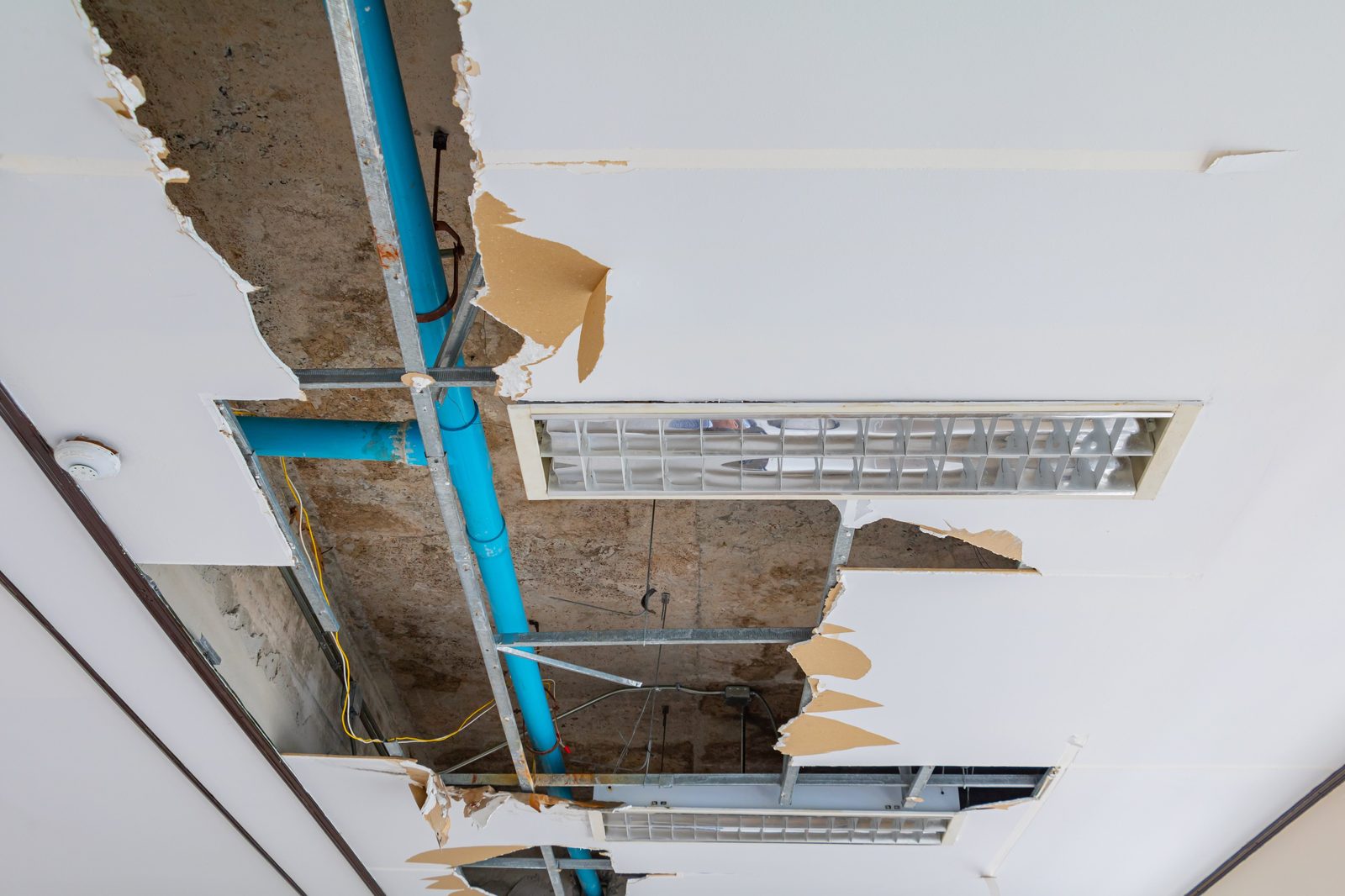
Roof failures: membrane, flashing and coping on low-slope roofs; water across thousands of square feet of racking, pallets and equipment in a single storm
Fire: about 1,500 warehouse structure fires a year nationally with roughly $323 million in damage; fires in storage areas are 38% of incidents but 72% of the damage, and fires between midnight and 6 a.m. do twice the average damage (NFPA)
Sprinkler discharge and frozen lines: the system that saves the building ruins the stock below it; in New Jersey a frozen branch line in an unheated corner does the same
Wind on doors and walls: overhead doors blown in, wall panels peeled, and the pressurization damage that follows inside
Equipment and machinery: conveyors, compressors, forklifts, CNC and process equipment damaged by water, surge or smoke; equipment breakdown is a separate coverage
Inventory: finished goods, raw materials and customer-owned stock, each insured differently and each depreciated differently
Business income: a plant that cannot ship loses contracts, not just days
Lithium battery fires in forklifts, e-mobility stock and battery storage, a growing cause with its own cleanup
Warehouses & Industrial: by the numbers
1,508U.S. warehouse structure fires per year, about $323 million in damage (NFPA, 2018–22)
72%Share of warehouse fire damage from fires that start in storage areas (NFPA)
50%+Damage rate on low-slope commercial roofs IBHS assessed after Hurricane Ian
92%Share of fires large enough to activate sprinklers in which they operated, effective 97% of the time (NFPA)
Every commercial policy is a package of separate coverages with separate limits and separate arguments. These are the ones that decide this industry’s claims:
Coverage
Why it matters here
What to check
Business income and contingent BI
A shutdown ripples to customers and suppliers
The period of restoration, extended income, and whether contingent business income covers a supplier’s loss that stops your line
Stock and inventory valuation
Finished goods at selling price, raw materials at cost, customer goods under bailee coverage
The valuation clause; a policy that pays “cost” on finished goods leaves the margin on the floor
Equipment breakdown
Machinery that fails after a surge, a flood or a fire
Without it, the carrier calls the failure mechanical and excludes it
Ordinance or law
A roof or wall rebuild triggers current wind-load, fire separation and sprinkler requirements
Coverage C limit; Florida’s roof-to-wall and opening-protection code work can exceed the base repair
Coinsurance
Large buildings valued years ago are routinely underinsured
Statement of values against current replacement cost per square foot
Tenant improvements and betterments
Mezzanines, offices, racking and process build-outs the tenant paid for
Which policy lists them, and whether the lease assigns the loss
What to Do After the Loss
1
Make it safe and stop the loss: shut the water, cut the power to the affected area, call the fire department for any smoke or gas. Keep people out of a space with a sagging ceiling.
2
Photograph and video before cleanup, every area, every piece of equipment, the stock, the ceiling above and the floor below, with a wide shot and close-ups.
3
Protect what is left and keep the receipts: board-up, tarps, extraction, a generator for the walk-in. Emergency work is reimbursed; permanent repairs wait for the inspection.
4
Freeze the inventory count: a cycle count of the affected aisles with photographs of each pallet position, before anything is moved or salvaged.
5
Get the sprinkler and alarm service records and the fire department report; the carrier’s first questions are whether the systems worked and whether the stock was stored to code.
6
Separate customer-owned goods from your own in the record; they are claimed under different coverages and sometimes different policies.
7
Let Homeland notify the carrier: call us before the insurance company. Hire us and we file the notice in writing with the facts, the photos and the coverage request.
8
Start the income record the same day: daily sales before and after, the reservations or orders you turned away, the payroll you kept, the extra costs to keep going.
How Homeland Helps
Policy read first: business income, extra expense, ordinance or law, coinsurance, equipment breakdown, spoilage, tenant improvements and the percentage wind deductible, before the carrier’s adjuster frames the claim.
Building, equipment and inventory documented separately, each under the coverage and valuation that applies to it.
Business income built from your records: sales, P&L, payroll and the period of restoration proved, not estimated.
Landlord and tenant policies coordinated so the shell, the build-out and the contents are each claimed once, under the right policy.
Code and ordinance costs identified before demolition, when they can still be claimed.
Appraisal when the number is still short, handled by a licensed public adjuster who is also a certified property appraiser and umpire.
No Recovery, No Fee.
Deadlines to Know
Florida. Notice of an initial or reopened property claim is due within 1 year after the date of loss and a supplemental claim within 18 months (Fla. Stat. §627.70132), which applies to property insurance of every kind, commercial included. The 7-day acknowledgment and 60-day decision rules of §627.70131 apply to residential policies and to certain smaller commercial properties, so for a larger building the policy’s own proof-of-loss and suit clauses control.
New Jersey. Insurers must begin investigating within 10 working days of notice and pay a first-party property claim within 30 calendar days after a properly executed proof of loss, with written delay notices every 45 days after that (N.J.A.C. 11:2-17.7).
In the News. NFPA’s 2025 research on warehouse structure fires found an average of 1,508 a year from 2018 through 2022, with about $323 million in direct property damage. Fires that started in storage areas were 38% of incidents but 72% of the damage, and the fires that began between midnight and 6 a.m., when no one was there to catch them, were 18% of incidents but 38% of the damage. For an owner or tenant, those two findings are the claim: the building is often standing, the racking and the stock are not, and the inventory and business income coverages carry the loss.
The roof leaked onto our inventory. Is the stock covered or just the roof?
Both, under different coverages: the roof under building, the stock under business personal property or stock coverage, valued the way the policy says. The carrier’s first estimate is usually the roof patch; the inventory is the claim.
The sprinklers went off and there was no fire. Who pays for the ruined goods?
Accidental sprinkler discharge is a covered cause on most commercial forms, and the stock, the cleanup and the downtime are part of the claim. A frozen line in New Jersey is covered unless the policy’s heat-maintenance condition was breached.
Our equipment powers on but runs badly since the flood. Is that a claim?
Yes, and it needs an equipment specialist’s report before the carrier calls it wear. Water in bearings, boards and windings is damage whether the machine still starts or not; equipment breakdown coverage applies when it fails later.
The carrier says we were underinsured and is applying a coinsurance penalty.
Coinsurance penalties are calculated, not asserted. We check the insured value against the required percentage and the building’s real replacement cost, and challenge the carrier’s valuation where it is high.
We hold customer-owned goods. Whose claim is it?
Yours, under bailee or customer goods coverage if the policy carries it, and the customer’s under their own stock coverage if not. The storage agreement decides who insures what; we read it before the claim is framed.
Can we claim the contracts we lost while the line was down?
Business income covers net income and continuing expenses during the period of restoration; a lost contract is claimed as part of that income when you can show it would have been earned. Extended business income and contingent business income cover the longer tail on some policies.
A commercial claim is a property claim and an income claim at once, and the first estimate covers neither. Call Homeland for a free review before you sign anything.
 By Nelson Avila