The FEMA 50% Rule After a Storm: Substantial Damage for Condos and HOAs

Licensed public adjusters serving Florida & New Jersey
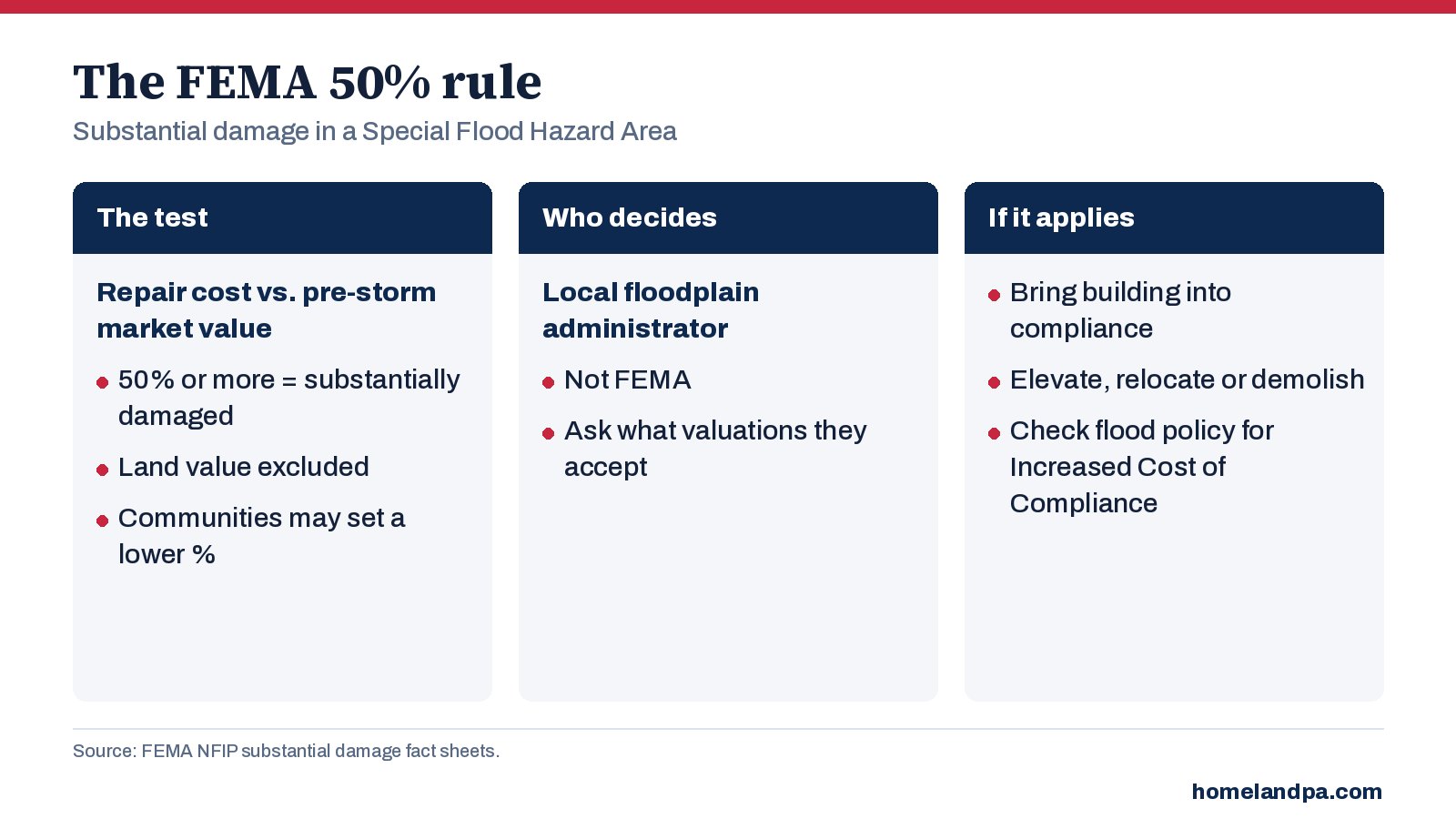
Short answer: in a Special Flood Hazard Area, a building is substantially damaged when the cost to repair it is 50% or more of its market value before the disaster, whatever caused the damage. The decision is made by the local floodplain administrator, not FEMA. A substantially damaged building must be brought into compliance with current floodplain rules, which can mean elevating it, and that can change the whole repair plan and the claim.
How it works
- The comparison is the total cost of repairs to the structure’s pre-disaster market value; land value is excluded.
- Communities may set a stricter (lower) percentage.
- The local building official or floodplain manager makes the determination; FEMA does not.
- If substantially damaged, the building must meet current floodplain requirements: elevate, relocate or demolish (or flood-proof non-residential buildings), with permits.
- Substantial improvement is the same 50% test applied to renovations and additions before a storm.
Why it matters to associations
- The repair estimate drives the 50% math. An incomplete estimate can push a building over the line, or understate the claim; both are expensive.
- Market value matters. If the local value is low, a well-documented appraisal of pre-storm market value (not the tax assessment) can be supported. Ask the floodplain administrator what they accept.
- Flood insurance policies can include Increased Cost of Compliance coverage that helps pay to bring a substantially damaged building into compliance; check the association’s flood policy.
- Units and buildings can receive separate determinations, which affects how the association allocates repairs.
What boards should do after a storm
- Document damage building by building before cleanup.
- Get a complete, line-item repair estimate early; the same estimate supports the insurance claims and the 50% determination.
- Talk with the local floodplain administrator before committing to repair plans.
- Coordinate the wind claim (master policy) and the flood claim (flood policy); how damage is split between them changes both. See Flood Zones Explained.
Frequently asked questions
What is the FEMA 50% rule?
Who decides whether a building is substantially damaged?
Does the 50% use market value or assessed value?
Sources: FEMA, NFIP substantial damage fact sheet; FEMA, local officials determine substantial damage; FEMA, substantial improvement.
This guide is general information for association boards and managers, current as of October 2026. It is not legal advice. Your governing documents, your policies and your association’s attorney control. Local floodplain rules may be stricter than FEMA’s minimum.
- Surprising Things Your Policy Covers
- Neighbor's Condo Fire: Who Pays?
- Damaged Tile or Laminate: A Claim?
- Barn, Stable & Outbuilding Coverage
- Wind and Tornado Risk on the Farm
- Crop Insurance vs. Property Insurance
 Yeni Martinez
 Alberto Enriquez
 Yisel Dieguez
Homeland Public Adjusters represents policyholders, not insurers. Get a free review of your claim.
Get a Free Claim Review