Flood Zones Explained: What Flood Zone Am I In, and Do I Need Flood Insurance?
Licensed public adjusters serving Florida & New Jersey
Short answer: your flood zone is the letter FEMA assigns your property on its Flood Insurance Rate Map. Zones starting with A or V are high-risk areas called the Special Flood Hazard Area: land with a 1% or greater chance of flooding in any year, often called the “100-year flood.” Zones X, B and C are moderate to low risk. Low risk is not no risk: many flood claims come from outside the high-risk zones.
How to find your flood zone
- Look up your address on the FEMA Flood Map Service Center. The map shows the zone and, in many A and V zones, the base flood elevation.
- Check your county’s flood map viewer; many Florida and New Jersey counties publish one.
- Check your mortgage closing papers, which usually include a flood zone determination.
- In the free Adjuster Advantage app, Flood Lens shows your zone and what it means for your home.
What each flood zone means
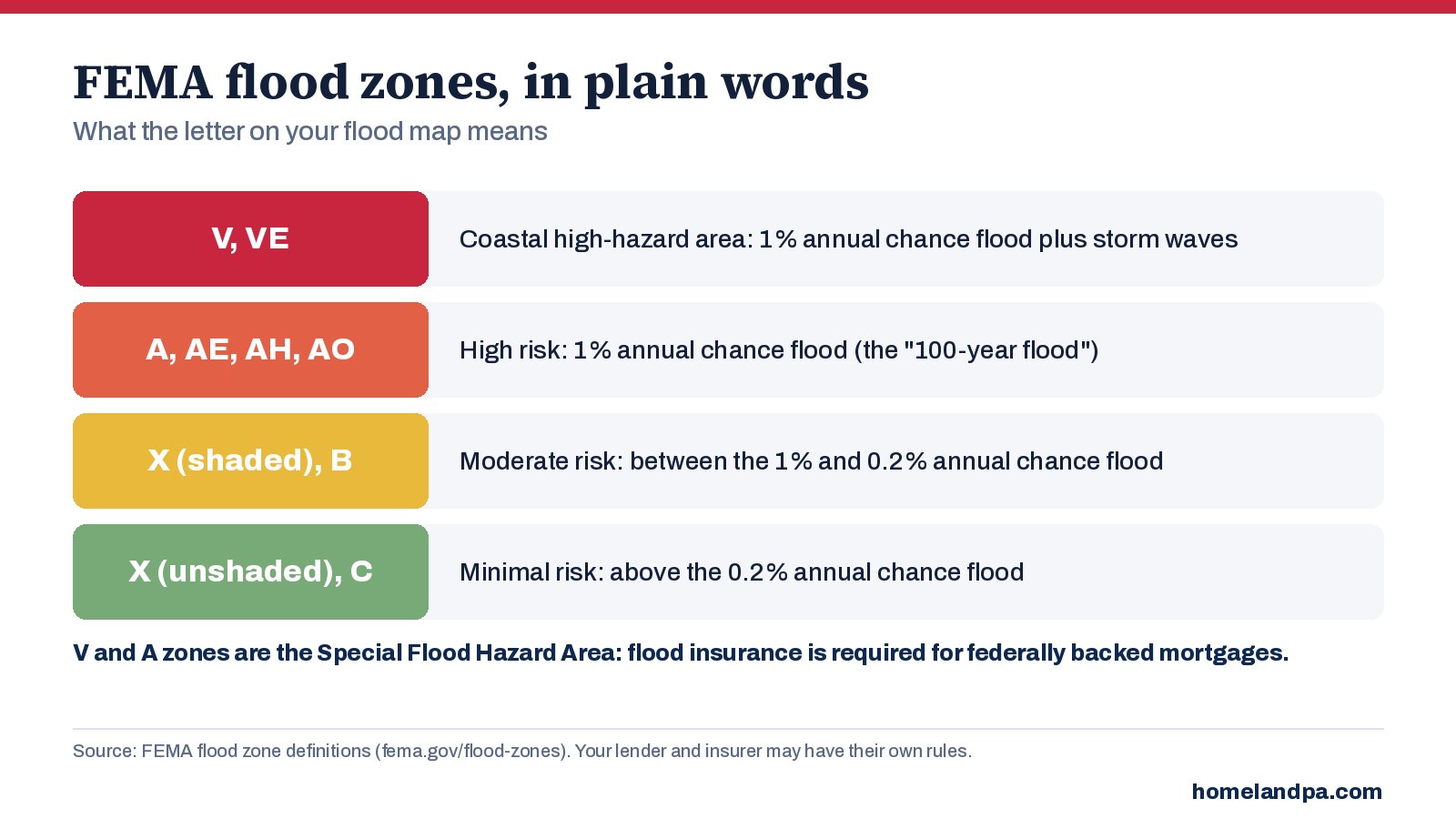
- V and VE: coastal high-hazard areas, the 1% annual chance flood plus storm-driven waves.
- A, AE, AH and AO: high risk, the 1% annual chance flood. AE zones have a base flood elevation; AH and AO are shallow flooding areas.
- X (shaded) and B: moderate risk, between the 1% and the 0.2% annual chance flood (the “500-year flood”).
- X (unshaded) and C: minimal risk, above the 0.2% annual chance flood.
Do I need flood insurance?
- Required by your lender: if your home is in an A or V zone and you have a mortgage from a federally regulated or insured lender, flood insurance is mandatory.
- Required by Citizens in Florida: Citizens requires flood insurance for homes in the Special Flood Hazard Area with wind coverage. Outside that area, the requirement phases in by dwelling value: $600,000 and up from January 1, 2024, $500,000 and up from January 1, 2025, $400,000 and up from January 1, 2026, and all policies from January 1, 2027. Condo unit-owner policies, tenant contents policies and policies that exclude wind are exempt.
- Not covered by your homeowners policy: most homeowners policies exclude flood. Flood coverage comes from a separate National Flood Insurance Program or private flood policy.
- Plan ahead: an NFIP policy generally has a 30-day waiting period before it takes effect.
Flood claims after a storm
After a hurricane, the same home can have wind damage (under the homeowners policy) and flood damage (under the flood policy). How the damage is split between the two policies often decides how much you are paid. Policies also include clauses like the anti-concurrent causation clause that matter when wind and water both hit. We document both losses and handle both claims. See flood damage claims and hurricane and wind damage claims.
Frequently asked questions
What flood zone am I in?
What does flood zone AE mean?
Is flood zone X safe?
Does Citizens require flood insurance?
Does homeowners insurance cover flooding?
Sources: FEMA Flood Map Service Center; FEMA, flood zones; Citizens Property Insurance Corporation, flood insurance requirement; FEMA FloodSmart (NFIP).
This guide is general information, current as of October 2026. It is not legal or insurance advice. Flood maps change; your official FEMA flood map, your lender and your insurer control.
- Surprising Things Your Policy Covers
- Neighbor's Condo Fire: Who Pays?
- Damaged Tile or Laminate: A Claim?
- Barn, Stable & Outbuilding Coverage
- Wind and Tornado Risk on the Farm
- Crop Insurance vs. Property Insurance
 Yeni Martinez
 Alberto Enriquez
 Yisel Dieguez
Homeland Public Adjusters represents policyholders, not insurers. Get a free review of your claim.
Get a Free Claim Review