Flood Zone AE: What It Means, Base Flood Elevation and Flood Insurance
Licensed public adjusters serving Florida & New Jersey
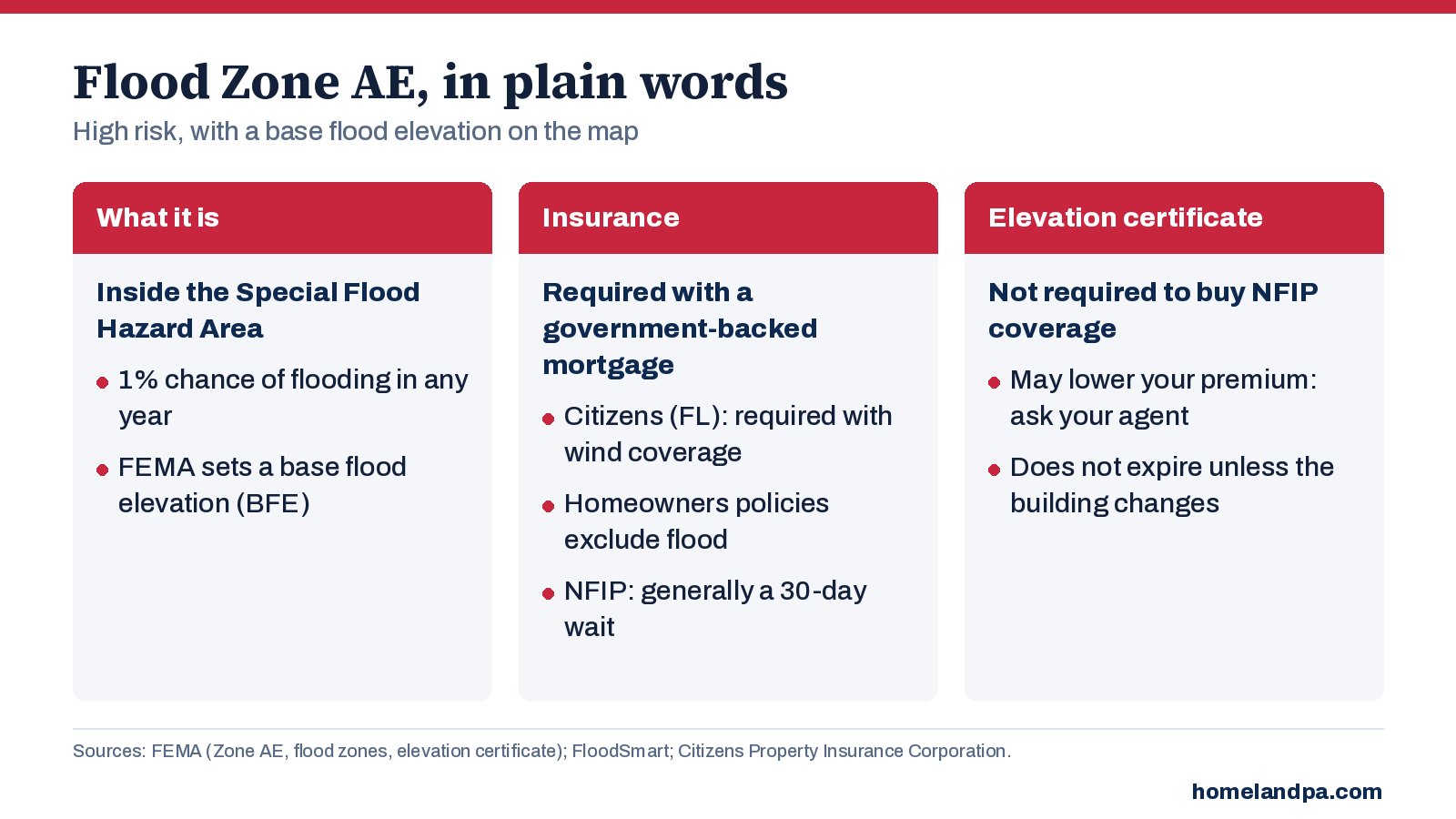
Short answer: Zone AE is a high-risk flood zone. FEMA defines it as the base floodplain where base flood elevations are provided. It is part of the Special Flood Hazard Area, the land FEMA expects to flood in the “base flood,” a flood with a 1% chance of happening in any year (often called the 100-year flood). If your home is in Zone AE and you have a government-backed mortgage, flood insurance is required.
What “AE” means on your flood map
- A zones are high-risk areas for the 1% annual chance flood.
- AE is an A zone where FEMA has calculated the base flood elevation (BFE), the height floodwater is expected to reach in the base flood. FEMA notes that AE zones are now used on new-format flood maps in place of the older A1–A30 zones.
- Next to AE you may see VE (coastal areas with storm waves), AH and AO (shallow flooding), or X (moderate to minimal risk). See Flood Zones Explained for every zone.
Is flood insurance required in Zone AE?
- Mortgage: FEMA’s FloodSmart site says that if you own a property in a high-risk zone and have a government-backed mortgage, you must buy flood insurance.
- Citizens in Florida: Citizens requires flood insurance for homes in the Special Flood Hazard Area with wind coverage. Outside that area, the requirement phases in by dwelling value: $600,000 and up from January 1, 2024, $500,000 and up from January 1, 2025, $400,000 and up from January 1, 2026, and all policies from January 1, 2027. Condo unit-owner policies, tenant contents policies and policies that exclude wind are exempt.
- Your homeowners policy does not cover it: most homeowners policies exclude flood. Flood coverage comes from a separate National Flood Insurance Program (NFIP) or private flood policy.
- Waiting period: an NFIP policy generally takes effect 30 days after purchase, so buying one when a storm is already forecast is usually too late.
Base flood elevation and the elevation certificate
Your home’s height compared with the base flood elevation matters for flood risk and for rebuilding rules. An elevation certificate is the FEMA form that records a building’s elevations. It is completed and certified by a licensed land surveyor, engineer or architect, and FEMA says it does not expire unless a physical change to the building makes it invalid.
Under FEMA’s current rating system (Risk Rating 2.0), an elevation certificate is no longer required to buy NFIP coverage. FEMA says an owner may still give one to the agent to see whether it lowers the cost of the policy. Ask your agent before you pay for a new survey; if you already have a certificate, keep a copy.
After a flood in Zone AE
Many homes in Zone AE are along the coast or near rivers and canals, where one storm brings both wind and water. Wind damage is usually claimed under your homeowners policy and flood damage under your flood policy, and how the damage is split between them often decides how much you are paid. If a building in the Special Flood Hazard Area is substantially damaged, local rebuilding rules can also apply; associations can read the FEMA 50% rule for condos and HOAs.
We document both losses and handle both claims for you. See flood damage claims and hurricane and wind damage claims.
Frequently asked questions
What does flood zone AE mean?
Is flood insurance mandatory in Zone AE?
What is the base flood elevation?
Do I need an elevation certificate in Zone AE?
What is the difference between Zone AE and Zone X?
Sources: FEMA, Zone AE; FEMA, flood zones; FloodSmart, What Is My Flood Risk; FEMA, elevation certificate; FloodSmart, Risk Rating 2.0; Citizens Property Insurance Corporation, flood insurance requirement.
This guide is general information, current as of October 2026. It is not legal or insurance advice. Flood maps change; your official FEMA flood map, your lender and your insurer control.
- Surprising Things Your Policy Covers
- Neighbor's Condo Fire: Who Pays?
- Damaged Tile or Laminate: A Claim?
- Barn, Stable & Outbuilding Coverage
- Wind and Tornado Risk on the Farm
- Crop Insurance vs. Property Insurance
 Yeni Martinez
 Alberto Enriquez
 Yisel Dieguez
Homeland Public Adjusters represents policyholders, not insurers. Get a free review of your claim.
Get a Free Claim Review