Florida Condo Association Insurance Requirements (718.111(11)) and What Happens at Claim Time

Homeland Public Adjusters · Last reviewed: October 2026
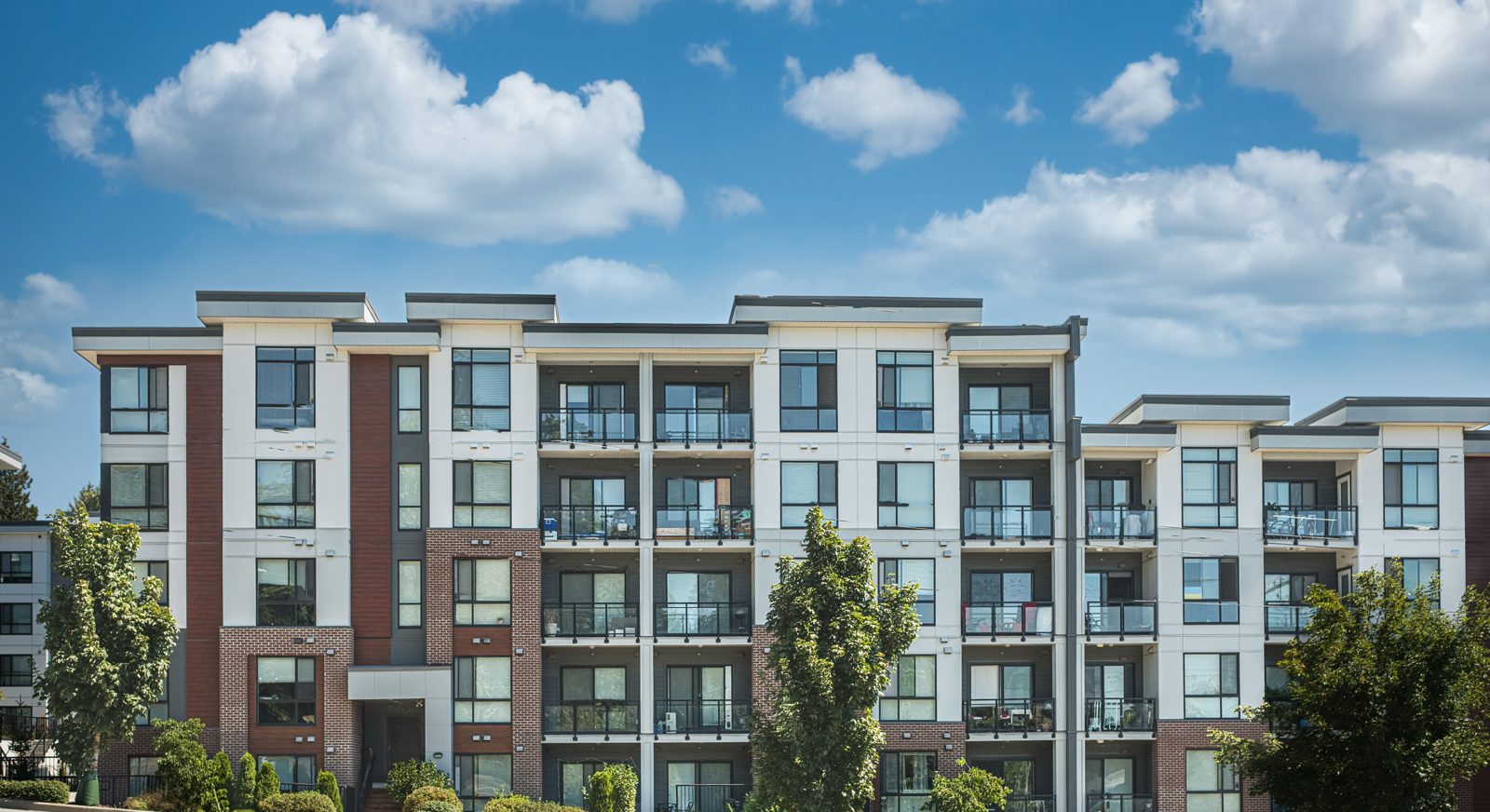
Short answer: Florida’s Condominium Act, §718.111, requires every residential condominium association to carry property insurance on the building based on its replacement cost as determined by an independent appraisal updated at least every three years, covering all portions of the condominium property as originally installed and all alterations to the common elements, and excluding personal property inside units and a specific list of unit finishes. Deductibles and damage above the coverage are a common expense. At claim time those three rules decide who files for what, what the carrier owes, and how a shortfall becomes a special assessment.
What the statute requires
Section 718.111(11)(a) requires “adequate property insurance” based on the replacement cost of the property to be insured, “as determined by an independent insurance appraisal or an update of a previous appraisal,” and states that the replacement cost “must be determined at least once every 3 years, at minimum.” Windstorm coverage is part of that requirement for the common elements. An association insured on a valuation from six years ago is underinsured by statute, and coinsurance clauses turn that into a penalty on every claim.
What the master policy must cover, and must not
Subsection (11)(f) sets the scope. The policy must cover “all portions of the condominium property as originally installed or replacement of like kind and quality,” and “all alterations or additions made to the condominium property or association property.” It must exclude “all personal property within the unit or limited common elements, and floor, wall, and ceiling coverings, electrical fixtures, appliances, water heaters, water filters, built-in cabinets and countertops, and window treatments” that are inside a unit and serve only that unit.
| Item | Master policy or unit owner | Statutory basis |
|---|---|---|
| Roof, structure, exterior walls, windows and doors as originally installed, stairwells, elevators, pool, common-area plumbing and electrical | Master policy | 718.111(11)(f): all portions of the condominium property as originally installed |
| Unit drywall | Master policy | Part of the building; only the coverings are excluded |
| Paint, wallpaper, flooring, cabinets, countertops, appliances, water heater, light fixtures, blinds and drapes inside the unit | Unit owner (HO-6) | 718.111(11)(f) exclusions |
| Furniture, electronics, clothing | Unit owner (HO-6) | Personal property within the unit excluded |
| The deductible, and damage above the master policy limit | Association as a common expense; may be assessed to owners | 718.111(11)(j) |
| Owner’s share of an assessment after a covered loss | Unit owner’s loss assessment coverage | Florida requires at least $2,000 on unit owner policies |
Deductibles, shortfalls and assessments
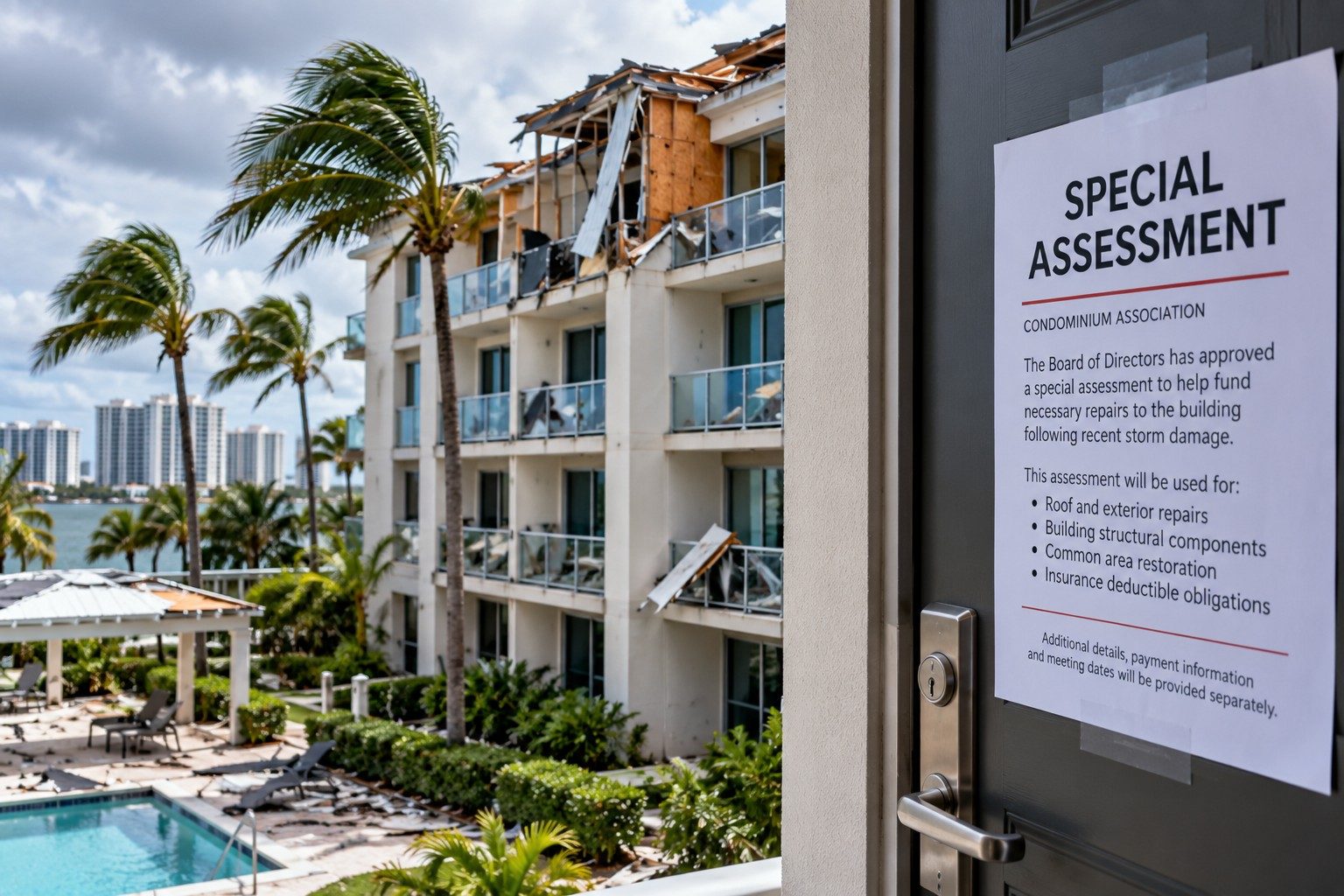
Subsection (11)(j) provides that any portion of the condominium property the association must insure, when damaged by an insurable event, “shall be reconstructed, repaired, or replaced as necessary by the association as a common expense,” and that “all property insurance deductibles and other damages in excess of property insurance coverage” are common expenses as well. A 5% hurricane deductible on a $30 million building is $1.5 million the owners fund before the policy pays a dollar, and every dollar the claim is underpaid is a dollar the owners fund after. That is the arithmetic behind the special assessment, and it is why a well-documented claim is the board’s best defense against one. See special assessments after an association claim.
What the statute means on the day of the loss
- The association files the master policy claim; unit owners file their own. A unit owner reporting building damage to the master carrier creates a second, uncoordinated file.
- The split in (11)(f) is the scope of the claim. The carrier’s estimate will put flooring, cabinets and paint on the owners; the drywall, the windows and everything originally installed stay on the master policy. Our guide to the master policy versus the HO-6 walks through it.
- Water between units follows the same line, not the direction the water came from; see who is responsible for water damage in a condo.
- The appraisal on file is the valuation argument. If the last replacement-cost appraisal is current, coinsurance is not an issue; if it is stale, get a new one before the proof of loss.
- Mediation is available. Florida’s DFS mediation program under §627.7015 covers personal lines and commercial residential policies, which include association master policies.
- The clocks run on the association: notice within 1 year and a supplemental claim within 18 months under §627.70132.
What boards and managers should do now
- Confirm the date of the last independent replacement-cost appraisal and schedule the update if it is more than three years old.
- Keep the policy, the declarations page, the appraisal, the declaration of condominium and the milestone and reserve study reports in one place the manager and two directors can reach.
- Adopt a resolution naming who may report a claim and who may sign for the association.
- Photograph the roof, exterior, common areas and mechanical rooms before June 1 every year.
- Tell unit owners, in writing, what the master policy covers and what their HO-6 must, with the loss assessment minimum.
- Book a free board and manager education session before the next season, and read our association claims page.
Frequently asked questions
What insurance does a Florida condo association have to carry?
What is excluded from the master policy by law?
Who pays the deductible after a hurricane?
Does the association have to insure the drywall in my unit?
Our appraisal is five years old. Does that matter?
Can a unit owner file against the master policy directly?
Homeland serves policyholders in Aventura, Hollywood and Naples, with local lines and a licensed public adjuster who calls back right away.
If this is your loss, call Homeland before you talk to the insurance company: Florida (305) 783-3777, New Jersey (732) 517-3777, 24 hours. A licensed public adjuster reviews the claim for free and calls you back right away. No Recovery, No Fee.
Sources
- Fla. Stat. 718.111 (Florida Senate)
- Fla. Stat. 627.70132
- Fla. Stat. 627.7015
- Fla. Stat. 553.899
- Fla. Stat. 718.112
This article is for general information only and is not legal or insurance advice. Statutes, regulations and policy wording change, and how they apply depends on your own policy and the facts of your claim. Homeland Public Adjusters is a public adjusting firm, not a law firm.
- Surprising Things Your Policy Covers
- Neighbor's Condo Fire: Who Pays?
- Damaged Tile or Laminate: A Claim?
- Barn, Stable & Outbuilding Coverage
- Wind and Tornado Risk on the Farm
- Crop Insurance vs. Property Insurance
 Yeni Martinez
 Alberto Enriquez
 Yisel Dieguez
Homeland Public Adjusters represents policyholders, not insurers. Get a free review of your claim.
Get a Free Claim ReviewIf you already have an open claim, see What to Do in the First 24 Hours After Property Damage, or visit our Public Adjuster Near Me page to get connected with the Homeland adjuster covering your area.