Condo Water Damage: Who Is Responsible, the Association or the Unit Owner? (Florida 718.111(11)(f) and New Jersey)

Homeland Public Adjusters · Last reviewed: October 2026
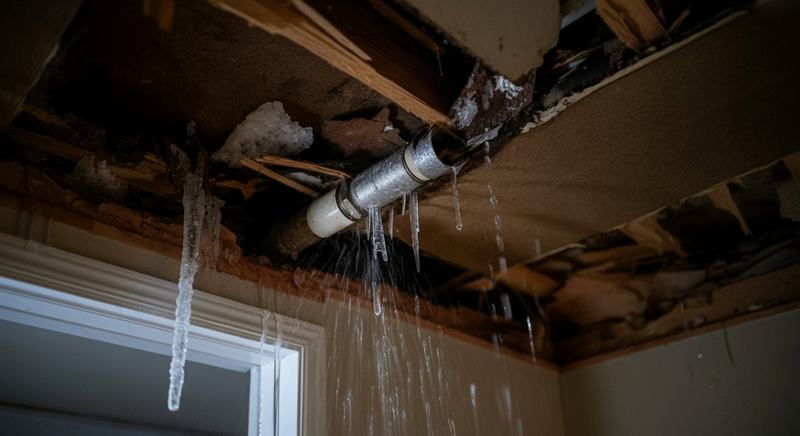
A pipe break in a shared riser, a roof leak over a common hallway, or a failure in a shared mechanical system often damages both common areas and the interiors of one or more units, and the master policy and each affected owner’s own policy don’t automatically divide that damage the same way every time.
What usually falls to the association's master policy
The shared system or structure that failed, and depending on the association’s coverage designation, possibly the original building-standard finishes inside affected units as well.
What usually falls to each affected unit owner's own policy
Personal belongings, any upgrades beyond the building-standard original finishes, and loss-of-use if a unit becomes temporarily uninhabitable.
Disagreement over whether a given item counts as original or as an owner upgrade, which determines which policy is supposed to pay for it, is one of the most common friction points after this type of loss. Associations and individual unit owners can both be Homeland clients on the same event, handled as the separate claims they actually are. Call us before anyone, board or owner, speaks with an insurance company about a shared-system loss.
Homeland handles association and unit-owner water claims in Miami, Hollywood and Long Branch.
Who is responsible for water damage in a condo: the Florida rule
Responsibility for repairing water damage in a Florida condominium follows the insurance split in Fla. Stat. §718.111(11), not the location of the leak. The association insures and repairs the building as originally installed and the common elements; the unit owner insures and repairs what the statute excludes from the master policy when it is inside the unit and serves only that unit: floor, wall and ceiling coverings, electrical fixtures, appliances, water heaters and filters, built-in cabinets and countertops, window treatments, and personal property. So a shared riser that bursts and floods three units produces a master policy claim for the drywall and the building systems and three HO-6 claims for the flooring, cabinets and contents, whoever owned the pipe.
When the water came from another unit: negligence and the third policy
Where the water came from decides a third question: whether someone else’s liability coverage owes anything. The statutory split assigns repair and insurance duties; it does not make the upstairs owner liable for a sudden, accidental failure in their unit. If the upstairs owner was negligent, for example by ignoring a known leak, the downstairs owner’s carrier pays the downstairs claim and then pursues the upstairs owner’s HO-6 liability coverage. Owners who wait for the neighbor’s carrier instead of filing their own claim wait a long time. In New Jersey the master deed and bylaws replace the statute, and the negligence question is the same.
- Report to the manager and to your own HO-6 carrier the same day; do not call the master carrier yourself.
- Photograph the source, the path and the damage in every unit affected, with a moisture reading if a dry-out company is on site.
- Keep the plumber’s invoice and the failed part: the cause of the failure decides the negligence question and sometimes a product claim.
- Ask for the association’s claim number so the HO-6 adjuster can coordinate scope with the master adjuster.
Frequently asked questions
Who pays when a shared pipe in a condo building leaks into units?
Is a water loss that affects several condo units one claim?
What is the most common dispute after a common-area water loss?
Who is responsible for water damage in a condo in Florida?
The leak came from the unit above me. Do they pay?
This article is for general information only and is not legal or insurance advice. Every policy and every claim is different — always review your own policy language or speak with a licensed public adjuster about your specific situation.
- Surprising Things Your Policy Covers
- Neighbor's Condo Fire: Who Pays?
- Damaged Tile or Laminate: A Claim?
- Barn, Stable & Outbuilding Coverage
- Wind and Tornado Risk on the Farm
- Crop Insurance vs. Property Insurance
 Yeni Martinez
 Alberto Enriquez
 Yisel Dieguez
Homeland Public Adjusters represents policyholders, not insurers. Get a free review of your claim.
Get a Free Claim ReviewThis topic often comes up alongside Before the Storm: What Your Association Should Have on File. If your situation involves this kind of loss, see our Condo & HOA Associations page for how Homeland can help with the claim itself.