Before the Storm: What Your Association Should Have on File

Homeland Public Adjusters · Last reviewed: October 2026
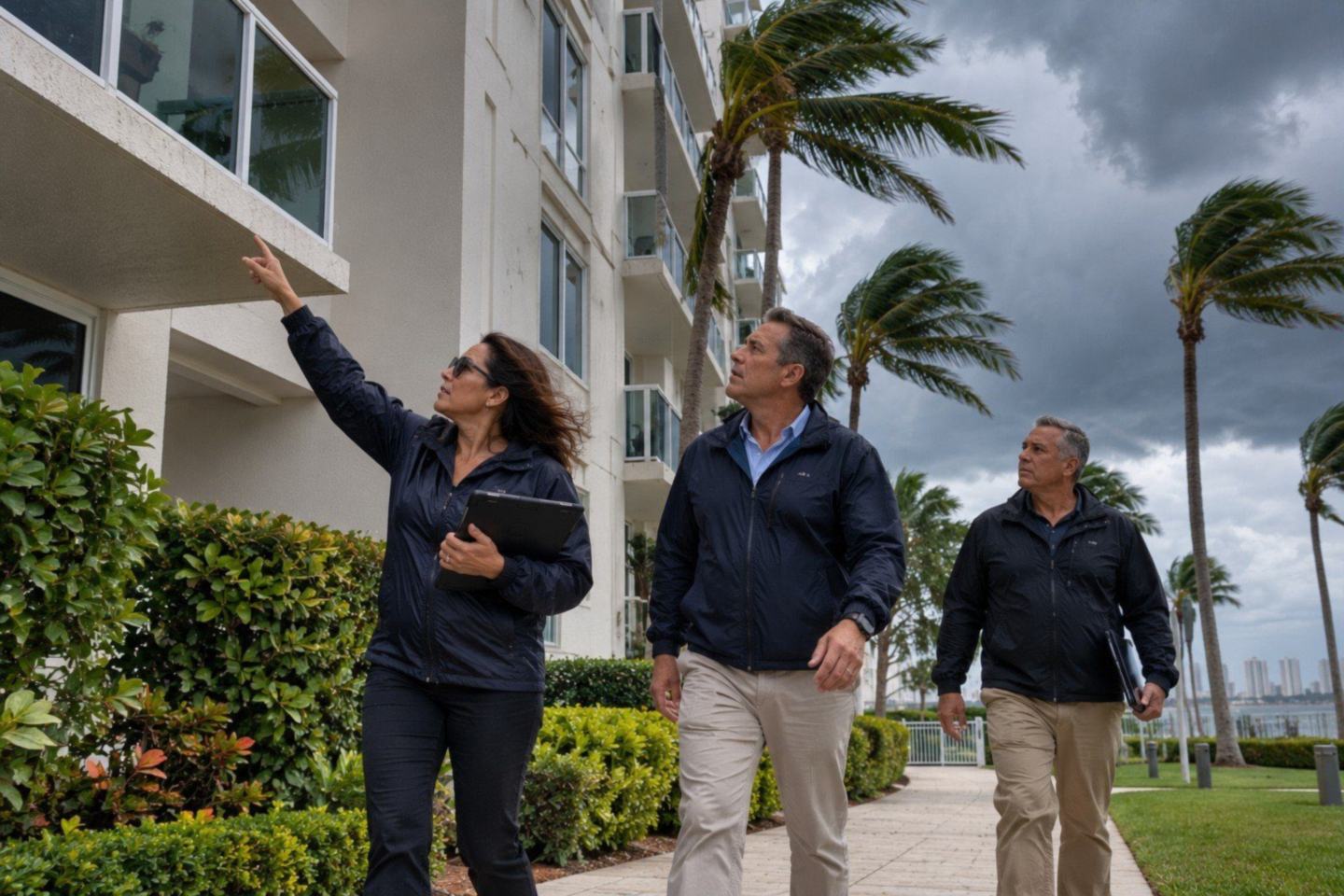
A board’s job after a major storm goes faster, and the claim it files goes further, when certain records are already current rather than scrambled together afterward.
Have a property claim anywhere in Florida? A licensed Homeland public adjuster comes to you within hours — no need to visit an office. Call (305) 783-3777 (Florida) or (732) 517-3777 (New Jersey), 24/7.
The master policy itself, in hand
Short answer: An association’s storm claim goes faster and further when the full master policy, recent reserve studies, maintenance records, dated photos and a unit-owner contact list are current before the storm. Maintenance history matters most: it answers the argument that storm damage was old wear.
With the declarations page and any endorsements — not a summary from the management company — so whoever handles the claim knows exactly what’s covered, what the deductible structure looks like, and what’s excluded.
Recent reserve studies and maintenance records
A well-documented maintenance history helps counter the argument that storm damage was actually pre-existing wear or deferred maintenance, one of the most common reasons associations see claims disputed or reduced.
A current unit roster and contact list also matters, so the board can reach every unit owner quickly after a widespread loss. Call Homeland before the association speaks with the insurance company about a post-storm claim. Boards that have these records ready are in a dramatically stronger position than those piecing it together after the fact.
Balcony furniture: the projectile problem
Community managers across Florida say the same thing before every storm: the notice goes out to clear the balconies, some owners do it, most do not. The chairs, planters and grills that stay become wind-blown projectiles that crack sliders, punch impact windows, dent cars and tear railings. After the storm they also start the hardest argument on the claim: whose policy pays.
A chair that leaves a balcony usually damages common elements (the master policy), another owner’s unit (that owner’s HO-6, with a possible claim back against the owner who left the chair) and sometimes a car (auto policy). The master policy adjuster will ask whether owners were told to clear their balconies. The unit owner’s carrier will ask whether the neighbor was negligent. If nobody can produce the notice or a dated photo of that balcony before the storm, the association tends to absorb the damage or chase an owner for months.
Homeland works with associations in Naples, Boca Raton and Ocean County before and after hurricane season.
Frequently asked questions
What records should a condo or HOA board have before hurricane season?
Why do maintenance records matter for an association’s storm claim?
How often should an association take pre-storm photos?
Who pays when an owner’s balcony furniture damages another unit in a hurricane?
Can a condo board require owners to clear balconies before a hurricane?
This article is for general information only and is not legal or insurance advice. Every policy and every claim is different — call Homeland. We review your policy language with you at no cost.
- Surprising Things Your Policy Covers
- Neighbor's Condo Fire: Who Pays?
- Damaged Tile or Laminate: A Claim?
- Barn, Stable & Outbuilding Coverage
- Wind and Tornado Risk on the Farm
- Crop Insurance vs. Property Insurance
 Yeni Martinez
 Alberto Enriquez
 Yisel Dieguez
Homeland Public Adjusters represents policyholders, not insurers. Get a free review of your claim.
Get a Free Claim ReviewThis topic often comes up alongside Special Assessments After a Major Loss: What Boards Should Know. If your situation involves this kind of loss, see our Condo & HOA Associations page for how Homeland can help with the claim itself.