Hail Damage Insurance Claims: Roof, Siding and the “Cosmetic Damage” Argument

Homeland Public Adjusters · Last reviewed: October 2026
Short answer: Hail damage is covered under the windstorm or hail peril on standard property policies. The disputes are about whether the damage is “cosmetic,” whether a partial repair has to match, and how the deductible applies: some policies carry a cosmetic-damage exclusion endorsement for roofs and siding, Florida’s matching statute requires adjoining areas to match, New Jersey has no matching statute, and Florida caps a separate roof deductible at the lesser of 2% of the dwelling limit or 50% of the roof replacement cost.
How much hail there is
The Insurance Information Institute, citing NOAA, counts 5,432 hail events in the United States in 2025, up from 5,373 in 2024; Texas, Kansas, Oklahoma, Nebraska and Missouri lead the list. State Farm alone paid more than $5.6 billion in hail claims in 2025. Florida and New Jersey are not hail states by those standards, but a storm-report tally derived from the Storm Prediction Center logged 73 Florida hail reports and 5 New Jersey reports in 2025, and a single spring cell over a subdivision produces hundreds of roof claims. New Jersey’s season runs roughly April through July; Florida’s comes with spring and summer thunderstorms.
What hail does to a house
- Asphalt shingles: bruises that fracture the fiberglass mat and knock granules loose; the mat cracks, the asphalt weathers, and the leak arrives a season or two later.
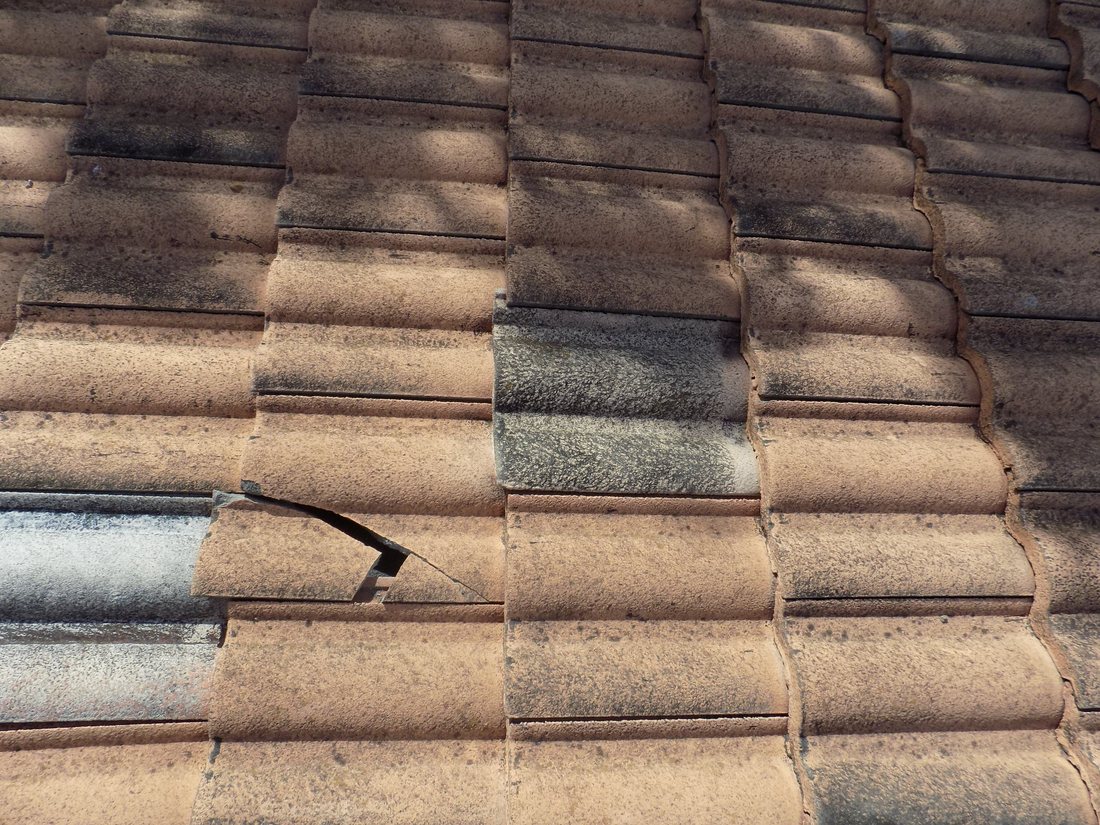
- Tile: cracked and shattered concrete and clay tile, often in a pattern that follows the storm’s direction.
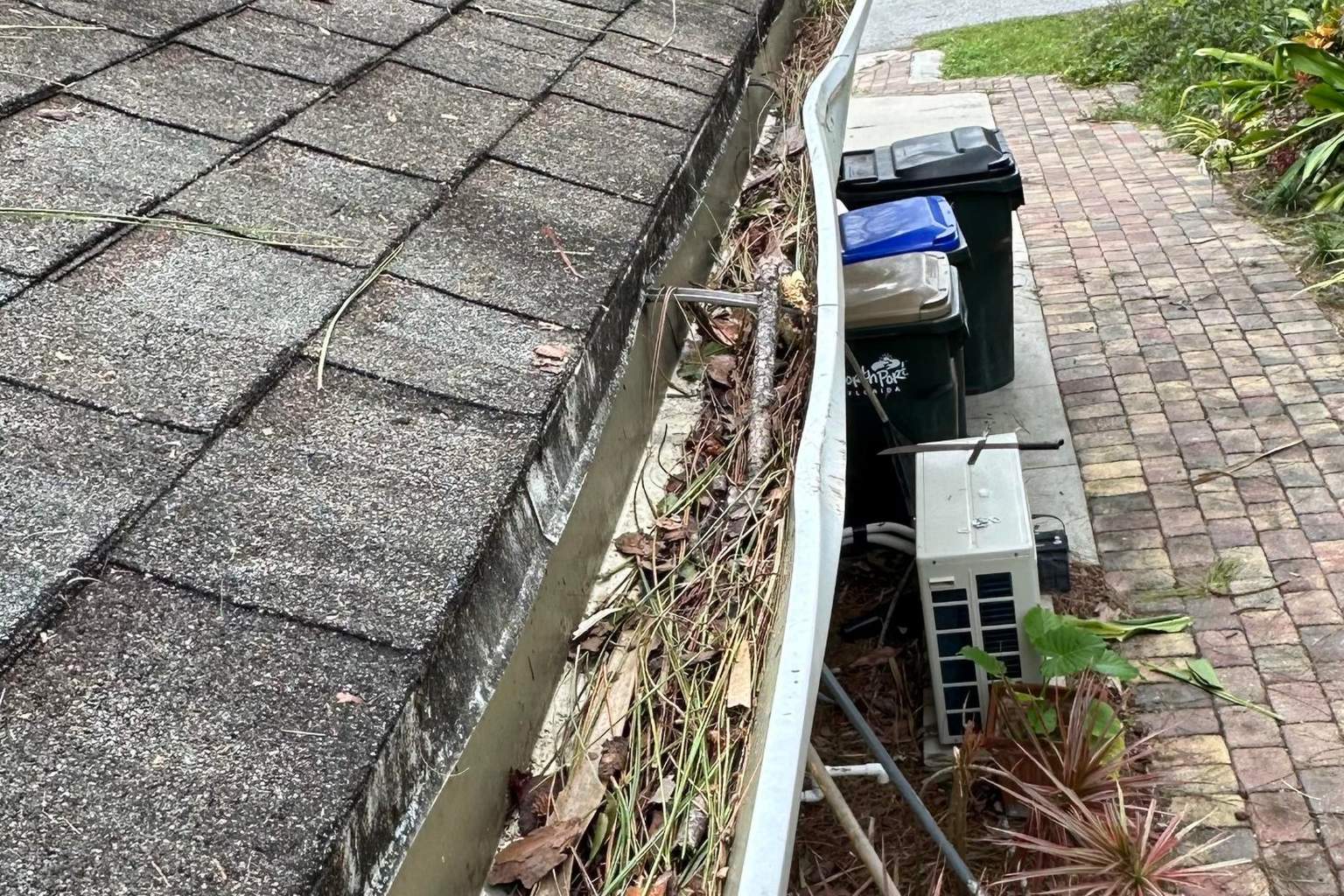
- Metal roofing, gutters, vents, flashing and A/C fins: dents that prove the hail size and direction even when the shingles look fine from the ground.
- Siding and screens: cracked vinyl, chipped stucco, torn pool-cage screen, punctured soffit.
- Windows, skylights and solar panels: cracked glazing, damaged cells.
- Paint and sealants: chipped surfaces that let water in.
The cosmetic-damage argument
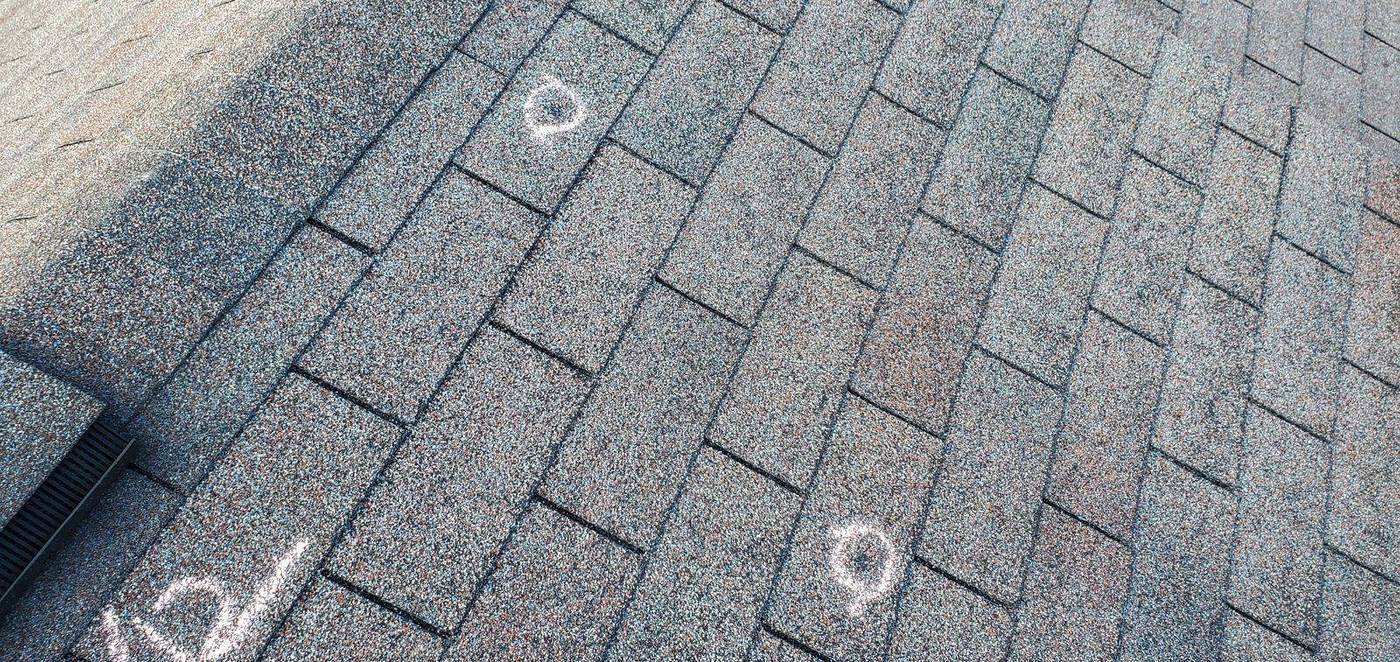
ISO publishes two endorsements carriers attach to policies in hail-prone areas: a cosmetic damage exclusion for windstorm or hail (HO 06 43) and a roof surfacing cosmetic damage exclusion (HO 06 44), both from the 04 16 edition. They exclude damage that alters the appearance of exterior surfacing but does not prevent it from keeping out the weather. Functional damage, a fractured shingle mat, a cracked tile, granule loss that exposes the asphalt, a dented metal roof seam that no longer sheds water, stays covered. The carrier’s adjuster will call bruising cosmetic; a roofer’s inspection with chalk-marked test squares (a 10-by-10-foot area with every hit counted) and close-up photographs of the mat fractures is the evidence that it is not. If your policy carries one of these endorsements, the declarations page lists it.
Hail damage on a metal roof
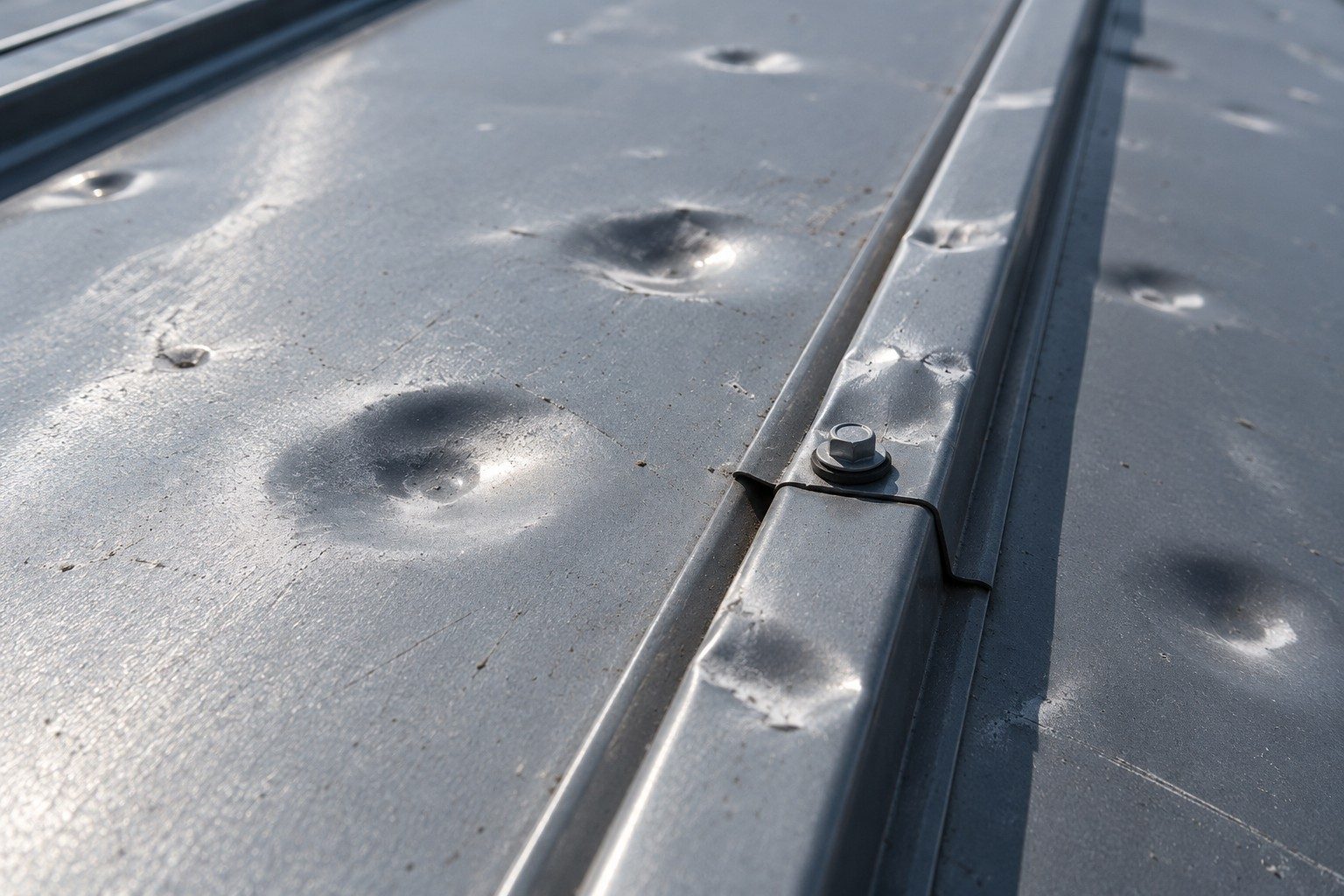
Metal roofs are where the cosmetic argument is fought hardest. Hail dents a standing-seam or 5V panel without opening it, and the carrier’s position is that a dented panel still sheds water, so the damage is cosmetic and, under a roof surfacing cosmetic damage exclusion (ISO HO 06 44 or a carrier equivalent), not covered. Three things make metal-roof hail damage functional rather than cosmetic: dents or fractures at seams, ribs, fasteners and flashings that open a path for water or break the seal; damage to the factory coating that exposes bare metal to corrosion and voids the manufacturer’s finish warranty; and panel deformation severe enough to pond water or lift at the laps. An inspection that photographs each of those conditions, tests a square of panels against the manufacturer’s own hail-impact criteria, and notes the warranty terms is what turns a “cosmetic” denial into a paid claim. If the policy has no cosmetic exclusion at all, dents are physical damage to the roof surfacing and are covered without the argument; check the declarations page before accepting the label.
Metal-roof hail claims also run into the roof payment schedule and ACV roof endorsements, which pay a percentage of replacement cost by age and material; metal carries a longer schedule than shingle, so a 20-year-old metal roof is usually paid at a much higher percentage than a 20-year-old shingle roof.
Matching and the deductible
When hail damages one slope or one wall and the carrier pays to replace only that, the rest of the roof or the siding does not match. Florida’s §626.9744 requires the insurer to make reasonable repairs or replacement of items in adjoining areas when the replaced items do not match in quality, color or size. New Jersey has no matching statute, regulation or controlling case law, so the argument there rests on the policy’s own replacement-cost language. Our guide to the matching rule covers the details.
Florida also regulates roof deductibles: a separate roof deductible cannot exceed the lesser of 2% of the dwelling coverage or 50% of the roof replacement cost, and it cannot be applied to a hurricane loss, a total loss, a fallen tree that punctures the deck, or a repair of less than 50% of the roof (§627.701). A hail claim that requires replacing a full slope is where that deductible, and any actual-cash-value roof schedule on the policy, changes the number most. See roof claims denied as wear and tear.
What to do after a hailstorm
- Photograph the soft metals the same day: gutters, downspouts, A/C fins, window screens, mailbox. They record hail size and direction before anyone argues about the roof.
- Get a dated hail report for your address from a weather-data service and keep the local news coverage.
- Have a roofer inspect with test squares and photograph the mat fractures and granule loss up close; do not rely on the carrier’s drone pass.
- Check the declarations page for cosmetic-damage endorsements and any roof schedule before the claim is framed.
- Document the siding, screens, windows and solar panels, not just the roof.
- Call Homeland before the carrier; a hail claim is decided by the first inspection.
- Report promptly; Florida’s outside limit is 1 year with 18 months for a supplemental claim (§627.70132), and New Jersey carriers must begin investigating within 10 working days (N.J.A.C. 11:2-17.7).
Frequently asked questions
Is hail damage covered by homeowners insurance?
The adjuster said the hail damage is only cosmetic.
Do they have to replace the whole roof if only one side was hit?
What deductible applies to a hail claim?
My roof is 18 years old. Will the carrier pay replacement cost?
How long do I have?
Homeland serves policyholders in Ocala, Gainesville and New Brunswick, with local lines and a licensed public adjuster who calls back right away.
If this is your loss, call Homeland before you talk to the insurance company: Florida (305) 783-3777, New Jersey (732) 517-3777, 24 hours. A licensed public adjuster reviews the claim for free and calls you back right away. No Recovery, No Fee.
Sources
- Insurance Information Institute, Facts + Statistics: Hail
- StormerSite, Florida hail reports 2025
- FC&S via PropertyCasualty360, Roof surfacing cosmetic damage exclusion
- Fla. Stat. 626.9744
- Fla. Stat. 627.701
- Fla. Stat. 627.7011
- Matthiesen, Wickert & Lehrer, 50-state matching chart
This article is for general information only and is not legal or insurance advice. Statutes, regulations and policy wording change, and how they apply depends on your own policy and the facts of your claim. Homeland Public Adjusters is a public adjusting firm, not a law firm.
- Surprising Things Your Policy Covers
- Neighbor's Condo Fire: Who Pays?
- Damaged Tile or Laminate: A Claim?
- Barn, Stable & Outbuilding Coverage
- Wind and Tornado Risk on the Farm
- Crop Insurance vs. Property Insurance
 Yeni Martinez
 Alberto Enriquez
 Yisel Dieguez
Homeland Public Adjusters represents policyholders, not insurers. Get a free review of your claim.
Get a Free Claim ReviewIf you already have an open claim, see What to Do in the First 24 Hours After Property Damage, or visit our Public Adjuster Near Me page to get connected with the Homeland adjuster covering your area.