Roof Collapse and Structural Collapse Insurance Claims: What “Collapse” Coverage Pays

Homeland Public Adjusters · Last reviewed: October 2026
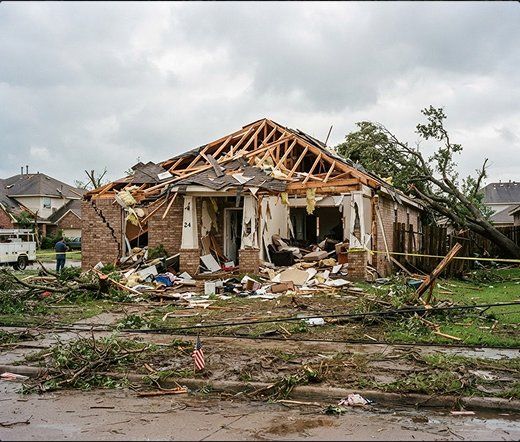
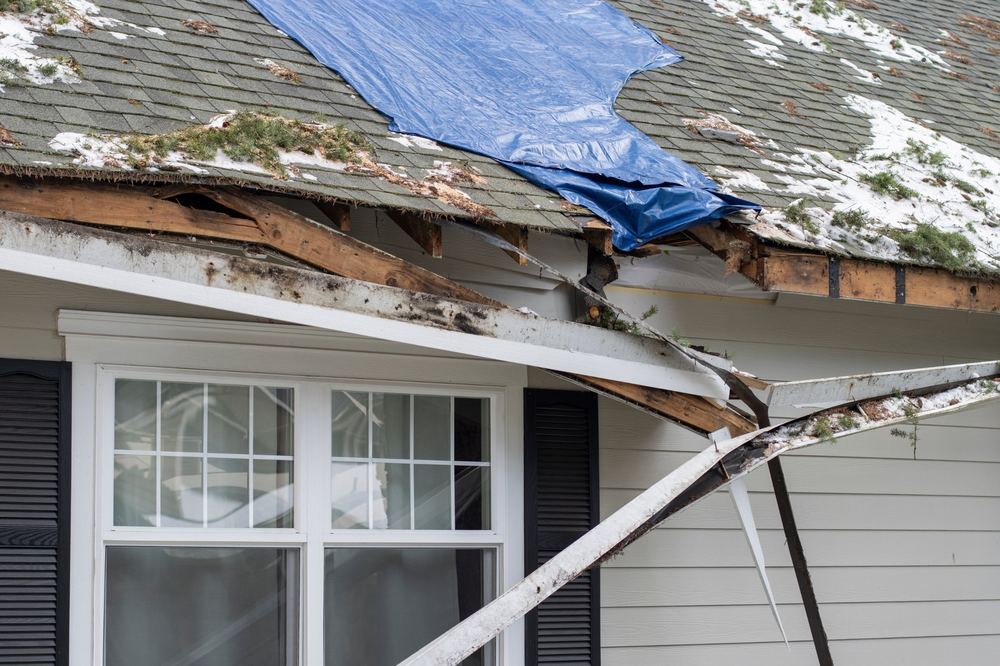
Short answer: The standard homeowners policy treats collapse as an additional coverage with its own definition: an abrupt falling down or caving in of a building or part of it, so that it cannot be occupied for its intended purpose, caused by a listed event such as hidden decay, hidden insect or vermin damage, the weight of contents, people, equipment or animals, the weight of rain or snow, or defective materials or methods. A building that is still standing is not a collapse under the form, even if it is cracking, bulging, sagging, bending, leaning or settling. Snow-load collapse is a named peril on most forms as well.
What the collapse coverage says
The ISO special form (HO 00 03) defines collapse as “an abrupt falling down or caving in of a building or any part of a building,” and lists the causes it will pay for: the perils insured against on contents (which include weight of ice, snow and sleet), decay that is hidden from view, insect or vermin damage that is hidden from view, weight of contents, equipment, animals or people, weight of rain that collects on a roof, and the use of defective material or methods in construction if the collapse happens during construction or renovation. It then says a building that is standing is not in a state of collapse “even if it shows evidence of cracking, bulging, sagging, bending, leaning, settling, shrinkage or expansion.” Older editions used the word “sudden” and courts split on what it meant; the 2010 edition’s “abrupt” was meant to close the argument.
| What happened | Collapse coverage? | Note |
|---|---|---|
| Roof section caves in under snow load (New Jersey) | Yes | Also the weight-of-ice-and-snow peril; see winter storm claims |
| Floor joists fail abruptly from termite damage nobody could see | Yes | Hidden insect damage is listed; visible, known infestation is not |
| Ceiling drops after a roof leak rotted the trusses inside the attic | Yes, if the decay was hidden | The carrier will argue the leak was known |
| Deck or balcony falls under a crowd | Yes | Weight of people is listed |
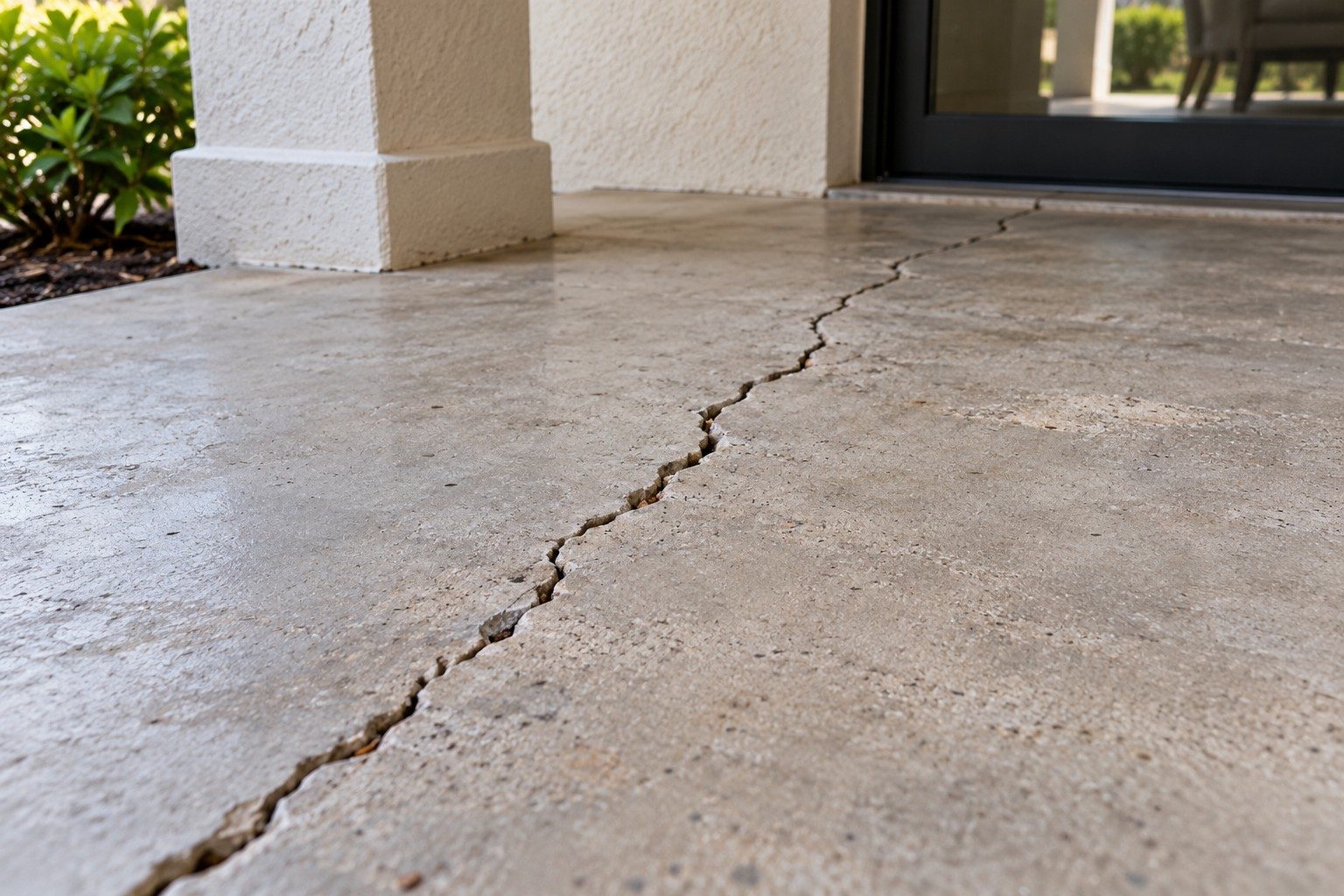
| Cracked slab, bowing wall, sagging roofline, doors that stick | No | Standing building; excluded by the definition. Settling and earth movement are also excluded |
| Collapse from a sinkhole | Separate | Florida’s catastrophic ground cover collapse coverage; see sinkhole warning signs |
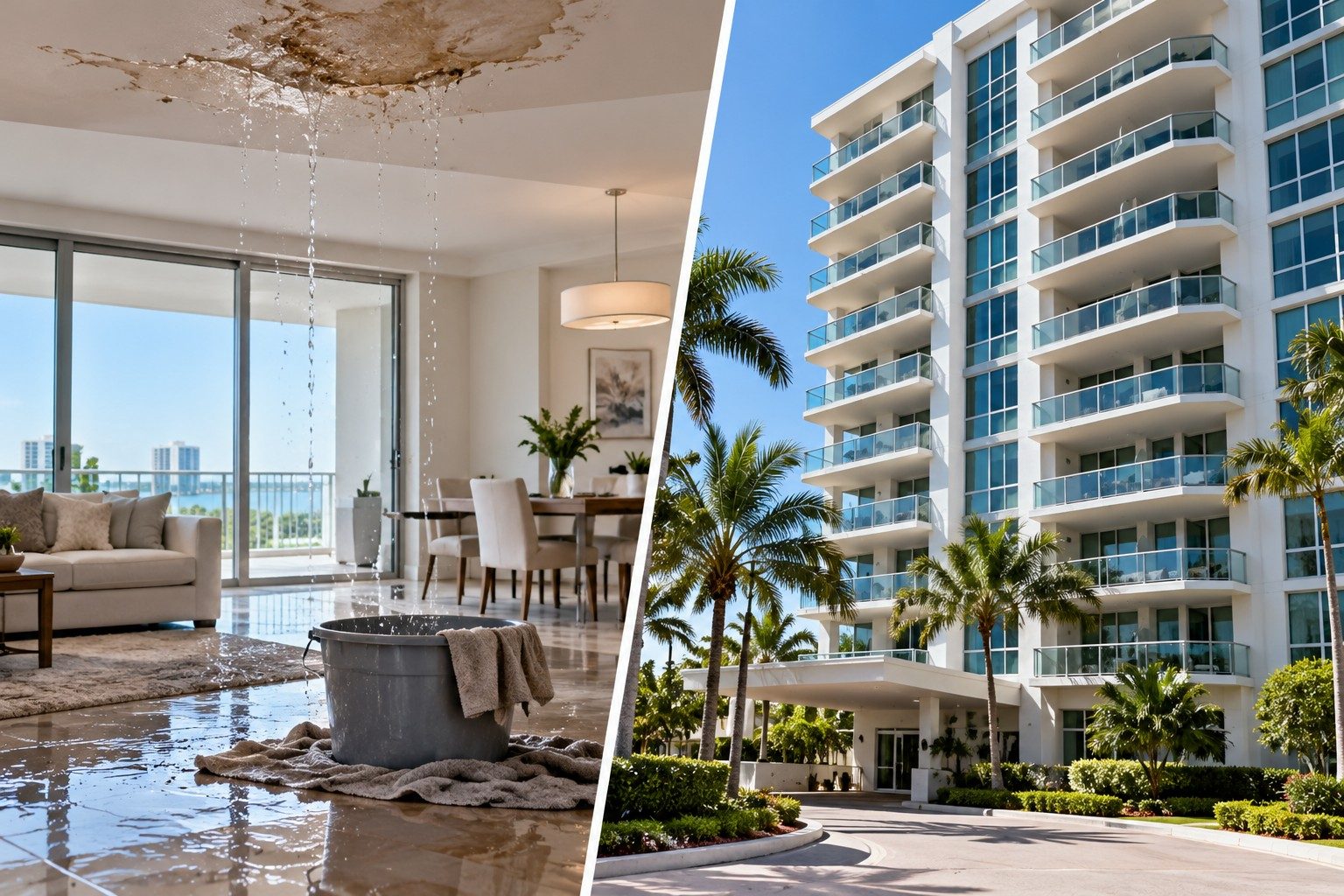
| Collapse of a condominium building | Master policy | Unit owners claim contents and loss of use under their HO-6; see below |
Florida and New Jersey after Surfside
Champlain Towers South partially collapsed at about 1:30 a.m. on June 24, 2021, killing 98 people; the National Institute of Standards and Technology released its technical findings in June 2026. Florida responded with mandatory milestone inspections: under §553.899, a condominium or cooperative building three or more stories tall must have a structural inspection by a licensed engineer or architect by December 31 of the year it reaches 30 years of age, and every ten years after that, and a local enforcement agency may require the first inspection at 25 years based on local conditions such as proximity to salt water. Associations must also complete a structural integrity reserve study at least every ten years under §718.112, covering the roof, structure, fireproofing, plumbing, electrical, waterproofing, windows and doors, and any item over $25,000.
New Jersey’s Structural Integrity law, P.L. 2023, c. 214, took effect January 8, 2024. It covers condominium and cooperative buildings with concrete, masonry, steel or hybrid load-bearing systems, requires an initial inspection within 15 years of the certificate of occupancy (or within two years of the law’s effective date for older buildings), repeat inspections no more than five years apart, and a reserve study within one year and every five years after that.
The arguments carriers make
- “It did not collapse; it sagged.” The definition requires an abrupt falling down. Document the before and after, the date and time, and whether the space could still be used.
- “The decay was not hidden.” Carriers cite prior leaks, stains or inspection notes. The question is whether the decay itself was visible, not whether a symptom was.
- “Settling, earth movement, faulty construction.” Excluded causes; the collapse coverage lists defective methods only during construction or renovation.
- “Wear and tear.” Decay is wear and tear by another name, which is exactly why the form lists hidden decay as a covered cause of collapse.
What to do after a collapse
- Get everyone out and keep them out; a partial collapse means the rest of the structure is unknown. Call the fire department and the building department.
- Photograph everything from a safe distance, then from inside only after an engineer or the fire department clears it.
- Hire a structural engineer independent of the carrier to document the cause; the engineer’s report is the claim.
- Do not demolish or shore in a way that destroys the failed members before they are documented; shore for safety and photograph the shoring.
- Call Homeland before the carrier; collapse claims turn on how the loss is first described.
- Associations: pull the milestone inspection, the reserve study and the maintenance file the first day, and notify the manager and counsel.
- Note the clocks: Florida notice within 1 year and supplemental claims within 18 months (§627.70132); New Jersey investigation within 10 working days and payment within 30 days of a proper proof of loss (N.J.A.C. 11:2-17.7).
Frequently asked questions
Does homeowners insurance cover roof collapse?
Is snow-load collapse covered in New Jersey?
Termites destroyed my floor joists and the floor dropped. Covered?
Who claims when a condo building collapses?
What is a milestone inspection?
Does New Jersey have a similar law?
Homeland serves policyholders in Miami Beach, Clearwater and Trenton, with local lines and a licensed public adjuster who calls back right away.
If this is your loss, call Homeland before you talk to the insurance company: Florida (305) 783-3777, New Jersey (732) 517-3777, 24 hours. A licensed public adjuster reviews the claim for free and calls you back right away. No Recovery, No Fee.
Sources
- Merlin Law Group, Clearing up collapse coverage, part II (quoting ISO HO 00 03 10 10)
- Fla. Stat. 553.899
- Fla. Stat. 718.112
- NJ Department of Community Affairs, Structural Integrity law FAQ
- Becker, New Jersey S2760/A4384 summary
- NIST, Champlain Towers South investigation
- WHYY, Surfside victims remembered
This article is for general information only and is not legal or insurance advice. Statutes, regulations and policy wording change, and how they apply depends on your own policy and the facts of your claim. Homeland Public Adjusters is a public adjusting firm, not a law firm.
- Surprising Things Your Policy Covers
- Neighbor's Condo Fire: Who Pays?
- Damaged Tile or Laminate: A Claim?
- Barn, Stable & Outbuilding Coverage
- Wind and Tornado Risk on the Farm
- Crop Insurance vs. Property Insurance
 Yeni Martinez
 Alberto Enriquez
 Yisel Dieguez
Homeland Public Adjusters represents policyholders, not insurers. Get a free review of your claim.
Get a Free Claim ReviewIf you already have an open claim, see What to Do in the First 24 Hours After Property Damage, or visit our Public Adjuster Near Me page to get connected with the Homeland adjuster covering your area.