Warning Signs of a Sinkhole in Your Yard, and What Florida Insurance Covers

Homeland Public Adjusters · Last reviewed: October 2026
Short answer: Common warning signs of a sinkhole include new cracks in walls, floors, pavement or the ground, doors and windows that stop closing properly, sagging or sloping floors, slanting fence posts or trees, rainwater pooling where it never did, and sediment in well water. In Florida, every property policy must cover catastrophic ground cover collapse, but broader sinkhole coverage is optional and must be bought separately.
Warning signs to watch for
Florida sits on limestone that groundwater slowly dissolves, which is why the state has more sinkholes than any other. The Alachua County Environmental Protection Department lists these warning signs:
Slumping, sagging or structural failure of a building.
Slanting fence posts, trees or other objects.
Doors and windows that fail to close properly.
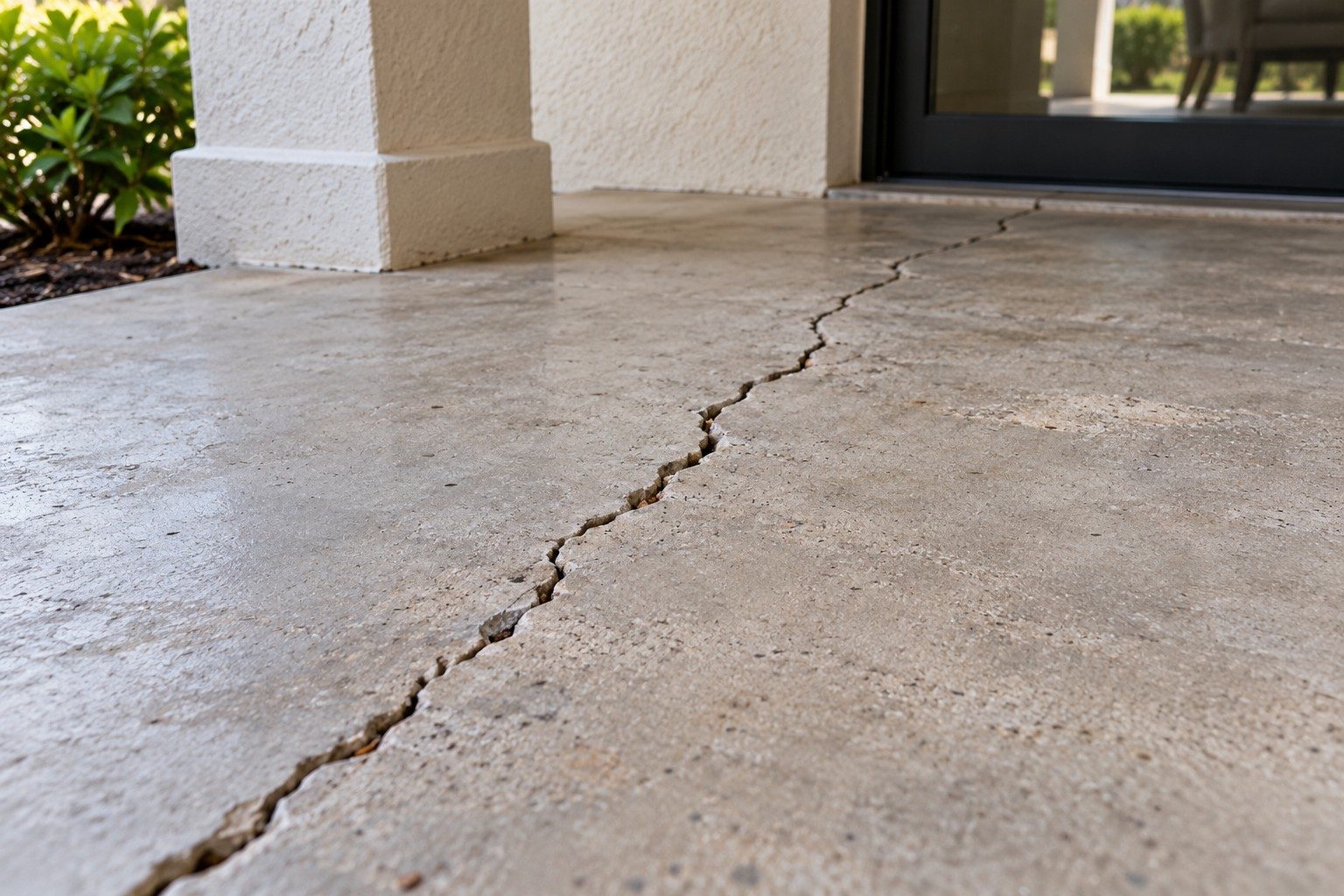
Cracks in walls, floors, pavement and the ground surface.
Rainwater pooling where it never did before, or no longer pooling where it used to.
Sediment in nearby well water.
What Florida insurance covers: two different things
Florida's sinkhole law, Fla. Stat. §627.706, separates two coverages that are often confused.
| Coverage | Required? | What it covers |
|---|---|---|
| Catastrophic ground cover collapse | Yes, in every Florida property policy | Geological activity that results in all four: an abrupt collapse of the ground cover, a depression clearly visible to the naked eye, structural damage to the building including the foundation, and the structure being condemned and ordered vacated by the government agency authorized to do so |
| Sinkhole loss coverage | No; insurers must offer it for an additional premium | Structural damage to the building, including the foundation, caused by sinkhole activity, as the statute defines those terms |
The gap matters. Settling, cracking and sagging that haven't produced a visible collapse and a condemned building are generally not catastrophic ground cover collapse. Without optional sinkhole coverage, those losses may not be covered. Insurers that offer sinkhole coverage may attach a separate sinkhole deductible of 1%, 2%, 5% or 10% of the dwelling limit.
"Structural damage" has a legal definition
Under §627.706(2)(k), a sinkhole loss requires "structural damage," which the statute defines as one of five specific conditions, such as interior floors sagging beyond set limits, foundation settlement that overstresses primary structural members, walls leaning or buckling, imminent collapse from ground movement, or damage meeting the Florida Building Code's definition of substantial structural damage. Cosmetic cracks alone usually don't qualify.
How a sinkhole claim is handled
Florida sets testing standards for sinkhole investigations (§627.7073) and offers a neutral evaluation program through the Department of Financial Services (§627.7074): the insurer pays the reasonable costs, the result is nonbinding, and the conference is held within 90 days of DFS receiving the request. Report the claim within Florida's deadlines (notice within 1 year of the date of loss under §627.70132) and keep dated photos of every crack and change.
Sinkhole activity is concentrated in west-central Florida; Homeland handles these claims in Tampa, Ocala and Pinellas County.
Frequently asked questions
What are the first signs of a sinkhole?
Does homeowners insurance cover sinkholes in Florida?
What is catastrophic ground cover collapse?
What should I do if I think I have a sinkhole?
Homeland handles sinkhole and ground-movement claims across Florida: we document the damage, match it to the coverage you actually have, and manage the testing and evaluation process with the insurer.
This article is for general information only and is not legal or insurance advice. Statutes, regulations and policy wording change, and how they apply depends on your own policy and the facts of your claim. Homeland Public Adjusters is a public adjusting firm, not a law firm.
- Surprising Things Your Policy Covers
- Neighbor's Condo Fire: Who Pays?
- Damaged Tile or Laminate: A Claim?
- Barn, Stable & Outbuilding Coverage
- Wind and Tornado Risk on the Farm
- Crop Insurance vs. Property Insurance
 Yeni Martinez
 Alberto Enriquez
 Yisel Dieguez
Homeland Public Adjusters represents policyholders, not insurers. Get a free review of your claim.
Get a Free Claim ReviewIf you already have an open claim, see What to Do in the First 24 Hours After Property Damage, or visit our Public Adjuster Near Me page to get connected with the Homeland adjuster covering your area.